E-Paper


Number Theory: Northern hills, central India beat forecasts in cool April surprise
While cooling compared to normal is welcome in a warming climate, this does not mean that the month necessarily felt pleasant to all places.
Published on: Apr 22, 2024, 09:55:39 IST

 Prefer HTon Google
Share via


Copy link

At the beginning of this month, the India Meteorological Department (IMD) forecast warmer than normal maximum temperatures for almost the entire country for April. However, an HT analysis of IMD’s gridded data shows that at least a third of India’s area has beaten that forecast so far. This includes central India, where the probability of warmer than normal maximums was high. To be sure, this does not necessarily mean the month so far was pleasant. Here are four charts that explain these trends:

Northern hills, central India beat forecasts in cool April surprise
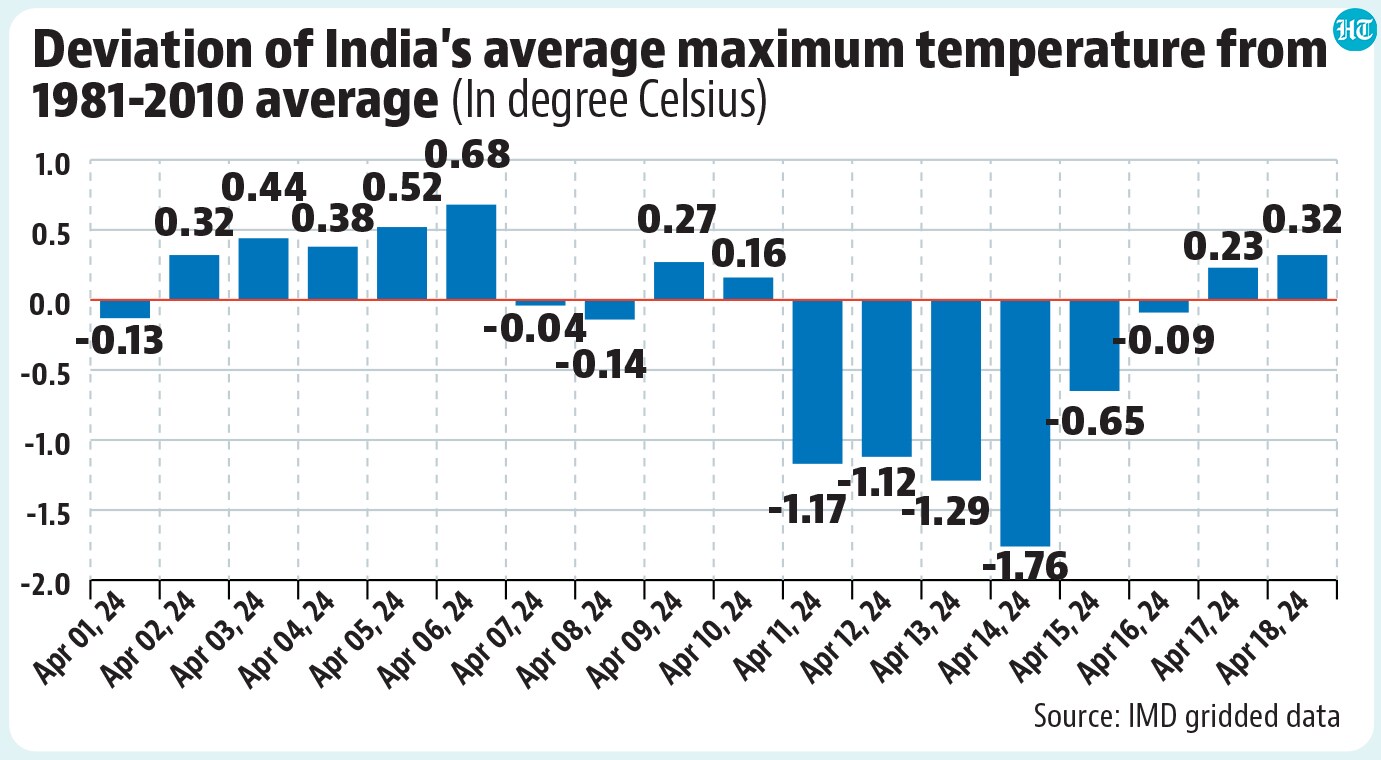
 India’s average maximum is almost normal in the month so farAccording to IMD’s gridded data, India’s average maximum in April (up to last week) was 34.2°C. This makes the month so far the 30th coolest since 1951, the earliest year for which IMD has published gridded data on temperatures. To be sure, compared to the normal (considered as the average in the 1981-2010 period by the IMD) for this period, the month is only 0.17°C cooler than normal. The overall trend is largely driven by four days that were much cooler than normal. To be sure, the average maximum temperature for the month so far would not have fallen below normal if not for four days that were much cooler than normal. Each day from April 11 to April 14 was 1.1-1.8°C cooler than normal. If these four days are excluded, the average for the month would be 0.2°C warmer than normal.
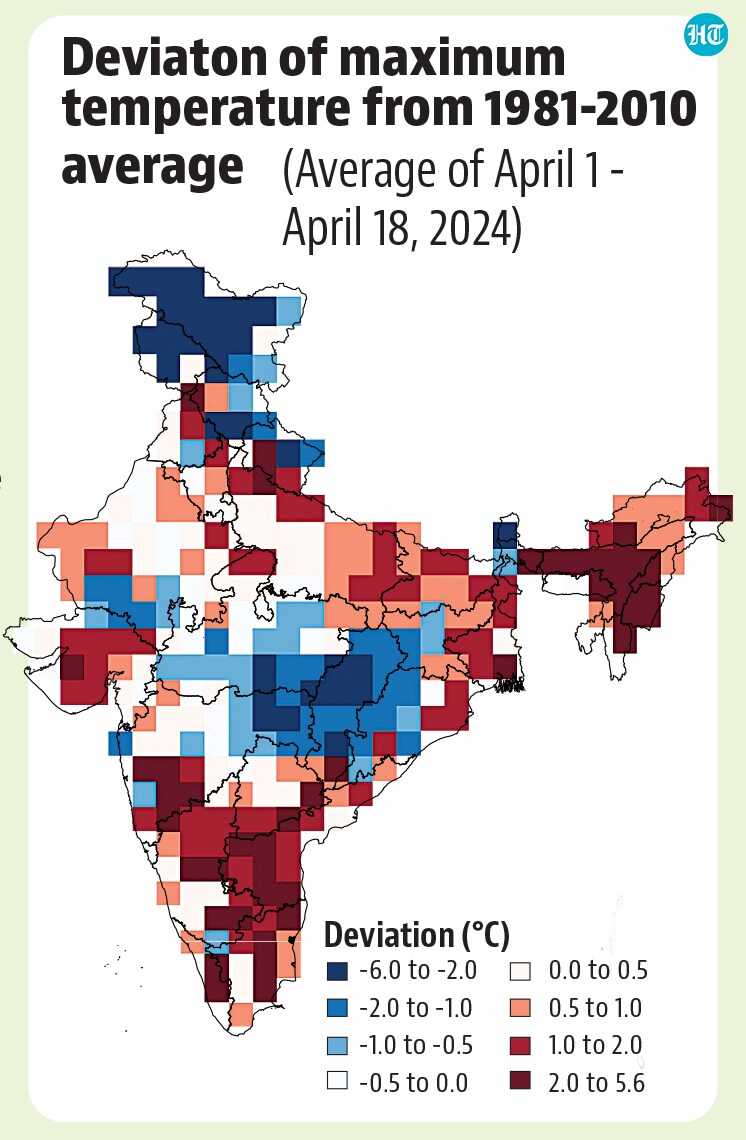
- The trend of cooler-than-normal maximum temperatures is confined to around 1/3rd of India’s areaDaily trends are not the only caveat with which one needs to read the average trend for the month. Cooler than normal maximums so far this month are also confined to only 35.8% of India’s area. Significant cooling in maximums – cooling of more than 0.5°C – was confined to only the UTs of Jammu and Kashmir and Ladakh, higher reaches of Himachal Pradesh and Uttarakhand, southern Rajasthan, Sikkim; and a contiguous area in central India covering southern Madhya Pradesh, eastern Maharashtra, Chhattisgarh, western Jharkhand and Odisha. Other areas which were only marginally cooler (0.5°C or less) are northern Madhya Pradesh, northern Rajasthan, Delhi, and parts of Haryana and Punjab. To be sure, IMD’s long-range forecast at the beginning the month did not suggest that such a large part of India would experience a cooler than normal maximum. Its forecast for the remaining part of the month also does not suggest any warming in the areas described here. On the other hand, half of India has largely followed IMD’s long-range forecast for April. This includes 32.5% of India’s area that was more than 1°C warmer than normal by maximum temperature. These warmer areas were majorly in peninsular India, western Maharashtra, most of Gujarat, eastern and north-eastern India. In these regions, some areas even experienced more than 2°C warming. Some parts of western Uttar Pradesh, lower reaches of the northern hilly states, and parts of Punjab and Haryana also experienced warming of at least 1°C.
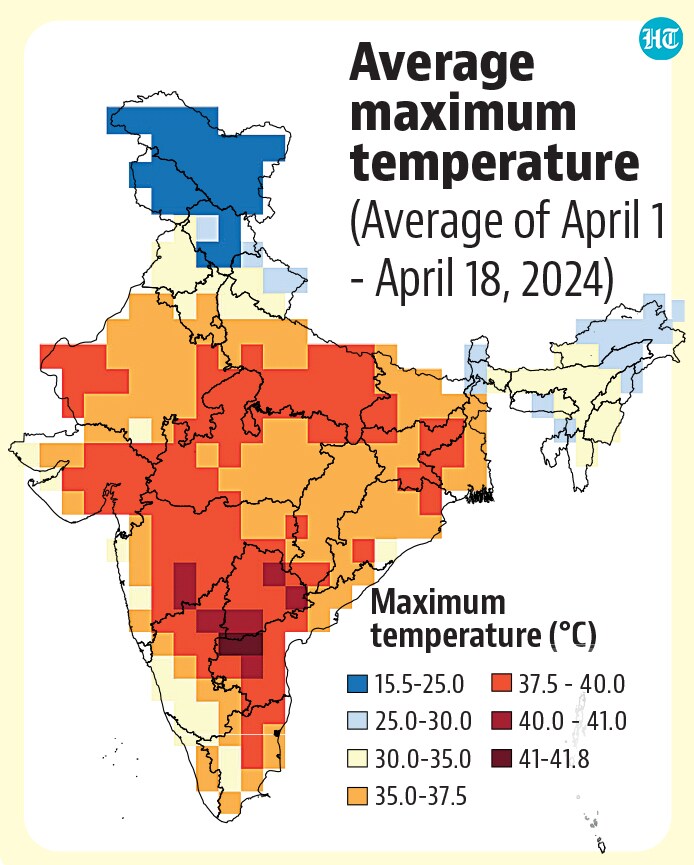
- When it comes to April, relative cooling may not have helped muchWhile cooling compared to normal is welcome in a warming climate, this does not mean that the month necessarily felt pleasant to all places that experienced this cooling. Almost three-fourth of India – 73% of India’s area – has averaged a maximum of more than 35°C. If these places were humid – cloudy or rainy weather is how most places experienced cooler than normal maximums – the cooling may not always have felt pleasant. On the other hand, 3% of India (located in parts of Andhra Pradesh, Telangana, Karnataka, and Maharashtra) experienced a maximum of more than 40°C even on average. These areas would have felt very hot irrespective of humidity.
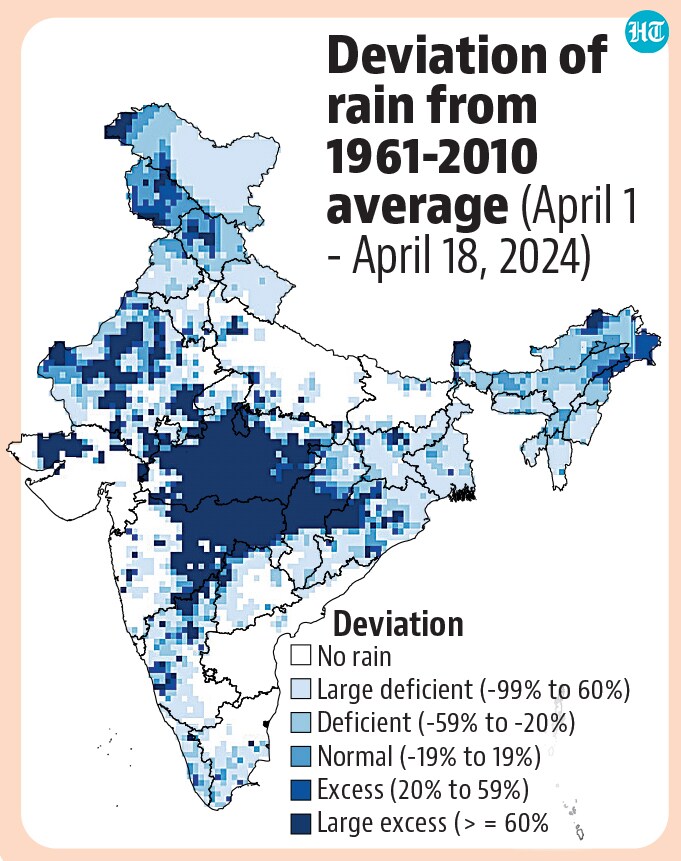
- Rainfall in the month explains the regional trends in temperatureAccording to IMD’s gridded data for rainfall, 73% of India has received at least some rain in the month so far. Moreover, compared to the 1961-2010 average for rainfall in this part of April – a benchmark for rain – 31% of India’s area has either a deficit of under 20% or a surplus. This area, especially the area with a surplus, is largely located in the areas that experienced cooling in maximum temperatures this month. This shows that the temperature trends this month were largely the result of unusual rainfall this month. This rainfall, according to IMD press releases over the course of the month, was largely the result of western disturbances, a storm that usually originates in West Asia and brings rain to India.