E-Paper



Number Theory: The electoral contest in Maharashtra and Jharkhand in 3 charts
.
Updated on: Oct 15, 2024, 18:39:46 IST


Share via


Copy link

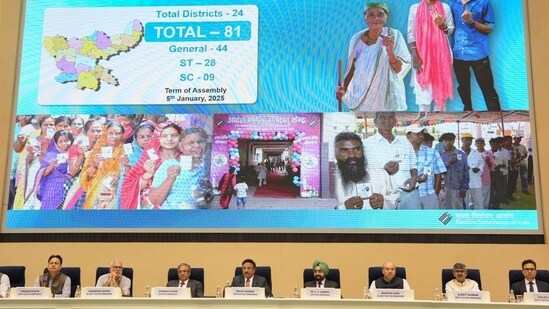
The Election Commission of India on Tuesday announced the schedule for the assembly elections in Maharashtra and Jharkhand. Maharashtra will go to the polls in a single phase on November 20 while Jharkhand will have polls in two phases on November 13 and 20. The results of the elections in both states will be declared on November 23. Here are four charts that describe the electoral contests in these states.
ECI announces Maharashtra, Jharkhand elections
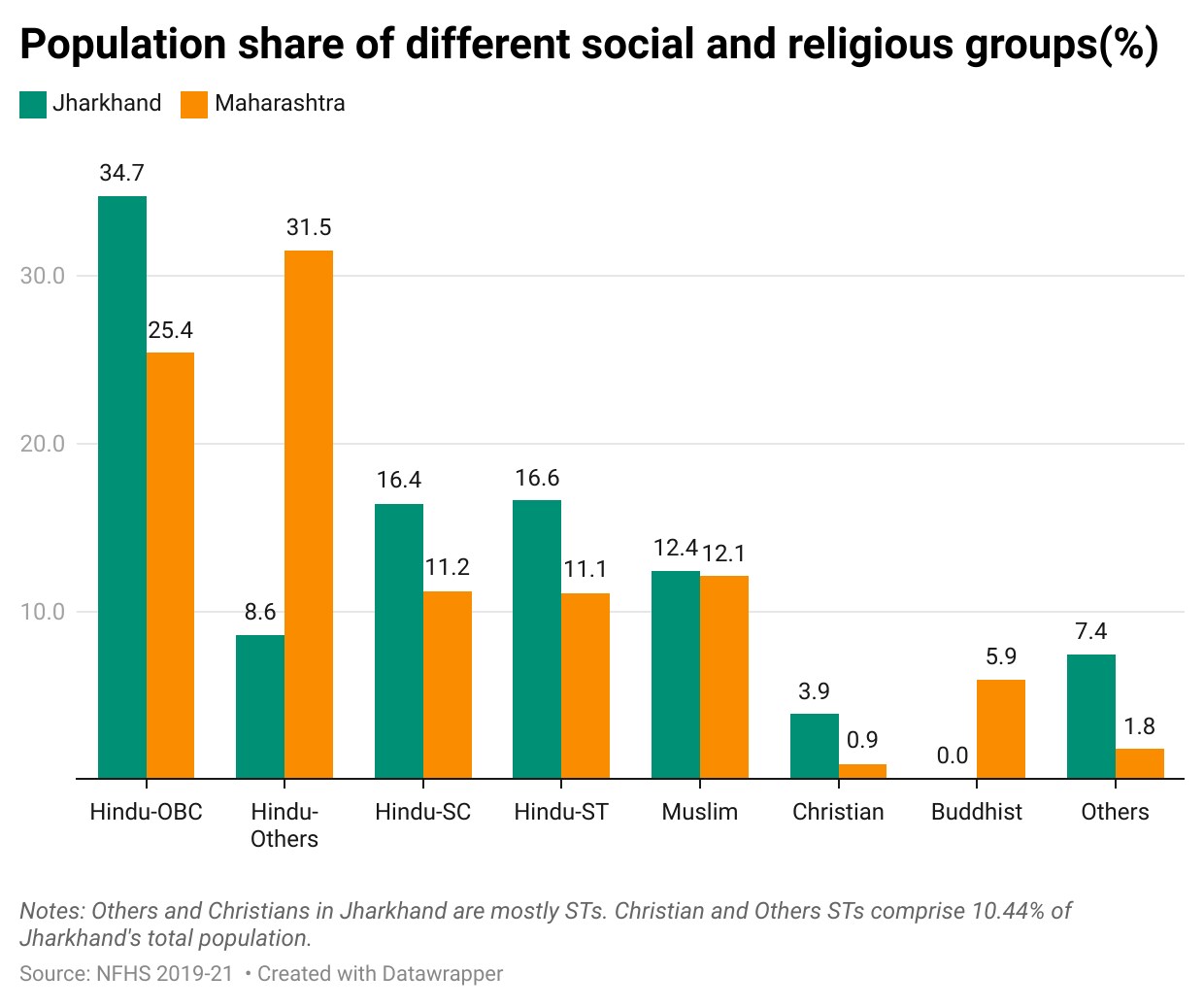
 Demographically, Maharashtra and Jharkhand are very differentMaharashtra and Jharkhand exhibit significant demographic and economic variations. According to the National Family Health Survey (NFHS) 2019-21 data, Jharkhand has a substantial share of Scheduled Tribe (ST) groups at 27.4%, the second highest among states with at least five parliamentary constituencies. In contrast, ST groups constitute 11.5% of Maharashtra’s total population. Both states have a similar share of around 17% for Scheduled Caste (SC) groups. Other backward classes (OBCs) make up 43.7% of Jharkhand’s population and 27.7% of Maharashtra’s. The non-OBC-SC-ST population stands at 11.6% in Jharkhand and 43.7% in Maharashtra. The rural-urban population distribution also varies significantly between the two states. Jharkhand’s rural population accounts for 76.75% of its total strength, while Maharashtra’s rural population is 53.82% as per NFHS 2019-21 data. In terms of religious demographics, Hindus comprise 76.4% of Jharkhand’s population and 79.25% of Maharashtra’s. Both states have a similar Muslim population share of around 12%. Economically, the conditions in these states differ starkly. According to the NFHS 2019-21, average asset score rank, Maharashtra is ranked 12th, while Jharkhand is ranked 36th among the 36 states and Union territories in India.
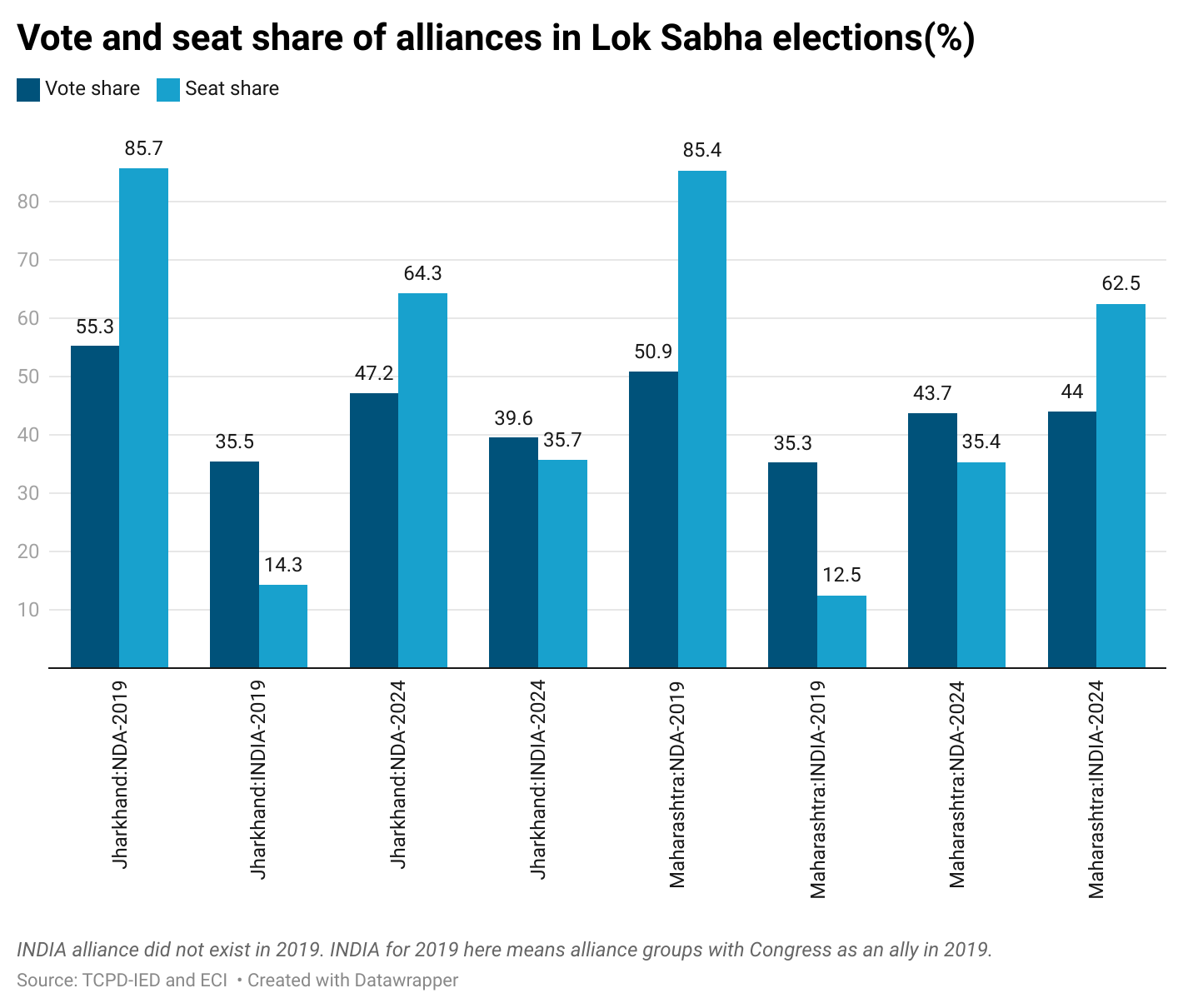
- NDA won Jharkhand in the 2024 Lok Sabha polls while Maharashtra went to INDIAIn the recently concluded Lok Sabha elections, the NDA won 17 out of 48 parliamentary constituencies (PCs) in Maharashtra while it won nine out of 14 PCs in Jharkhand. The vote share gap between the two alliances is much smaller than the seat share gap in Maharashtra. A remarkable thing about the Jharkhand results for 2024 Lok Sabha elections is that the INDIA alliance won all 5 PCs reserved for Scheduled Tribes (STs), suggesting a strong ST vs non-ST polarisation in the state. What is also worth underlining is the fact that the NDA’s seat shares and vote share went down in 2024 Lok Sabha elections in both Maharashtra and Jharkhand compared to 2019.
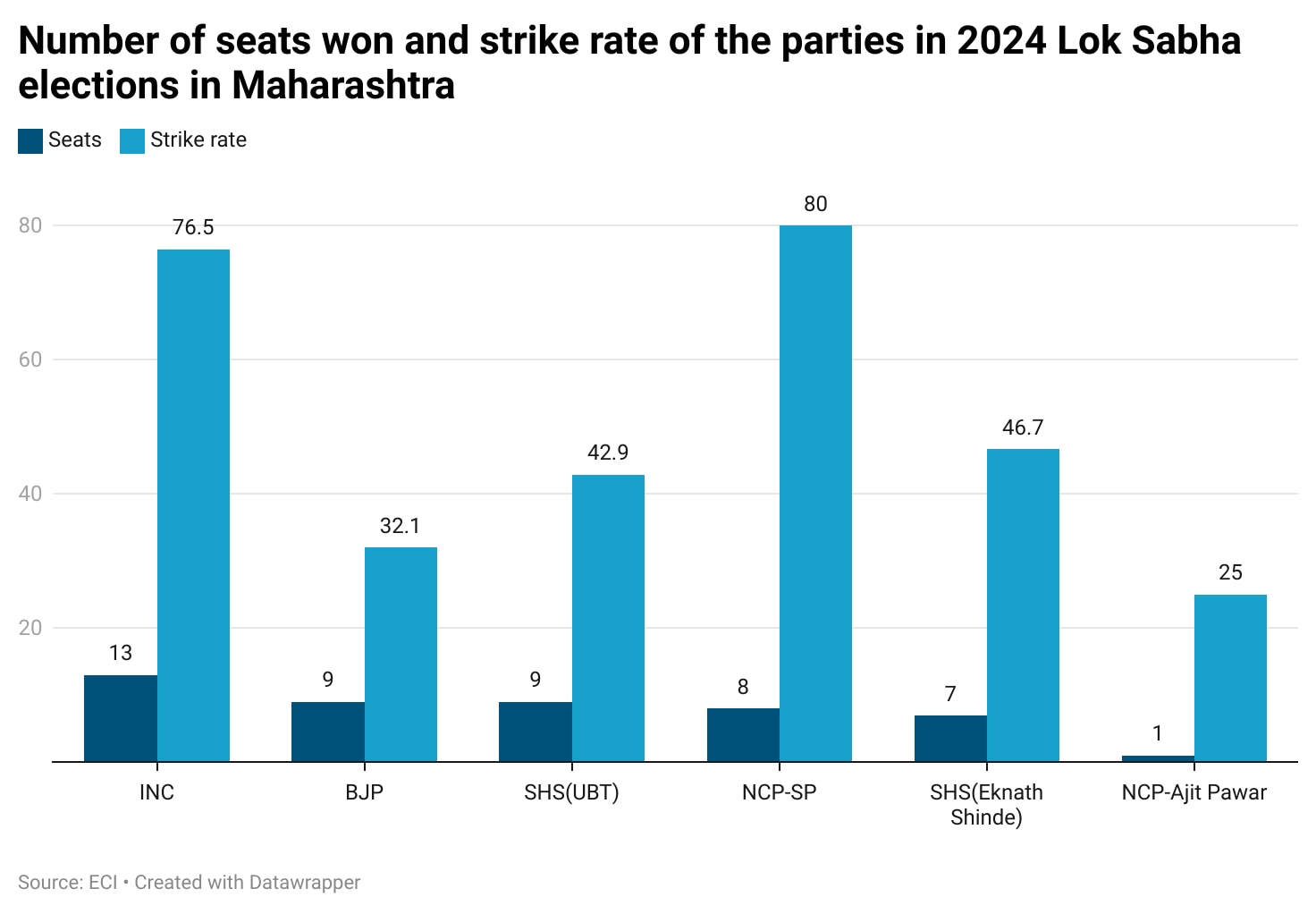
- Maharashtra’s political equation has changed significantly because of splits in Shiv Sena and NCPThis is the most important thing to keep in mind. In Maharashtra, the two factions of Shiv Sena and NCP will be contesting their first assembly elections after the split in the parties. In the 2024 Lok Sabha elections, the Sharad Pawar faction of the NCP had a much better strike rate than the Ajit Pawar faction, while the Shinde faction of the Shiv Sena (7 seats won) was ahead of the Uddhav Balasaheb Thackeray faction (9 seats) in terms of strike rate. It remains to be seen whether these factions can retain their Lok Sabha performance and whether the alliances led by the Congress and BJP keep the Lok Sabha performance in mind while deciding on the seat-sharing formula.
- Will alliances help the BJP win back Jharkhand?Unlike the 2019 assembly elections, the BJP is likely to contest these elections in an alliance with other NDA partners. Will this help the BJP win back Jharkhand? The answer might not be straightforward. That the JMM and the Congress were together in an alliance in 2019 unlike in 2014 was a big factor in nullifying the BJP’s 2014 advantage in Jharkhand. This is a factor that will not change in 2024. Also, the BJP saw a marginal drop in its contested vote share in the 2019 elections compared to 2014, which suggests that anti-incumbency and not just alliance politics could have played a role in its 2019 loss. That the then BJP chief minister Raghubar Das lost his own seat in the 2019 elections was a key indicator of this anti-incumbency. Whether the headwinds from anti-incumbency will hurt the JMM-led alliance is the key question in these elections.