E-Paper



Number Theory: Understanding the rising danger of GLOF disasters
A GLOF is a flood that happens when a moraine (dam formed by debris deposited by glaciers) bursts, leading to a sudden, very large discharge of water downstream
Published on: Oct 6, 2023, 09:04:24 IST


Share via


Copy link

The flash floods of October 4 in Sikkim were the result of a glacial lake outburst flood (GLOF) at Lhonak Lake. Multiple reports had flagged Lohnak Lake’s high vulnerability to the GLOF-like event. While the fact that such warnings were not heeded is bad enough, what is worse is the fact that at least two man-made factors, namely global warming inflicted extreme rainfall events and human encroachment of floodplains will significantly increase the risks of GLOF-like disasters in the future. Here are three charts which explain this in detail.

Understanding the rising danger of GLOF disasters
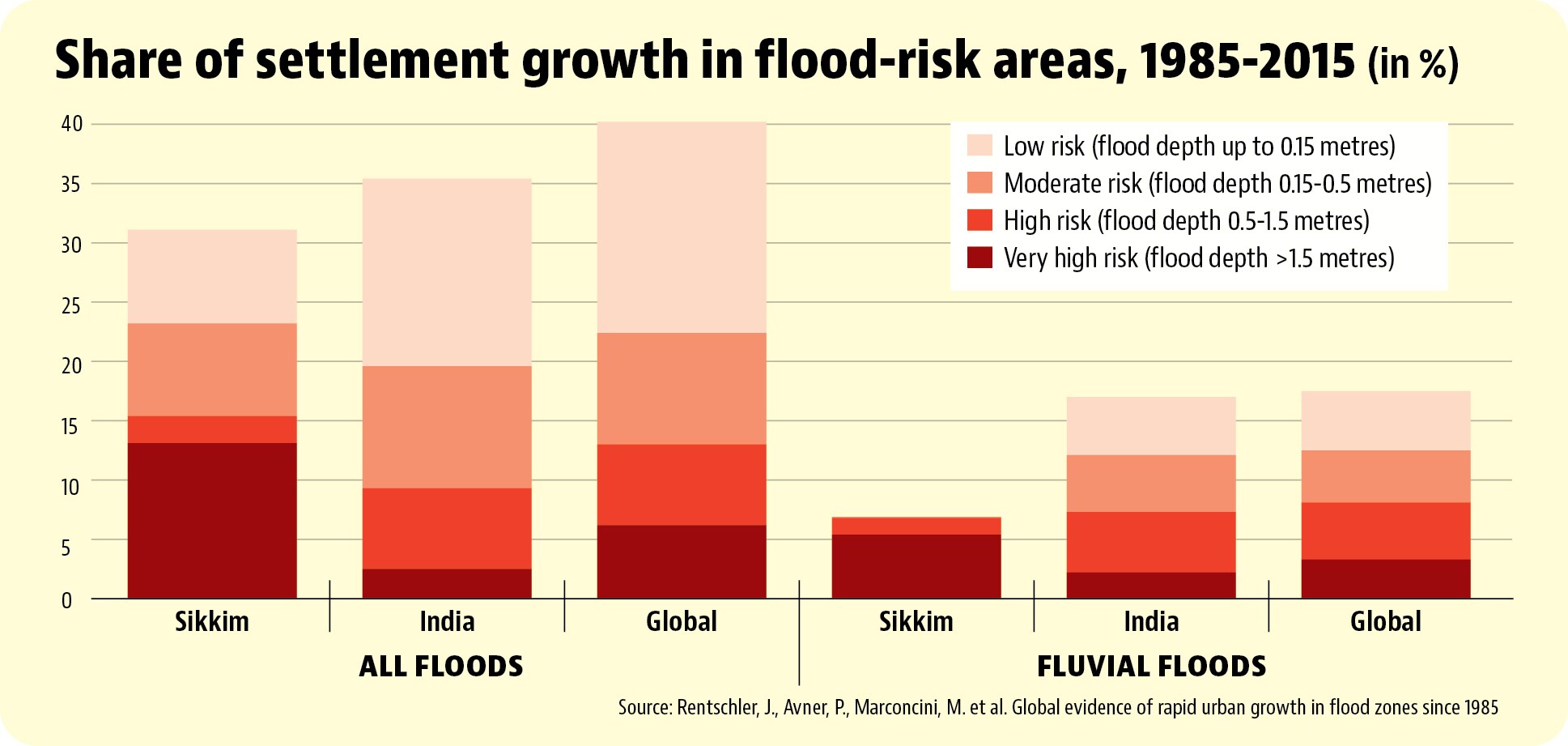
 Sikkim's new settlements concentrated in ‘very high’ flood risk areas – more than most statesA study published in Nature on October 4 (“Global evidence of rapid urban growth in flood zones since 1985”) has looked at the growth of settlements in flood-prone areas between 1985 to 2015 at the sub-national level across countries. The more such growth is, the more the damage to life and property from a flood. The paper shows that 35% of new settlements which have been developed in India during this period have come up in flood-risk zones. This number is 40% at the global level. In Sikkim’s case, this number is 31%, which is lower than both the global and India average. To be sure, the Nature paper also classifies these flood zones by low, moderate, high and very high flood risks. The basis of this classification is flood depth. For example, regions which are vulnerable to a flood depth of 1.5 metres have been classified as very high risk. It is here that Sikkim has a big cause for concern: 13% of new habitations in Sikkim have come up in very high flood risk zones, which is significantly higher than the global and all-India average of 6.2% and 2.5% respectively. Even for fluvial floods – those specifically caused by rivers flowing as opposed to coastal floods or by poor drainage – of “very high” hazard level, Sikkim’s vulnerability is significantly higher than the all-India average.
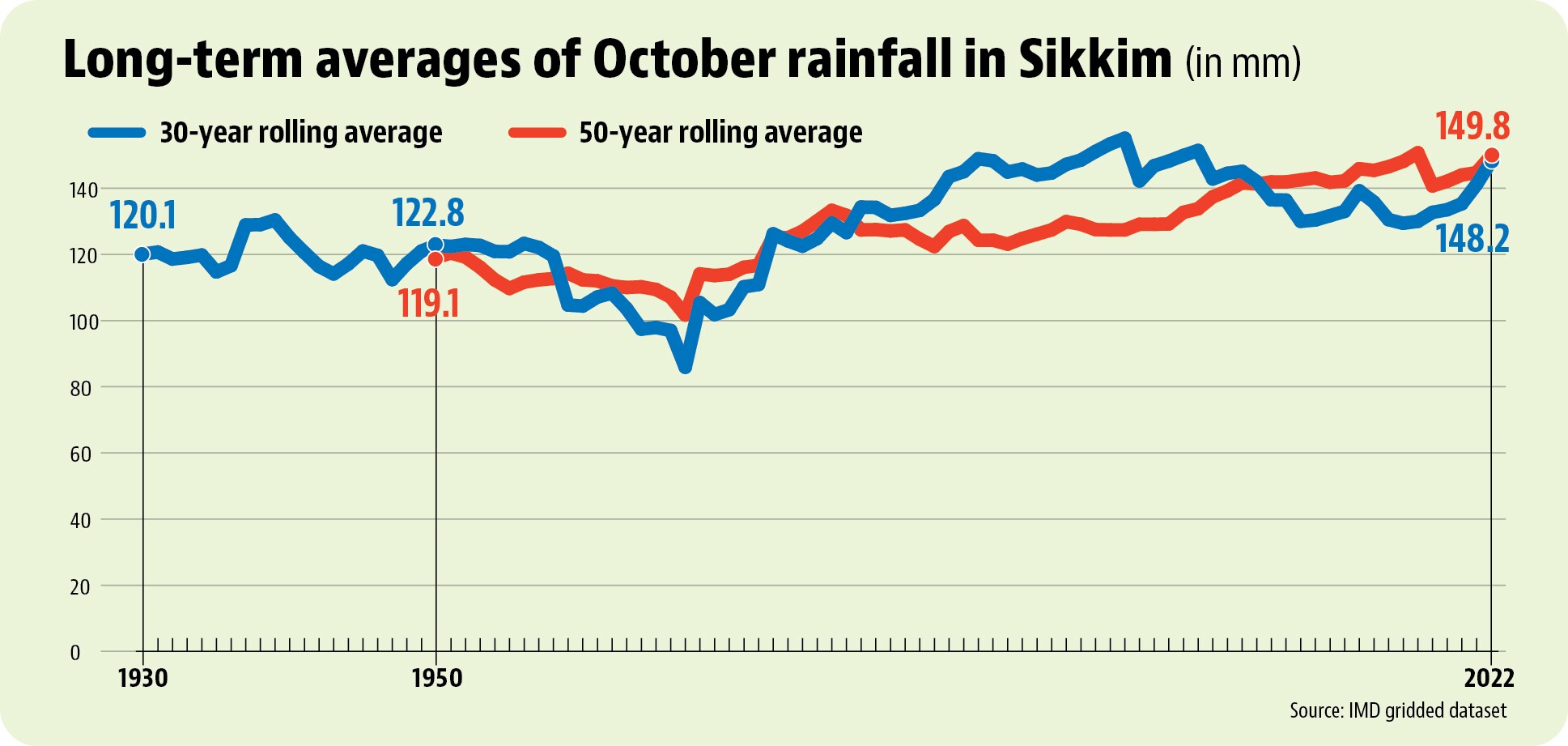
- Sikkim is experiencing one of the rainiest October months in recorded historyAs HT reported on October 5, India Meteorological Department’s gridded dataset does not allow us to track the amount of rainfall at the exact location of the GLOF. This is because the geographical distribution of rain over hills can be very uneven, requiring a dense network of weather stations that Sikkim does not have. Despite these difficulties in measurement, records show that the October so far is the eighth rainiest since 1901 in the state, the earliest year for which IMD has published gridded data. Rain on October 4 – IMD publishes data for 24-hour periods ending at 8.30am of the date – was fourth highest since 1901 for the day. Is October expected to be rainy in Sikkim? Not if things were usual, as October is only the seventh rainiest month of the year in the state according to the 1961-2010 average, a benchmark for rain. This would make people believe that flooding risk should actually be very low at this time of the year. However, long-term data suggests that October has indeed become rainier over time in the state.
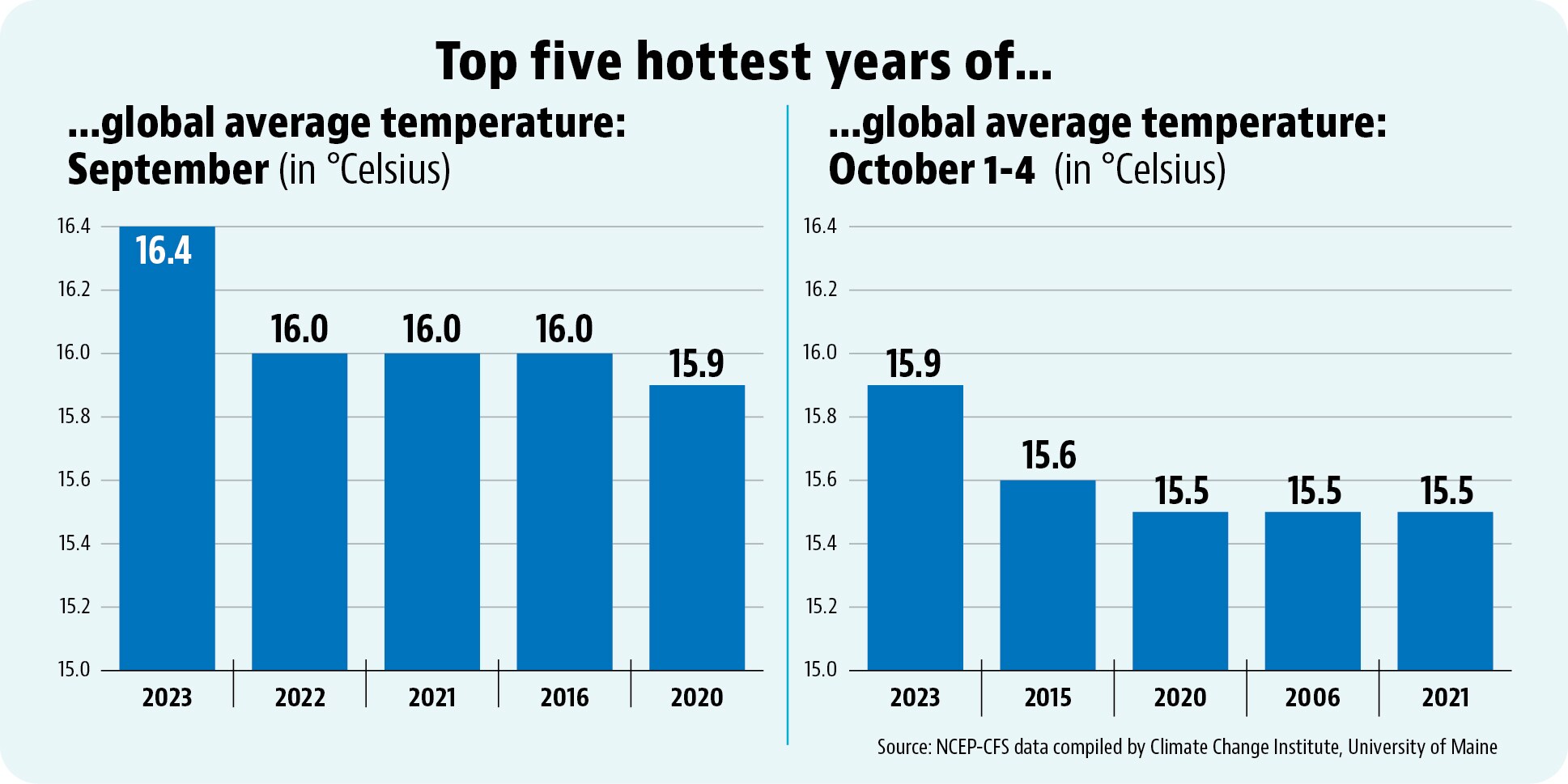
- GLOF-triggered floods could become more common if global warming continuesPerhaps it is the rarity of such floods (technically a once-in-100-year flood has a 10% probability of occurrence in a decade) that encouraged governments to develop Sikkim in blatant disregard of the risks involved. However, these risks are likely to only increase over time if the world keeps warming like it has in 2023. Not only was the June-August (this is considered the northern hemisphere summer and is important because most humans live here) global average temperature the highest ever this year, it was also far ahead of previous records. The second and fifth hottest June-August temperatures are 0.07 degrees Celsius apart while 2023 was warmer than the second hottest year (2022) by 0.21 degrees, according to NASA’s temperature records. This trend has not stopped after August. An experimental dataset of daily temperatures shows the trend continuing in September and October. For example, September’s average temperature this year was 0.47 degrees higher of the second warmest September (2022), when the second and fifth years are separated by only 0.02 degrees. Clearly, an acceleration in global warming will only make any place downstream of glaciers prone to disasters like the one in Sikkim this week.