E-Paper



Odisha orders weekend shutdown in urban areas amid all time high Covid surge
Odisha’s Sundargarh district reported 673 positive cases on Tuesday, a few less than the 722 registered on Monday, when the test positivity rate (TPR) in the district touched 26.8. The number of cases in Khurda however shot up drastically to 820 on Tuesday from 587 recorded on Monday.


Odisha on Monday announced a weekend shutdown in all urban areas starting April 24 after reporting 4,445 new Covid-19 cases-- a record for a single day. A day later on Tuesday, the grim record was surpassed with 4,761 new infections, further justifying the new restrictions on operation of schools, interstate transport and public gatherings announced a day earlier, when a decision to augment the state’s patient-handling capacity was also taken, said officials
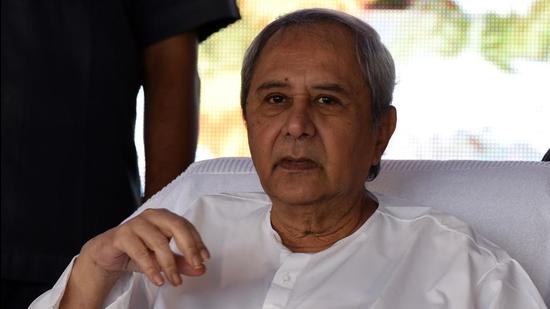
“It is seen that the number of Covid-19 cases are showing an increasing trend in the state. Therefore, the state government has decided to impose weekend shutdown in all urban areas across the state from April 24,” said special relief commissioner Pradip Jena on Monday.
Currently, a weekend shutdown is being enforced in urban areas of 10 districts including Sundargarh, bordering Chhattisgarh. Sundargarh district reported 673 positive cases on Tuesday, a few less than the 722 registered on Monday, when the test positivity rate (TPR) in the district touched 26.8. The number of cases in Khurda however shot up drastically to 820 on Tuesday from the 587 recorded on Monday.
The surge in cases was being fuelled by a statewide TPR of 14.71 recorded on Tuesday, up from 12.28 on Monday, and also the reproductive number or R0 of 2.39. TPR is the ratio of tests performed to cases confirmed and the R0 or the reproductive number is an indication of the transmissibility of a virus, representing the average number of new infections generated by an infectious person. For R0 > 1, the number infected is likely to increase, and for R0 < 1, transmission is likely to die out.
The health authorities say the situation is very unpredictable. “We initially thought the peak of the second wave in Odisha would come by April 25. But now, it seems no one can predict for sure. None of the health experts know when the peak will come. Today the cases surged to more than 4,500, tomorrow it can go beyond 5,500. We just don’t know how the double mutant strain (of the virus) is behaving,” said PK Mohapatra, additional chief secretary (health) of Odisha.
The state government on Monday stopped interstate bus movements. Intrastate transport is allowed as long as the number of passengers doesn’t exceed the seating capacity and everyone wears masks, according to an official statement.
For weddings, organisers have been told to submit a list of no more than 50 invitees to local administration 24 hours in advance. The list has to be displayed at the marriage venue as well, the statement said.
In schools, 50% of teaching and non-teaching staff have been permitted to perform important functions such as admissions, distribution of books, monitoring of mid day meal programmes etc.
On the positive side, there was no scarcity of Covid-19 beds in hospitals in the state. Director of public health Niranjan Mishra said only 17.43% of the total Covid-19 beds, including ICUs and ventilators, were occupied till now in both government and private healthcare facilities in the state.
Of the 24,578 active cases, 2,059 patients were currently under treatment in various hospitals including 945 in government healthcare facilities. 424 patients were in ICUs and 59 were on ventilator support, according to the daily Covid-19 bulletin released by the state.
Currently, 7,432 general Covid-19 beds are lying vacant in Odisha including 3,887 in private and 3,545 in government hospitals. Similarly, 1,594 ICU beds including 1,174 in private and 420 in government hospitals and 723 ventilators including 562 in private and 161 in government hospitals are currently unused.
Mishra said the number of beds for Covid-19 patients is being increased up to five times compared to last year. In Bhubaneswar, more private hospitals are being added to the list of Covid-19 hospitals. Nilachal and hi-tech Covid-19 hospitals become operational on Monday and Blue Wheel will become operational from Tuesday. Sparsh and KIMS Covid-19 hospitals too will soon start operations, the officer said.