E-Paper



Odisha’s Dongaria Kondhs reject Covid tests, cases rise among vulnerable tribals
The Dongaria Kondhs live in Odisha’s 36 villages under Kalyansinghpur block of Rayagada district and many of them were infected with Covid-19 while selling their produce in daily vegetable markets.


As Covid-19 spreads to at least 61 vulnerable tribal groups in the hinterlands of Odisha, the Dongaria Kondh tribals are resisting testing for the disease, officials said.
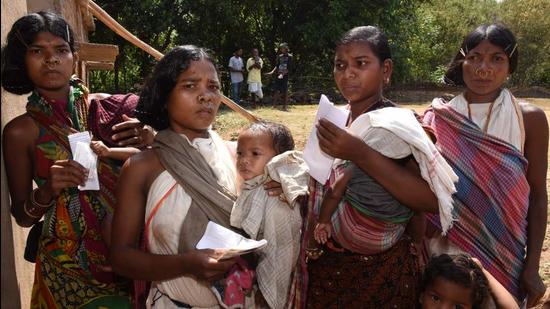
After 19 Dongaria Kondh tribals-- one among the state’s 13 particularly vulnerable tribal groups (PVTG) tested Covid positive-- a medical camp was set up at Parsali on the foot of Niyamgiri hills for their mass testing. However, not a single tribal turned up with their leader telling the state government officials that they don’t trust the medical system.
“We have talked to the head of the community and another round of discussion will be held. We will come tomorrow again for sample collection,” said Kalucharan Nayak, Kalyansingpur BDO (block development officer).
The Dongaria Kondhs live in 36 villages under Kalyansinghpur block of Rayagada district and many of them were infected while selling their produce in daily vegetable markets.
A community leader, who heads the Niyamgiri Suraksha Manch, Sakaka Ulaka said there was no point in testing for a disease that does not exist. “Nothing will happen to us as we worship Niyam Raja,” said Ulaka. Niyarmraja is the traditional deity of the Dongaria Kondhs.
Officials and researchers said they may reject vaccination too. “They have their own belief system. They would rather believe in Dishari and Bejuni, their priests, than the modern medical system. As a tribal researcher working in a central government project, I have found it difficult to win their trust,” said PC Mohapatra of Koraput-based Council of Analytical Tribal Studies.
Among the hundreds of tribal communities in the country, PVTG groups are more isolated, archaic, vulnerable, deprived and backward. They have been classified separately to ensure they get special attention.
Since April, at least 61 PVTG members including Bondas, Dongaria Kondhs and Kharias have been infected with Covid-19 in Odisha. While 26 Bondas in Malkangiri district have tested positive, at least 16 Kharia tribals living inside Similipal biosphere of Mayurbhanj district too have tested positive.
Dr Uttam Dash, a member of the quick response team said the tribals were being sensitised about the importance of social distancing and masks. “Many of the infected are in home isolation, but stable,” he said.