
 E-Paper



Onions shipped by rail from Nashik to Delhi
The government is likely to use more rail rakes to transport onions and other commodities to regions where grocery prices continue to be elevated amid anticipated higher demand in the run up to Diwali.


The Centre is moving 1600 tonnes of onions procured from Nashik on priority to the national capital territory by rail to alleviate shortages and stabilise prices, a senior official said on Thursday.
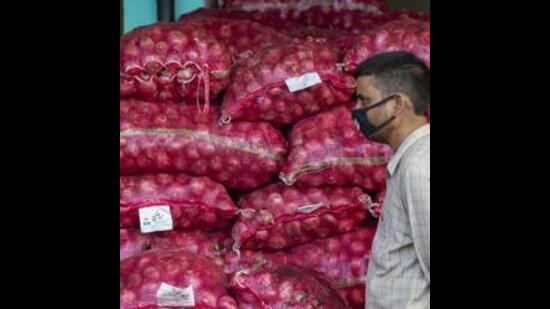
The government is likely to use more rail rakes to transport onions and other commodities to regions where grocery prices continue to be elevated amid anticipated higher demand in the run up to Diwali.
The onions, equivalent to 52 truckloads, are being shipped by the National Cooperative Consumers Federation of India Ltd. (NCCF) under the Centre’s price stabilisation fund on the Kanda fast train from Nashik to Delhi NCR.
“Shipments by rail rake to Lucknow and Varanasi will be scheduled in next few days. The consumer affairs department has also requested Indian railways to facilitate transportation of onion rakes from Nashik to multiple locations across the north-eastern region,” said Nidhi Khare, Union consumer affairs secretary.
The onion shipment for Delhi-NCR is scheduled to arrive by October 20 and will be sold at ₹35 a kg, while market prices range between ₹60-65 a kg.
In September, retail inflation rose to a nine-month high of 5.49%, driven by a food inflation rate of 9.24%, mainly on account of costlier vegetables.
Bulk transportation of onion by rail rake is a “significant measure” to ramp up supplies and rail mode provides a cost-effective and expeditious transportation of onions to consuming centres, Khare said.
The world’s largest onion exporter banned overseas sales in December last year to boost domestic supplies after patchy rains in key states led to a 20% fall in output. Shipments were allowed on May 4, 2024 but with an MEP (minimum export price) of $550 per tonne plus 40% tariff. The MEP was also scrapped last month.
In 2023-24, the net value of onion exports stood at ₹3,513 crore, lower than ₹4,525 crore in the previous year. In 2023-24, Bangladesh imported 724,000 tonne of the bulb from India.


