
 E-Paper



Order on institutional isolation for all Covid-19 patients in Delhi scrapped
Asymptomatic and mild Covid-19 cases in Delhi are lodged in home isolation after surveillance officers assess the homes of such patients and institute a monitoring mechanism.


The Delhi Disaster Management Authority (DDMA) on Saturday rolled back its controversial order to mandatorily quarantine even asymptomatic and mild coronavirus disease (Covid-19) cases at institutional facilities for five days, in a move that was welcomed by the Delhi government and experts, who said the directive would have overwhelmed the Capital’s health care infrastructure.
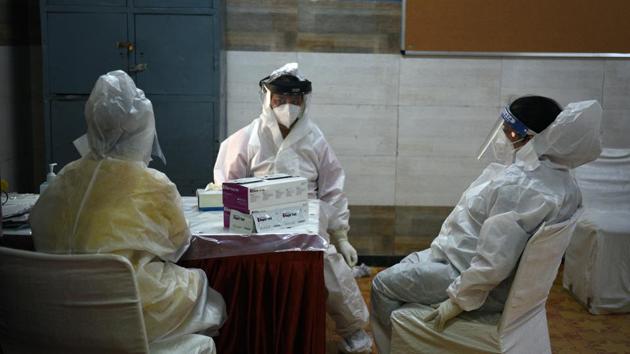
Delhi lieutenant governor Anil Baijal, who heads DDMA, issued the order on Saturday, with experts saying that thousands of additional patients at hospitals would strain the Capital’s health infrastructure, result in a shortage of health care workers, militate against people getting tested, and throw Delhi’s long-term strategy out of gear.
“Regarding institutional isolation, only those COVID positive cases which do not require hospitalisation on clinical assessment & do not have adequate facilities for home isolation would be required to undergo institutional isolation,” Baijal tweeted on Saturday, about 24 hours after ordering the change in the guidelines. The LG, however, said that all Covid-19 patients will have to be referred to Covid Care Centres (CCCs) for assessment of their clinical conditions, severity of illness and presence of co-morbidities.
In another tweet, he said DDMA approved the recommendations of a high-level expert committee for fixing subsidised rates for Covid-19 treatment at private hospitals of Delhi. Delhi deputy chief minister Manish Sisodia said 100% Covid-19 beds in private hospitals will be subsidised up to an upper limit of 60% of the total hospital capacity.
Asymptomatic and mild Covid-19 cases in Delhi are lodged in home isolation after surveillance officers assess the homes of such patients and institute a monitoring mechanism. As of Saturday night, 12,611 Covid-19 patients were in home isolation, according to the official bulletin.
On Saturday morning, Delhi’s ruling Aam Aadmi Party (AAP) said that a move to scrap home isolation for all cases would mean that the Capital needed 90,000 Covid-19-designated beds by June 30. The previous prediction was that Delhi needed 15,000 beds by June 30, the AAP’s national spokesperson Raghav Chadha said. “People in my assembly called me and told me that we will not get tested now. People are that scared… From where will we get these (additional) beds?” he said, hours before the order was rolled back.
Later in the day, Delhi chief minister Arvind Kejriwal opposed Baijal’s order, asking why a separate rule was being applied for the city, according to people aware of the developments.
A senior government official present at the meeting said the chief minister, through video-conferencing, told the LG that if institutional quarantine was made mandatory for all, there would be chaos in the city and the focus would shift from treating serious Covid-19 patients to finding additional facilities for asymptomatic ones, since they make up a high number.
While a meeting of DDMA could not arrive at a consensus on the fate of the order earlier in the day, another round of discussions in the evening resulted in the home isolation strategy being restored.
At the second meeting, the LG stated that since the government began intensive community-based rapid antigen testing, it was possible that individuals who were positive may have moderate to severe illness, necessitating hospitalisation, which can be missed if they remain under home isolation.
Baijal said that if adequate facility for home isolation is found available with Covid-19 patients, and the people on clinical assessment do not require hospitalisation, then they would also be offered either a stay at CCCs or at paid isolation facilities such as hotels.
“Those who are in home isolation should follow home isolation guidelines laid down by the Ministry of Health and Family Welfare and should stay in touch with health care providers so that if their condition deteriorates, they can be moved to the COVID hospitals. The earlier orders would be amended accordingly,” the LG office said.
“To prevent this from happening, all individuals who are positive will be referred to the Covid Care Centers for assessment of clinical conditions, severity of illness and presence of co-morbidities. Simultaneously, physical assessment will also be done whether adequate facilities for home isolation like minimum two rooms and separate toilet exists so that the family members and neighbors are protected and a cluster of cases does not develop in that locality,” a statement by the LG’s office said.
After the evening meeting, Sisodia tweeted: “The reservations of LG over home isolation were resolved in the SDMA meeting and the home isolation system will continue. We thank LG for this. Under the leadership of our Chief Minister Arvind Kejriwal, we will not let Delhi people have any inconvenience.”
In a statement, the Delhi government said: “CM Kejriwal explained the Delhi government’s position to the LG and clarified all the doubts which the LG had about home isolation. We are thankful to the LG for amending his earlier order after considering all our points. A private agency was managing the home isolation programme of the Delhi government via tele-consultation in a professional manner. They were taking care of on-boarding the patient followed by their home-isolation training, medical counselling of patient and family and day-to-day tracking of symptoms. An emergency phone number was given to all patients in case of any escalation of symptoms. If the patients’ symptoms were severe, they were immediately shifted to a hospital. The LG has now asked the health department to make a detailed presentation and submit a concrete proposal to the DDMA on managing the entire process in-house or any other plans for the same before 12pm on Monday. Till then, the service of the said agency has been restored.” The DDMA order on Friday discontinued the services of the company hired to manage the home quarantine, Portea Medical, which contacted individuals through phone calls.
According to the government’s June 20 bulletin, 6,285 of its 12,208 Covid-19 hospital beds were vacant, and 4,965 beds were available (out of 6,249) in Covid care and health centres.
While issuing the original order, which was called arbitrary by the Delhi government, DDMA said that it feared “home isolation without physical contact to monitor the patients may be a reason for the increase in the spread of Covid-19 infections in Delhi”. Total infections reached 56,746 on Saturday.
Home quarantine for patients has been approved by the Union government as an effective way to preserve health care infrastructure for future challenges, under certain guidelines.
To be eligible for it, a Covid-19 patient must fulfil seven criteria, according to a Union health ministry circular issued on May 10. One, they should be clinically declared as mild or pre-symptomatic by a treating medical officer; two, they should have requisite facility at home to be self-isolated and for quarantining family contacts; three, a caregiver should be available for 24x7 care and should be in direct contact with a hospital; four, the caregiver and other family contacts should take hydroxychloroquine as a prophylaxis; five, the patient should download the Aarogya Setu app and keep it active at all times; six, they should monitor their health and regularly inform the status to designated surveillance officers; and seven, give a written undertaking that all these guidelines will be followed.
On June 19, the health ministry reiterated these guidelines while writing to all states asking for their strict adherence and saying that some states were not following them in “letter and spirit”.
The Delhi government’s home isolation management system was launched on May 8. The first 5,000 patients were onboarded in Delhi government’s home isolation system on May 26.
According to experts, hospital beds should be kept aside only for serious patients needing specialised care. Most countries in the world recommend home isolation for mild cases. Experts also point to the risks of infections from crowded quarantine facilities.
Experts also said that if all cases were to be admitted to institutional facilities in the Capital, the authorities would have to find additional doctors, nurses and health workers. HT reported on Wednesday that the plan to add 23,800 beds this month for Covid-19 patients will require roughly 2,000 doctors and 3,000 nursing staff.
To add to the shortfall, several health care workers testing positive are going into quarantine on coming in direct contact with Covid-19 patients.
On Friday, the announcement by the central government was criticised as “arbitrary” by the state government, which pointed out its success in running a home quarantine programme and the challenges that will come with adding “thousands of quarantine rooms and finding additional doctors and nurses and health workers” to manage these facilities.
Saturday’s move was welcomed by residents and experts.
Iqbal Singh Chahal, commissioner of the Brihanmumbai Municipal Corporation (BMC), said: “A rollback was expected because in cities such as Mumbai and Delhi you need to have solutions that are localised… For the middle and upper middle class people, we give them choices of either opting for paid quarantine or observing home isolation. So, a one-size-fits-all rule cannot be enforced on the ground in reality.”
Rajiv Kakria, member of the GK-I Residents’ Welfare Association, said that it was a welcome step. “I would still say that instead of mass open quarantine centres, the government must use facilities like hostels, dharamshalas or state guest houses, which have separate rooms and toilets for people to help them keep safe from exposure to severe infection… We have also written to the government regarding this,” said Kakria, also convener of the Save City Group, a collective of Delhi-NCR RWAs.


