
 E-Paper



Paddy sowing: Haryana’s initiative to save groundwater falls flat
The Haryana government’s efforts to save groundwater with ‘direct seeding of rice’ (DSR) method of paddy sowing have failed to achieve the targets due to lack of support from farmers.


The Haryana government’s efforts to save groundwater with ‘direct seeding of rice’ (DSR) method of paddy sowing have failed to achieve the targets due to lack of support from farmers.
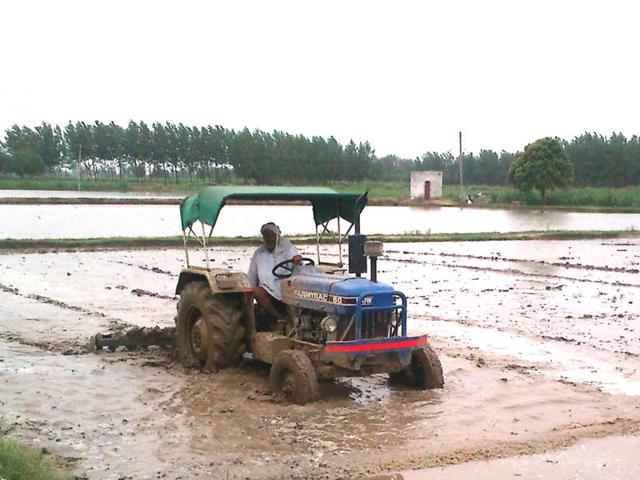
Though the DSR technique helps reduce the production cost by 10-15% and consumes 40-50% less water than the conventional method of transplantation, farmers are showing poor interest in this method and the officials of the agriculture department have failed to achieve their set targets.
The government has been taking steps to encourage farmers to adopt this technique but the farmers feel insecure saying that it is ‘risky’, especially for the small farmers as they fear crop loss through this method.
“This technique has failed due to low production while uncontrolled weeds are another major problem associated with it. The technique increases the production cost as well,” said Mohan Lal, a paddy grower.
Even the officials of the state agriculture department also admit that there are some flaws in this method.
“We could sow only 1,300 acres of paddy under this technique this year against a target of 4,000 acres, whereas last year, we planted 1,600 acres of paddy with this technology”, said Wazir Singh, deputy director, agriculture, (DDA), Kurukshetra district.
UNCONTROLLED WEEDS MAJOR ISSUE: OFFICIAL
Asked as to why the government’s drive failed to attract farmers, he said, “Though it helps to save groundwater and helps maintain fertility of soil, the uncontrolled weeds is a major issue and also the production also remained almost equal to the conventional method.”
Similarly, Pardeep Singh Meel, DDA of Karnal district, said, “We could sow 3,000 acres under this method against 4,000 acres in the district this year. More efforts are required to promote this technique and it will take more time.”
However, agriculture experts said the DSR method was the need of the hour, especially in the paddy sowing areas of Karnal, Kurukshetra, Yamunanagar, Kaithal and Ambala districts to deal with the issue of depleting groundwater, as about 40% of all irrigation water goes to paddy cultivation in the region.
Besides saving 50% groundwater, this technique also helps in saving up to 27% of diesel, 35 to 40 man days in maturing of crop, besides enhancing fertiliser efficiency due to placement of fertiliser in the root zone and causing little disturbance to soil structure.
“But due to lack of proper awareness campaign, the farmers not interested in this technique. Also, more steps are required to increase production and reduce growthof weeds,” said a senior official of the agriculture department.


