E-Paper



Pakistan reiterates its offer to host Saarc Summit, then throws darts at India
Pakistan foreign minister Shah Mahmood Qureshi said Saarc was an “important forum” and accused India of making “this forum dysfunctional because of its stubbornness.

 Prefer HTon Google


NEW DELHI: Pakistan on Monday reiterated its offer to host the long-pending summit of the South Asian Association for Regional Cooperation (Saarc), with foreign minister Shah Mahmood Qureshi saying India can attend the meet virtually if it does not wish to participate in person.
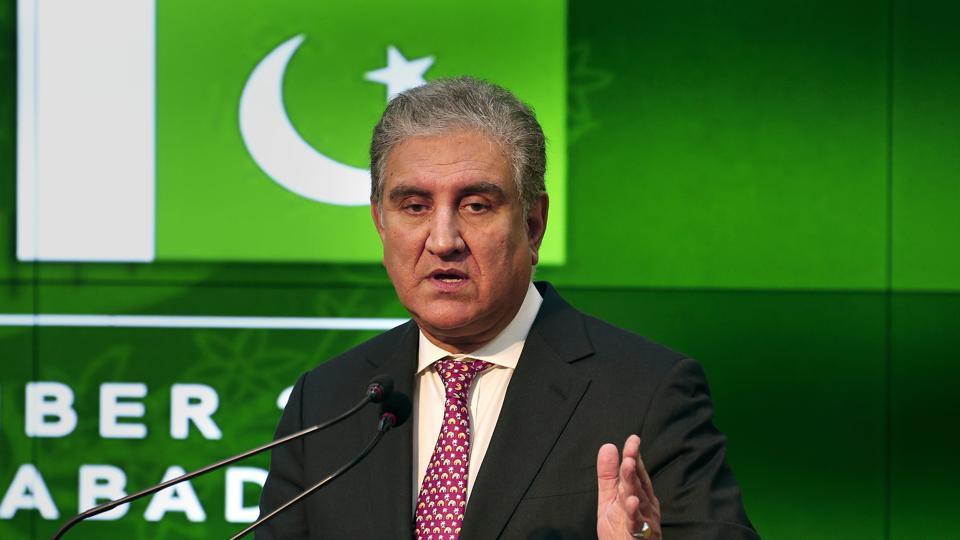
Qureshi made the remarks while addressing a news conference in Islamabad, where he presented a review of Pakistan’s foreign policy during 2021. He reiterated Pakistan Prime Minister Imran Khan’s remarks that the onus is on India to take steps to create an environment conducive to dialogue between the two sides.
The 19th Saarc Summit was to have been held in Islamabad in November 2016 but was called off after New Delhi pulled out over the Uri terror attack that was blamed on Pakistan-based terrorists. There is also uncertainty about the status of Afghanistan, one of the eight members of the grouping, following the Taliban takeover of the country last year.
Qureshi, who was speaking in Urdu, described Saarc as an “important forum” and said: “Unfortunately, India has made this forum dysfunctional because of its stubbornness. They are not ready to come to Islamabad, they are hesitant.”
He added: “Because of India’s obstinacy, this forum is suffering. If India does not want to come [for the Saarc Summit], then new means are available. I reiterate our invitation to all Saarc members and Pakistan is willing to host the 19th Saarc Summit in Islamabad. If India doesn’t want to come, they can attend virtually.”
Qureshi further said, “If they [India] have problems coming here physically, they can attend virtually but they shouldn’t stop others. They should let others come and not affect this forum.”
There was no immediate response by Indian officials to Qureshi’s comments.
Saarc operates on the principle of consensus and the summit cannot be held if even one member decides not to attend. With India-Pakistan relations at an all-time low following a string of terror attacks blamed on Pakistan-based groups, New Delhi has said there cannot be any dialogue between the two sides if Islamabad does not act against terrorist groups operating from its soil.
In recent years, India has also focused on other regional groupings, such as the Bay of Bengal Initiative for Multi-Sectoral Technical and Economic Cooperation (Bimstec) to take forward developmental cooperation.
Qureshi further told the news conference that prospects for durable peace and stability in the region and the potential for economic development and regional cooperation had been “held hostage by the hegemonic and hostile behaviour of India”, whose leadership has adopted a “particularly irresponsible and politically motivated anti-Pakistan posture”.
He contended that India’s “unilateral and illegal actions” in Jammu and Kashmir since August 2019 had “vitiated the environment and threatened international peace and security”. Qureshi said, “Resolution of the Jammu and Kashmir dispute is a prerequisite for durable peace and stability in South Asia.”
He added that Pakistan will continue to extend “moral and diplomatic support” to the Kashmiri people in their struggle for self-determination.