
 E-Paper



Pakistan ceasefire violations doubled in 2018 as bloodshed hit 10-year high
Terrorist violence in Jammu and Kashmir is at levels not seen in a decade: 614 attacks in 2018 with 38 civilians and 257 Islamic extremists killed.


Ceasefire violations along India’s border with Pakistan and the Line of Control (LoC) in Kashmir more than doubled in 2018 from the previous year to reach the highest this decade, according to data compiled by India’s security and military establishment.
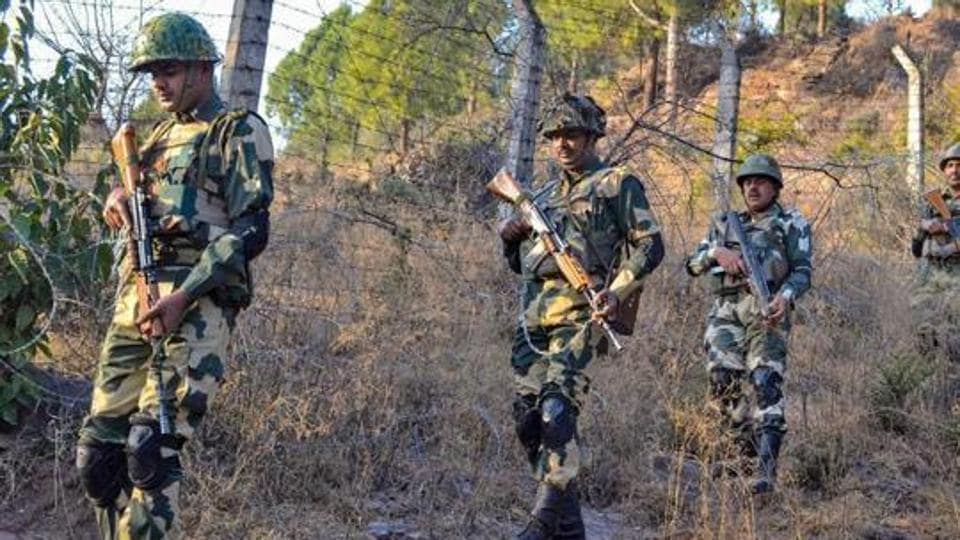
The ceasefire violations, with increased Pakistan sniper activity, touched 2,140 last year, increasing from 971 in 2017 and 449 in 2016, according to the data seen by HT. This led to a decadal high of 30 civilian casualties and 29 casualties among security personnel manning the border with Pakistan and the LoC.
Every Tuesday, for the past three Tuesdays, India’s Director General of Military Operations (DGMO) has red-flagged a massive escalation of ceasefire violations along the international border and the LoC to his Pakistani counterpart. This isn’t new, but indicates no change in Islamabad’s approach under a new government, with Indian security officials saying all monitored parameters have touched all-time highs. The Pakistan DGMO, on his part, and as in the past, has flatly denied all charges.

Analysts say the Imran Khan government may have been emboldened by the lowering of pressure from the US as the latter needs Islamabad when it exits from Afghanistan. That the US needs Pakistan to start the peace and reconciliation dialogue between the Taliban and the Ashraf Ghani government was evident during the meetings between US Special Envoy on Afghanistan, Zalmay Khalilzad,and Indian interlocutors including NSA Ajit Doval on January 10-11. According to officials familiar with the matter, the Indian side made it clear to the US interlocutor that its humanitarian assistance to Afghanistan was linked to Kabul containing terrorism and that New Delhi would explore other options if the peace dialogue is not inclusive and not pro-Afghan. Although Pakistan submitted its risk assessment report on action taken against terrorist groups to the Financial Action Task Force (FATF) at a meeting in Sydney on January 7-8 , Indian security officials say it continues to provide a base for terrorists targeting India.
Terrorist violence in Jammu and Kashmir is at levels not seen in a decade: 614 attacks in 2018 with 38 civilians and 257 Islamic extremists killed. FATF, on its part, found the Pakistan assessment unsatisfactory and asked the Imran Khan government to make required changes in its anti-terrorism strategy before it grants any relief to Islamabad. Adverse action by FATF could have consequences for Pakistan’s already troubled economy with a possible downgrade of Islamabad’s debt ratings and restrictions being placed on how much it can borrow from global monetary institutions.
Chances of Pakistan being downgraded to a black list and be clubbed with Iran and North Korea are, however, remote.
The data shows that cross-border infiltration attempts are the one area in which there has been improvement. While 302 attempts were made by Pakistan-based terrorist groups till November 2018, the figure stood at 397 in 2017 and 371 in 2016 during the same period. Still, there was a spike in infiltration attempts in December and the BSF says there has been no let-up in January. In 2018, 27 Pakistani extremists were killed during infiltration attempts, compared to 59 in 2017 and 35 in 2016. With the PDP and the BJP ending their alliance in June, and the state coming under Governor’s Rule, incidents of stone pelting, often aided and abetted by Pakistani agencies, touched 1,666 till November compared to 1,196 during the same period in 2017. This figure touched an all-time high of 2,808 in 2016.
“ Structurally, Pakistan cannot change its policy towards India. The armed forces, the religious organisations , the political forces and the ideology that created the country will not allow this,” former Indian foreign secretary Kanwal Sibal said . “Imran Khan is a product of these forces.
In the current difficult circumstances, Imran Khan is making soft noises, but these are tactical in nature. China also will not allow a real improvement of relations with India as Pakistan will begin to balance India and China.”
Former Indian ambassador to US and Pakistan expert Arun Singh said : “It is clear that the Imran Khan government remains dependent on the Pakistan army for its stability, including so as to remain in majority with a coalition. Policies on India, US and Afghanistan will be determined by the Army, whatever the sense of formal activism by the civilian establishment. In Afghanistan, the Pakistan establishment is continuing with its policies of supporting the Taliban, as they continue with violent attacks on the ground, even as reconciliation talks are being pursued with the US. On India, the attempt would be to maintain some activity on LoC and in Kashmir, to leverage potential positions post general elections in India.”


