
 E-Paper



Reduce age to contest polls to 18 yrs, says parliamentary panel; ECI disagrees
On common electoral rolls for local and national elections, the parliamentary standing committee led by BJP MP Sushil Kumar Modi advised the government and ECI to proceed with caution

 Prefer HTon Google


NEW DELHI: A parliamentary panel has recommended reducing the minimum age for contesting national and assembly elections from 25 years to 18 years to “enable greater youth participation in decision-making process”.
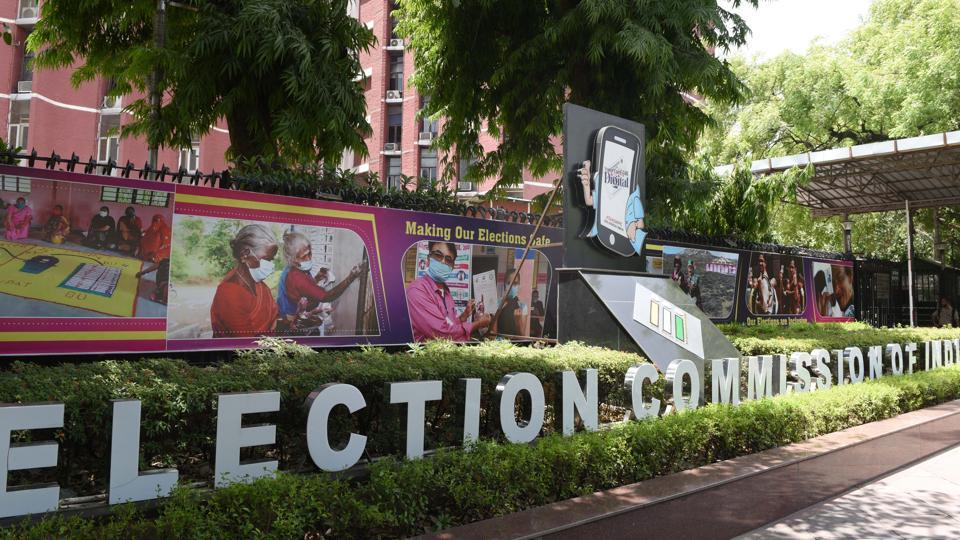
The recommendation was made in the 132nd report on “Specific aspects of election process and their reform’, tabled in the Parliament on Friday, by the department related standing committee on personnel, public grievances, law and justice headed by Bharatiya Janata Party (BJP) leader Sushil Kumar Modi.
“The Committee observes that reducing the minimum age requirement for candidacy in elections would give young individuals equal opportunities to engage in democracy. This viewpoint is reinforced by a vast amount of evidence, such as global practices, the increasing political consciousness among young people, and the advantages of youth representation. After examining various countries’ practices, such as Canada, the United Kingdom, and Australia, the Committee observes that the minimum age for candidacy in national elections needs to be 18 years. These nations’ examples demonstrate that young individuals can be reliable and responsible political participants,” the committee said.
Citing the example of youth-led global campaigns like Fridays for Future (led by climate activist Greta Thunberg) and March for Our Lives (student led campaign by for gun control legislation), the committee said they highlight youngsters’ “capacity to rally and champion critical social and political concerns”.
“The Committee, therefore, suggests reducing the minimum age requirement for candidacy in assembly elections. The Committee believes that this measure can promote a wider range of viewpoints in policy deliberations and results. Additionally, younger candidates can help connect different generations, facilitating discussions and cooperation. This can boost the credibility and faith in the political process,” it noted.
According to the Constitution, the minimum age eligibility to contest assembly or Lok Sabha elections is 25 years. A Rajya Sabha member has to be at least 30.
To be sure, the Election Commission of India (ECI) has not favoured changing the current age requirement for joining Lok Sabha, assembly or legislative councils stating that “it is unrealistic to expect 18-year-olds to possess the necessary experience and maturity for these responsibilities”.
On common electoral roll, something which is being pushed by the union government and the ECI, the parliamentary panel has expressed concern about the potential impact on state powers listed under Chapter IX and IX A of the Constitution of India.
“The Committee therefore suggests that the ECI before taking up the responsibility of preparing the Common Electoral Roll may give due consideration to the constitutional provisions and powers of the States. The ECI may also keep in mind the principles of federalism enshrined under the constitution and the powers reserved for the State Election Commissions under List II Entry 5,” it said.
It observed that “implementing a common electoral roll, as proposed by the central government and ECI, is presently outside the scope of Article 325 of the Constitution”.
This provision stipulates that separate electoral rolls must be used for elections to parliament and the state legislatures.
“The Committee advises the government to proceed with caution, adhere to the principles of federalism enshrined in the Constitution, and carefully assess the potential consequences before taking any action,” it said and asked the ECI to “be careful and avoid overstepping its boundaries into the state’s domain”.
India has two main types of electoral rolls: the general electoral rolls overseen by the Election Commission of India for national and state-level elections, and the separate electoral rolls prepared by the State Election Commissions for municipal and panchayat elections.
In another elections related issue, pertaining to false affidavits by the candidates, the panel recommended increasing the punishment to maximum of two years imprisonment and fine in case a candidate makes false declaration. Under section 125A of the Representation of the People Act, 1951, the punishment for furnishing false information is currently six months.
“However, this penalty should only be applied in exceptional cases, and not for minor errors or unintentional mistakes,” the panel said in its report.
The committee proposed that “intentionally disregarding other requirements, such as the furnishing of information outlined in Section 33A of the RP Act, 1951, as listed in section 125A, should be considered a “corrupt practice”.


