
 E-Paper





Follow the latest breaking news, major developments and agenda-setting stories from India and around the world with the newsdesk at Hindustan Times. Operating round the clock, the desk brings together experienced editors, reporters and correspondents to deliver fast, accurate and contextual reporting across subjects that influence public policy, governance, business, society and international affairs. The HT News Desk covers politics, elections, government policies, the economy, business and markets, science and technology, the environment, law and order, infrastructure, education, climate issues and geopolitics, while closely tracking developments across states, institutions and global capitals. The team also leads coverage of major breaking news events, policy announcements, court proceedings, natural disasters, public emergencies and significant international developments. Reports published by the newsdesk are based on information gathered from reporters on the ground, official statements, government agencies, court records, regulatory filings, recognised institutions and other authoritative sources. Stories undergo editorial scrutiny and verification processes to ensure accuracy, fairness and relevance, and are updated as events evolve and additional information becomes available. Whether covering a key political decision in New Delhi, an economic policy shift affecting millions, a landmark court ruling or a major global event, the HT News Desk aims to provide readers with reliable, fact-based journalism that delivers not only the latest developments but also the context and analysis needed to understand their wider implications.
Participative governance must reach panchayat level, says Prasad
MyGov platform provides an opportunity to citizens and all stakeholders from across the world to share their views on key governance issues across all stages by directly engaging with the government departments, policy makers and implementers.


The central government’s e-governance feedback initiative, MyGov, is now likely to be extended right up to the panchayat level to help improve local participative governance.
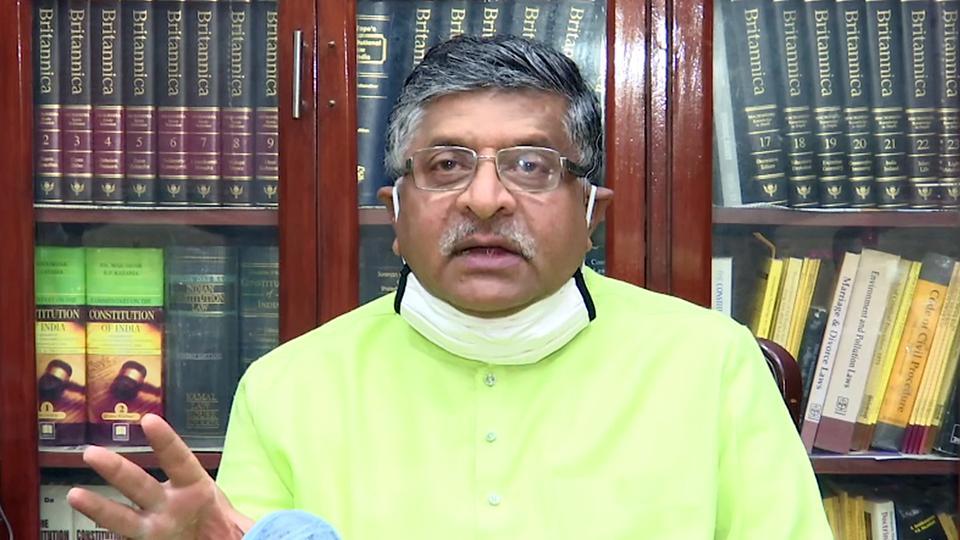
MyGov platform provides an opportunity to citizens and all stakeholders from across the world to share their views on key governance issues across all stages by directly engaging with the government departments, policy makers and implementers.
Speaking at the eve of the completion of six years of MyGov, which was launched on July 26, 2014, information technology (IT) minister Ravi Shankar Prasad on Sunday commended the efforts of the team involved with MyGov in improving participative governance across the country.
“The MyGov movement must go forward,” Prasad said. “12 states have already joined it. It represents a model of participative governance that must reach the gram panchayat level.” He added that the intiative should act as a be catalyst for giving a platform to the most talented minds to share their ideas.
MyGov also launched the Saathi Chatbot this April, in the wake of the Covid-19 pandemic, that allows people to provide inputs and solutions to the government, thereby participate in policy-making. The chatbot also answers any queries people have with regard to the Covid-19 pandemic. MyGov also has state intiatives, which provides access to the e-governance initiative in local languages, 12 states. These include Assam, Arunachal Pradesh, Bihar, Jharkhand, Chattisgarh, Himachal Pradesh, Nagaland, Manipur, Tripura, Uttarakhand, Madhya Pradesh and Maharashtra.
Officials in the ministry said that they are also ready to launch chapters in nine other states, once the chief ministers inaugurate the same.
The next phase will include Kerala, Punjab, Tamil Nadu, Karnataka, Puducherry, Goa, Andhra Pradesh and Daman and Diu.


