
 E-Paper



PLA mobilises theatre commands
While India is engaging China through both military and diplomatic channels for resolve the current stalemate, the military commanders are prepared for the worst on all the borders and the sea.

 Prefer HTon Google


After the military flare-up in Galwan Valley, the People’s Liberation Army (PLA) has mobilised four out of five of its military theatre commands, with reports suggesting that live firing drills and military exercises from the East China Sea and Yellow Sea to the South China Sea were intended to be a distraction for its calculated aggression in the Ladakh sector.
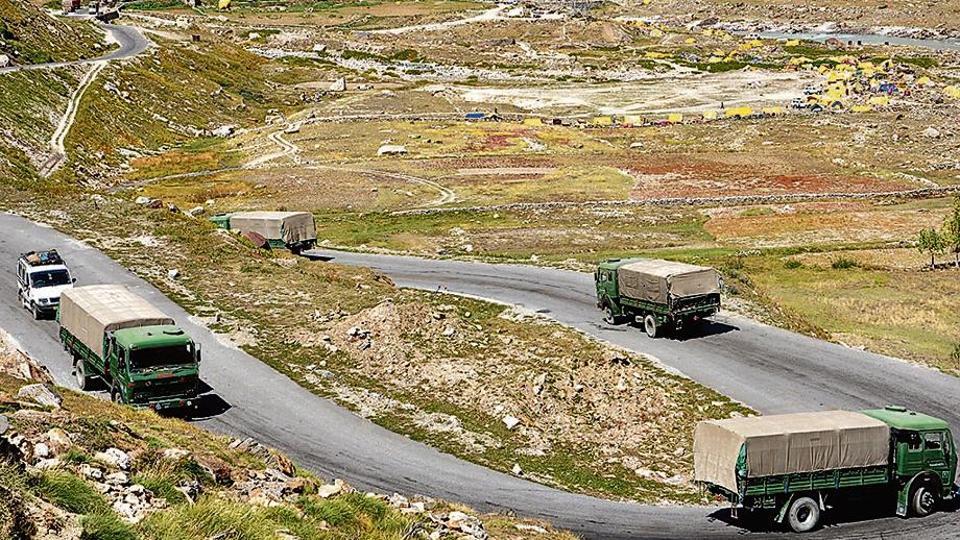
While the next India and China military commanders’ meeting is due to be held on Monday, the PLA is continuing its build-up along the 1,597km Line of Actual Control (LAC) in the western sector. After the India-China foreign ministers meeting on September 10 in Moscow, a decision was taken to ask the military commanders to implement a total disengagement and de-escalation agreement on the ground. It is understood that the meetings at the Corps Commanders level will restrict itself to disengagement of forces post-April, and the Depsang Bulge issue will be taken up at a separate Divisional Commanders level meeting.
According to a report in Nikkei Asian Review, the PLA has mobilised its Southern Theatre Command, which oversees the South China Sea; Northern Theatre Command, which overseas the Korean Peninsula; and the Eastern Theatre Command, which oversees arch-rivals Japan and Taiwan. The paper said that just like the Chinese annexed Tibet in the 1950s against the backdrop of its intervention in the Korean war, the present mobilisation was a distraction for a real stand-off in the Karakoram-Zanskar ranges of the Himalayas. For the Ladakh operations, PLA’s Western Theatre Command has been fully mobilised with the military districts of Xinjiang and Tibet fully involved in the aggression.
The Korean war in the 1950s also turned out to be distraction for the Jawaharlal Nehru government and Indian diplomacy as they got involved in sorting out the North Korea issue, leaving their own flanks in the western and eastern sectors open to the Chinese military in 1962. The PLA chose to attack India in 1962 when the entire world was diverted towards the Cuban missile crisis.
While India is engaging China through both military and diplomatic channels for resolve the current stalemate, the military commanders are prepared for the worst on all the borders and the sea. They know that distraction, diversion and deception are part of Chinese information warfare with psychological operations playing the lead role before the flag goes up.
By deploying three military commands against the US from South China to East China Sea and test firing both the DF-26 also, called the Chinese Guam Killer, and DF-21 D, also called the Carrier Killer intermediate range ballistic missiles, in the last week of August, the PLA is sending a message that it capable of taking on both the US on its eastern and India on its western flank. The missile firing was to showcase the Chinese capability to taken on the exercising USS Navy’s super carrier Ronald Reagan and Nimitz around the Chinese nuclear submarine base at Hainan Islands in the South China Sea. .


