E-Paper



PM Modi delays departure from Delhi airport to avoid inconvenience for NEET aspirants
With the NEET examination scheduled to begin at 2 pm, he delayed his departure to ensure that students faced no inconvenience.

 Prefer HTon Google


Prime Minister Narendra Modi delayed his departure from Delhi Airport on Sunday to ensure that students faced no inconvenience in reaching their NEET examination centres and that traffic movement remained smooth.
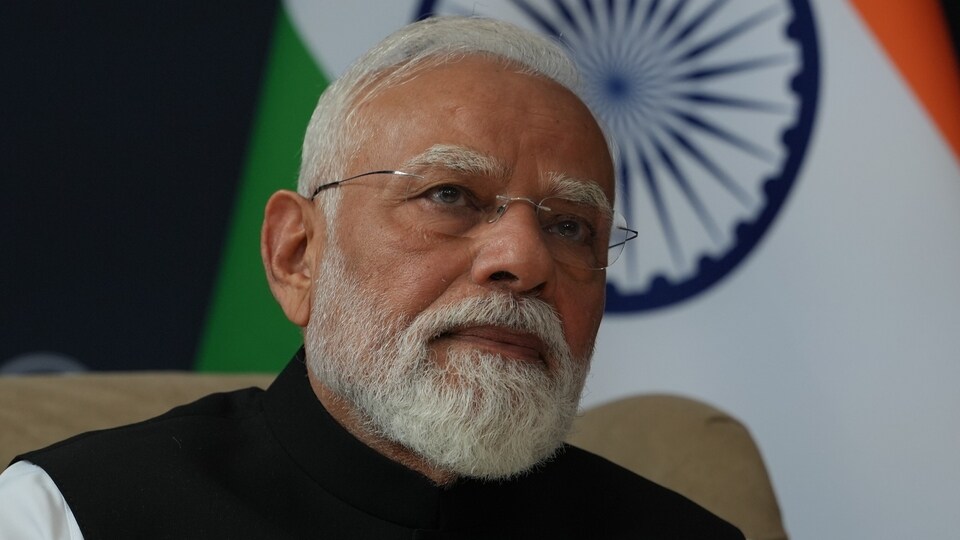
After arriving at around 1:15 pm, the Prime Minister chose to wait at the airport instead of heading directly to his residence, with the NEET examination scheduled to begin at 2 pm, according to news agency ANI.
Union Minister Sukanta Mazumdar praised PM Modi, "For some, power means privilege. For PM Narendra Modi, it means responsibility. Choosing to wait at the airport so NEET aspirants could travel smoothly to their examination centres reflects a leadership style that puts citizens first."
PM's return during NEET exam hours
The Prime Minister was returning from a two-day visit to Odisha and West Bengal, during which he attended several events, including an International Yoga Day programme in Kolkata on Sunday.
Meanwhile, the National Testing Agency (NTA) is conducting the NEET-UG 2026 re-examination for admission to undergraduate medical courses.
The exam, originally scheduled for May 3, was cancelled following allegations of a question paper leak.
The re-test is being held from 2 pm to 5.15 pm across 5,440 centres in 551 cities in India and at 14 centres abroad.
Also Read | 5,454 centres, 22 lakh aspirants: How NTA has prepared for NEET UG retest today
What is happening?
Nationwide re-examination for NEET-UG 2026 is underway, with more than 22 lakh aspirants appearing for the test amid heightened security and monitoring measures put in place by the National Testing Agency (NTA).
The re-test comes weeks after the original examination, held on May 3, was cancelled over allegations of a question paper leak, triggering widespread protests, legal challenges and calls for the resignation of Education Minister Dharmendra Pradhan.
Ahead of the examination, the NTA said it had made "comprehensive arrangements" to ensure the "fair, secure and candidate-friendly" conduct of the test across the country.
Entry into examination centres was subject to strict checks, with metal detectors deployed to screen candidates.
To ensure a secure and smooth conduct of the examination, the National Testing Agency (NTA) put in place extensive surveillance and security measures. Exam rooms were equipped with CCTV cameras under constant monitoring, while signal jammers supplied by ECIL and BEL were deployed to prevent malpractice.
The NTA also stationed two invigilators in each examination room, with more than 10 officials present at every centre to oversee the process.