
 E-Paper



PM Modi speaks to rulers of Bahrain, Saudi Arabia after Iran's strikes amid conflict with US, Israel; condemns attacks
Modi condemned attacks amid US-Iran conflict, discussed the well-being of Indian community in both countries

 Prefer HTon Google


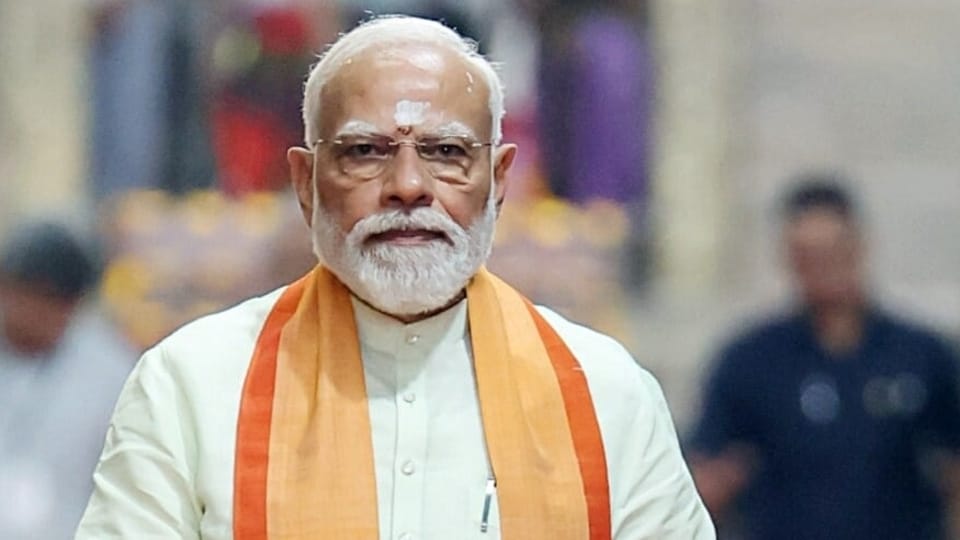
Indian Prime Minister Narendra spoke with the Bahrain's King Hamad bin Isa Al Khalifa, and the Crown Prince and PM of Saudi Arabia, Mohammed bin Salman Al Saud, HT has learnt.
Follow | Live updates on the West Asia conflict
PM Modi condemned the attacks on both these countries, as the US-Israel attack on Iran and the latter's counter strikes have engulfed the wider West Asian region (also referred to as the Middle East).
He also discussed the well-being of Indian community in both countries, people familiar with the matter told HT on Monday.
Late in the day, he posted on X that he spoke to King Abdullah II of Jordan too. “Conveyed our deep concern at the evolving situation in the region. We reaffirm our support for peace, security and the well-being of the people of Jordan. I thanked him for taking care of the Indian community in Jordan in this difficult hour,” Modi wrote.
Iran has been launching multiple attacks, including strikes at an oil refinery in Saudi Arabia.
PM Modi's calls to more West Asian leaders came a day after he called and told United Arab Emirates President Sheikh Mohamed bin Zayed that India condemns the attacks on the UAE, and stands in solidarity with it while calling for de-escalation and regional peace.
The leaders spoke after Iran continued with missile and drone strikes against several West Asian countries that have US military bases, in retaliation for the joint Israel-US air strikes on Saturday that killed Iran’s Supreme Leader Ali Khamenei among others.
“Spoke with President of the UAE, my brother Sheikh Mohamed bin Zayed Al Nahyan. Strongly condemned the attacks on the UAE and condoled the loss of lives in these attacks,” Modi said in a social media post.
“India stands in solidarity with the UAE in these difficult times,” he said. “We support de-escalation, regional peace, security and stability.”
Modi said he had thanked Sheikh Mohamed for taking care of the Indian community in the UAE.
Earlier on Sunday, India's external affairs minister S Jaishankar spoke to his Omani counterpart Badr Albusaidi to discuss the situation in the region.
Oman was involved in brokering last-minute talks between Iran and the US before the military strikes were launched on Tehran and other cities.
“Had a telecon this evening with Oman FM @badralbusaidi. Appreciated his assessments and insights on the ongoing conflict,” Jaishankar said on social media.
India has held a cautious silence on the killing of Khamenei.
A statement issued by the external affairs ministry on Saturday urged all stakeholders in West Asia to exercise restraint and avoid escalation. The statement also emphasised the importance of respecting the sovereignty and territorial integrity of all states.
More than 10 million Indians live and work in West Asian countries. Iran is home to around 10,000 Indians, while more than 40,000 Indians live in Israel.
Indian missions in Bahrain, Israel, Jordan, Kuwait, Qatar, Saudi Arabia and the UAE have issued advisories urging Indian citizens to be cautious and to avoid unnecessary travel.


