E-Paper



PM Modi to roll out National Digital Health Mission on Sep 27
“PM Narendra Modi ji to announce nationwide roll-out of Pradhan Mantri Digital Health Mission on September 27. Under this, a unique digital health ID will be provided to the people, which will contain all the health records of the person,” Union health minister Mansukh Mandaviya said.

 Prefer HTon Google


Prime Minister Narendra Modi will announce the nationwide roll-out of the National Digital Health Mission (NDHM), which has been renamed as Pradhan Mantri Digital Health Mission (PM-DHM), on September 27, Union health minister Mansukh Mandaviya said on Thursday.
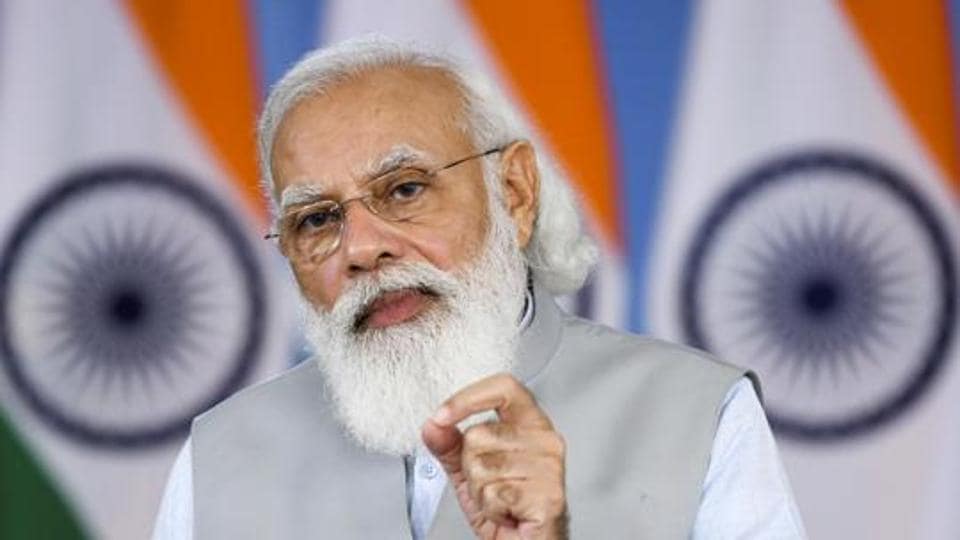
“PM Narendra Modi ji to announce nationwide rollout of Pradhan Mantri Digital Health Mission on September 27. Under this, a unique digital health ID will be provided to the people, which will contain all the health records of the person,” he tweeted.
The id will be created using details such as Aadhaar and the user’s mobile number, people familiar with the matter said.
The initiative will be rolled out on the final day of Arogya Manthan, which was kicked off on Thursday to mark the third anniversary of the government’s flagship health insurance scheme — Ayushman Bharat Pradhan Mantri Jan Arogya Yojana.
The project is currently in its pilot phase in the Union territories of Andaman and Nicobar Islands, Chandigarh, Dadra and Nagar Haveli, Daman and Diu, Ladakh, Lakshadweep, and Puducherry.
The mission essentially consists of four main building blocks -- unique digital health id, health care professionals registry, health facility registry and electronic health records.
To begin with, three components — unique health id, doctor’s registry and the health facility registry — have been made operational, the officials cited above said.
The health id is to standardise the process of identification of an individual across health care providers which aims to ensure that the created medical records are issued to the correct individual or accessed by health information users through appropriate consent.
In order to issue the id, the system will collect certain basic details such as demography and location, family or relationship, and contact details that can be updated from time to time. The id will be used for uniquely identifying persons, authenticating them and threading their health records (only with the informed consent of the patient) across multiple systems and stakeholders.
The doctors’ registry will carry details of all healthcare professionals involved in the delivery of healthcare services across both modern and traditional systems of medicine.
The health facility registry will act as a database of all health facilities across different systems of medicine, including both public and private health facilities such as hospitals, clinics, diagnostic laboratories and imaging centres, pharmacies, etc.
The initiative supports Universal Health Coverage in an efficient, accessible, inclusive, affordable and safe manner through provision of a wide-range of data, information and infrastructure services.
“The mission has been designed keeping in mind the needs of the future; it will benefit not just patients but doctors, policy makers and researchers alike. Since almost everything will be electronically handled, it will do away with the requirement of paperwork, like Ayushman Bharat PM-JAY is implemented,” a senior government functionary said, seeking anonymity.