
 E-Paper



Political slugfest erupts over Bengaluru Governance Bill
The bill may face significant legal challenges due to the 74th amendment of the Constitution of India, which emphasises the need for autonomy within elected civic bodies.


The Karnataka government’s recent introduction of the Bengaluru Governance Bill, 2024, focusing on proposed changes to the city’s administrative structure has stirred considerable debate as there are concerns about revenue imbalances across different city areas. The opposition has also accused the Congress of concentrating executive powers within the offices of the chief minister and deputy CM.
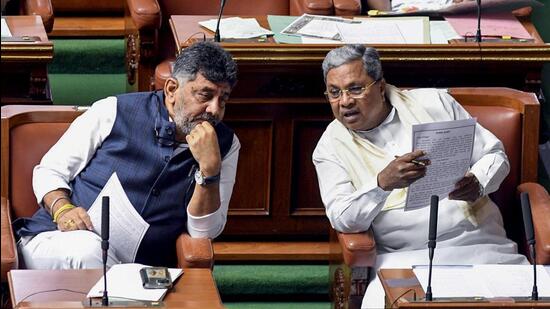
People familiar with the matter said that the government is well aware that the bill may face significant legal challenges due to the 74th amendment of the Constitution of India, which emphasises the need for autonomy within elected civic bodies.
Citizen Action Forum president Vijayan Menon said: “The amendment was designed to lessen the grip of state-level bureaucracy over municipal governance, but daily operations under the new bill will largely controlled by bureaucrats and state ministers. Mayors are notably excluded from key decision-making processes, which defeats the amendment’s purpose.”
Despite these issues, the bill’s introduction could further delay the Bengaluru Bruhat Mahanagara Palike (BBMP) elections.
“It’s apparent to anyone following this issue that the CM, deputy CM, and their bureaucratic allies are aware that the governance structure they’ve proposed is unlikely to withstand legal scrutiny. So why press forward with this proposal? It seems to be driven by a political agenda aimed at influencing upcoming council elections. The government might present this legislation to the Supreme Court as a reason for needing more time, hoping for a sympathetic ear unless the court chooses to intervene directly,” Menon said.
The Greater Bengaluru Governance Bill, 2024, proposes the restructuring of the BBMP into several smaller corporations and will be reviewed by a Joint Select Committee composed of members from both houses of the state legislature. While an expert committee’s draft view the Greater Bengaluru Authority (GBA) as a body tasked with planning, integrating, and coordinating without executive powers, the Bill tabled in the assembly would be granting the GBA significant executive and financial authority.
The Bill has suggested forming new departments within the GBA, including town planning, solid waste management, engineering, finance, and law, while retaining planning powers with the Bengaluru Development Authority (BDA).
An expert committee’s draft, which was given to the government before the bill was tabled, gave full financial and operational independence for the corporations and envisioned the GBA as a body ensuring equitable distribution of state grants. However, the proposed Bill stipulated that a portion of the corporations’ revenue would be allocated to the GBA, which is against the provisions of the 74th amendment.
Menon further said that dividing Bengaluru into multiple corporations could lead to chaos.
He said: “We lack the necessary resources and skilled personnel for such a division. Fragmenting an already overburdened workforce into five separate entities would only worsen existing challenges. This isn’t a straightforward task; the logistical complexities involving physical assets and resources are significant.”
“We currently lack the seamless coordination required for effective corporation operations,” he said.
Shivakumar, who holds the Bengaluru City Development portfolio said the bill is merely at the proposal stage and has not yet been enacted. He reassured that the government intends to include all stakeholders in the decision-making process when establishing the Greater Bengaluru Authority.
The controversial will be referred to a Joint Select Committee comprising members of both the Houses of the State Legislature, he added.
Meanwhile, political observer A Narayana said: “The idea of splitting the city corporation has been under consideration for a while. The Congress sees this move as a tactic to dismantle the BJP’s strong influence in Bengaluru, which has been solidified in both state and national elections. Over the last two decades, the BJP has established a formidable presence in the city, making it tough for the Congress to gain a foothold.”
He said: “By dividing the city corporation into smaller units, the Congress believes it can gain control of one or two of these new entities. This strategy would not only help them implement their policies more efficiently but also provide an opportunity to regain some political clout in a city where they have struggled against the BJP’s entrenched dominance.”


