
 E-Paper



US energy secretary hints at India role in securing Strait of Hormuz
US energy secretary Chris Wright claimed that Donald Trump told him about some countries which have "committed to aiding the United States”.

 Prefer HTon Google


US energy secretary Chris Wright hinted on Sunday that India might help the US to secure the Strait of Hormuz, a key oil route which has been effectively closed since Washington launched strikes in Iran more than two weeks ago.
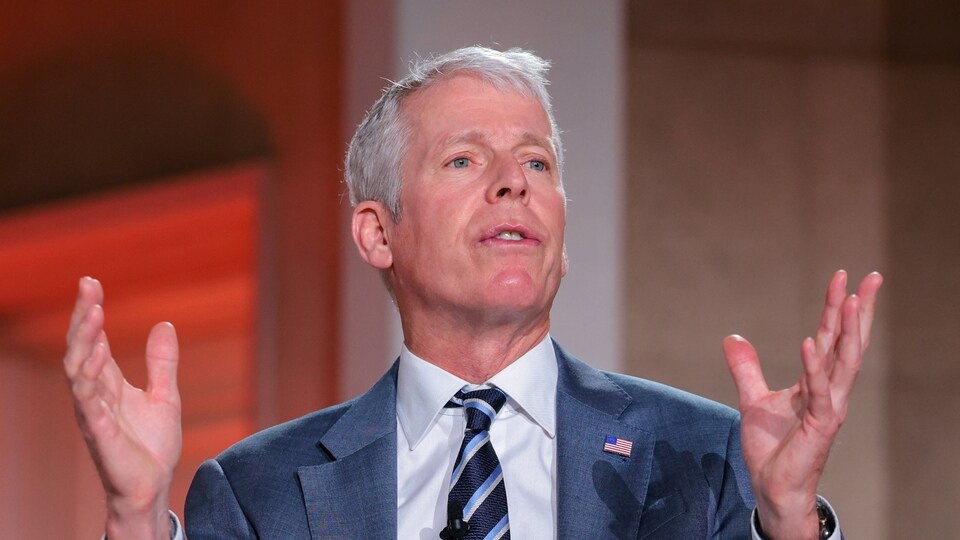
Addressing a press conference, Wright said that US President Donald Trump was “reaching out” to other countries to enlist help on the Strait of Hormuz issue. He further claimed that Trump told him about some countries which have "committed to aiding the United States”.
“President Trump told me on Saturday he's reaching out to other countries to enlist their help to secure the Strait of Hormuz. And then in a post later in the day, he named some of the countries — China, Japan, the UK, France and South Korea. He told me some countries have committed to aiding the United States,” Wright told reporters.
Asked if he could give specific names of countries that would help secure the Strait of Hormuz, Chris Wright tried to dodge the question but named some nations, including India.
"So I won't get in front of the President or make announcements on that, but I've been in dialogue with some of those nations, so I know that to be true. But I'm not going to leak any news in front of the President. The world depends on the flows through Hormuz, and most importantly, the Asian nations — Japan, Korea, China, Thailand, India — a meaningful part of their total energy supply comes from the Strait of Hormuz. So the whole world would be united in opening the Strait of Hormuz, and we will have the support of other nations to achieve that objective," he said.
The comments come as Axios reported that Trump is working to assemble a coalition of countries to reopen the Strait of Hormuz and is hoping to announce it later this week. The outlet cited four sources for the update.
Japan’s Prime Minister Sanae Takaichi has told parliament that Tokyo has no plan to dispatch naval vessels to escort oil tankers through the Strait of Hormuz.
“We have not made any decisions whatsoever about dispatching escort ships. We are continuing to examine what Japan can do independently and what can be done within the legal framework,” Takaichi said.
Why is the Strait of Hormuz important?
According to Reuters, experts have said that any closure of the Strait of Hormuz would restrict trade and impact worldwide oil prices. Since the war began, oil prices have soared to over $100 a barrel.
Around one-fifth of the world's total oil consumption passes through the Strait of Hormuz. Between the start and end of 2022, approximately 17.8 million to 20.8 million barrels of crude, condensate and fuels flowed through the strait every day, data from Vortexa showed.
Members of the Organisation of the Petroleum Exporting Countries (OPEC), Saudi Arabia, Iran, the United Arab Emirates, Kuwait, and Iraq, export the majority of their crude through the Strait, especially to Asia.
Iran’s stance on the Strait of Hormuz
Iranian Foreign Minister Abbas Araghchi said the Strait of Hormuz is open and that the strategic route is only closed to the US and Israeli vessels.
"As a matter of fact, the Strait of Hormuz is open. It is only closed to the tankers and ships belonging to our enemies, to those who are attacking us and our allies. Others are free to pass," Araghchi told MS Now in an interview on Saturday.
Speaking about the ongoing blockade of the narrow passageway, the Iranian minister said the route is closed due to “security concerns”.
“Of course, many of them prefer not to because of their security concerns. This has nothing to do with us. And at the same time, there are many tankers and ships that are passing through the Strait of Hormuz,” he said.
Araghchi said the Strait is not closed, adding, “It is only closed to American, Israeli ships and tankers and not to others.”


