
 E-Paper



Protesting Tahilramani’s transfer, Madras HC advocates boycott court
The legal fraternity practicing at the Madurai Bench of Madras HC and the district courts and other judicial fora, joined their colleagues at the principal seat of the HC, bringing court proceedings across the state to a grinding halt. But for government advocates, no one turned up in the courts.


Advocates in Tamil Nadu boycotted courts on Tuesday, protesting the transfer of Madras High Court Chief Justice VK Tahilramani to the Meghalaya HC, condemning it as arbitrary and undemocratic.
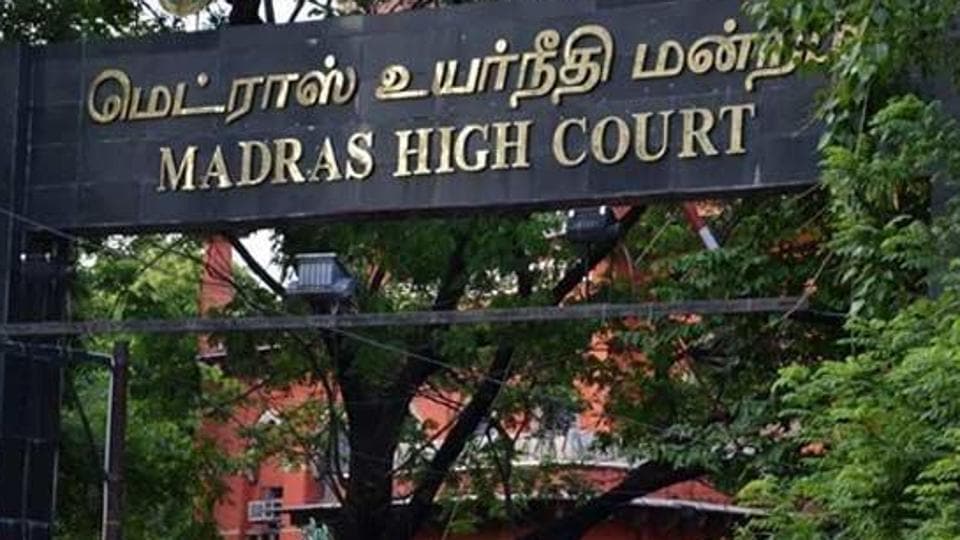
The legal fraternity practicing at the Madurai Bench of Madras HC and the district courts and other judicial fora, joined their colleagues at the principal seat of the HC, bringing court proceedings across the state to a grinding halt. But for government advocates, no one turned up in the courts.
The usually busy Madras HC campus wore a deserted look with the nearly 18,000 advocates, practicing at the HC and subordinate courts in the campus staying away from work.
Meanwhile, Justice Tahilramani abstained from the court proceedings for the second day. On Monday itself, most of the cases listed before her have been posted before other Benches.
However, the Chief Justice made it clear that she was not interested in the issue being debated.
“I do not wish to make any comments or discuss the matter,” was all that she said when the media approached her for her reaction to the transfer and her subsequent resignation.
Justice Tahilramani, apparently upset over her transfer to Meghalaya, had resigned days after the Supreme Court collegium turned down her request to reconsider the decision. While the sanctioned strength of Madras HC is 75 Judges, it is just three for Meghalaya HC.
She had tendered her resignation to President Ramnath Kovind with a copy to Chief Justice of India Ranjan Gogoi on Friday last.
Senior most High Court Judge in the country and one of the two women High Court Chief Justices, she was elevated as a Judge of Bombay High Court in June 2000 and appointed Chief Justice of Madras High Court, one of the four chartered High Courts in the country, in August 2018. Earlier, she had officiated twice as the acting CJ of Mumbai High Court.
Having been a Judge for nearly two decades, Justice Tahilramani is due to retire on October 2, 2020. As such, the transfer has evoked criticism among the legal fraternity.
Last week, a section of lawyers had sent a representation to the CJI to reconsider the transfer of Justice Tahilramani. The signatories included senior advocates, NGR Prasad, R Vaigai and G Masilamani. They have questioned the rationale behind the transfer of a Judge heading a chartered HC to a smaller HC. According to them, this would affect the administration of justice in the state.
According to former Madras HC Judge K Chandru, it has been a practice to hold consultations with the respective state government before transferring a Chief Justice.
On Monday, Tamil Nadu Law Minister C Ve Shanmugam called on Tahilramani at her residence and had a one-one meeting.
The legal fraternity in the state is resolutely behind the Chief Justice and the High Court is witnessing a protest after a long time though it was peaceful.
“Transfer of the Chief Justice shows the cavalier manner in which the opaque and non-transparent collegium functions. The fate that has befallen the senior most Judge of the High Courts in the country will affect the independence of the Judges. They will feel curtailed by the fear of having to face punitive action if their decisions were seen to be unpalatable and appear to go against the ruling executive or the higher judiciary,” said V Suresh, general secretary of PUCL.
Advocate Mohanakrishnan, President Madras high Court Advocate Association (MHAA) termed it as undemocratic and undignified.
“The transfer is like posting a college professor in an elementary school. Meghalaya HC, being one with three judges including the CJ, doesn’t have that much workload is not in good taste. It is not appropriate. Pendency in Madras HC is one of the highest in the country. Hence, we are protesting this,” he explained.
According to senior advocate R Vaigai, this transfer smacks of gender bias.
“She is the number one in seniority. Arbitrary transfer of the CJ will affect the administration of justice in Tamil Nadu. People of the state have questions as to why this transfer when there are no complaints against her like relatives practicing before her. If she was suitable in August 2018, how come she has become unsuitable now?” she asked.


