
 E-Paper



Rajasthan battles locust attack from bordering districts amid Covid-19 crisis
The locust invasion from neighbouring Pakistan’s Sindh province, which made its wild foray for the first time in 26 years on May 21, 2019, is threatening to cause major damage to the green fodder and some rabi crops such as raiyda and bajra


Farmers in western Rajasthan’s Barmer, Jalore, Jaisalmer and Jodhpur districts are battling a double whammy.
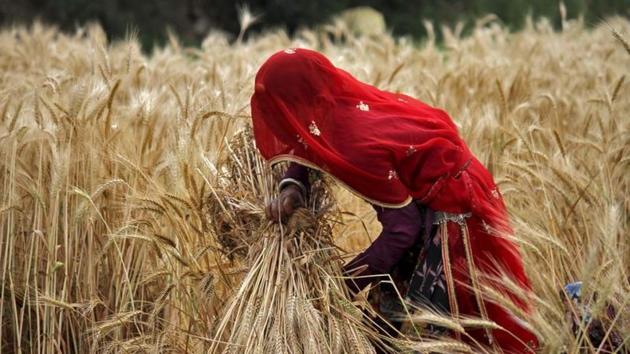
Amid the coronavirus disease (Covid-19) pandemic, the locust invasion from neighbouring Pakistan’s Sindh province, which made its wild foray for the first time in 26 years on May 21, 2019, is threatening to cause major damage to the green fodder and some rabi crops such as raiyda and bajra.
The authorities are claiming that this year’s locust invasion may surpass last year’s, as both rabi and kharif crops are under threat.
Official data suggested that crops spread over around 1.5 lakh hectares have been damaged, including Jalore (60,000), Jaisalmer (55,000), Barmer (35,000) and Jodhpur (10,000), by the locust attack.
The state government is worried about the economic implications of the locust attack. State revenue minister Harish Choudhary has drawn the central government’s attention and sought its urgent intervention in the matter.
Choudhary has written to both Prime Minister Narendra Modi and Union Minister for Agriculture and Farmers’ Welfare Narendra Singh Tomar and reminded them about the extent of damage caused to the crops during a similar attack last year.
He cited a lack of coordination between the centre and state government for the situation spiralling out of control last year and also urged that New Delhi raises the matter at the international level such as the United Nations’ Food and Agricultural Organisation (FAO), as the insects are invading from neighbouring Pakistan, and make a desperate bid to restrict the invasion.
Farmers, however, can heave a sigh of relief, as they have harvested the cumin crop, one of the swarming locusts’ favourite targets.
The state government is trying to contain the locust attacks that have been reported from several villages of Barmer and Jaisalmer districts and other parts of western Rajasthan.
Vishram Meena, district collector, Barmer, said that the authorities have started monitoring the locust invasion and meetings have been held with revenue and agricultural departments to prevent them.
“Locust attacks have been controlled in 250 hectares in Barmer district’s Gida block. Many villages under Sheo, Chohtan, Barmer and Gadara blocks in the district are also grappling with the crisis. In Jaisalmer district, Chandhan, Lathi, Ramgarh, Tanot and Kishangarh areas are facing a similar problem. So are some parts of Ganganagar and Bikaner districts,” Meena said.
Jaisalmer district administration authorities have held a meeting with officials from the Border Security Force (BSF), who guards the international border with Pakistan, to tackle the crisis.
Several districts in western Rajasthan, including Barmer, Jalore, Jodhpur, Bikaner and Ganganagar, fell prey to the locust attack last summer, which took the farmers by surprise, as it occurred after a gap of 26 years.
Barmer, Jaisalmer and Jalore districts were the worst-hit last year.


