
 E-Paper



Ranchi air ambulance crash: Plane did not have black box, say officials
Ranchi plane crash: Civil aviation rules do not mandate cockpit voice recorders (CVR) or flight data recorders (FDR) for aircraft weighing below 5,700kg.

 Prefer HTon Google


The medical evacuation aircraft that crashed in Jharkhand Monday night, killing all seven people on board, had no black box, officials familiar with the matter told HT, in what would likely pose a significant challenge in piecing together the cause of the incident.
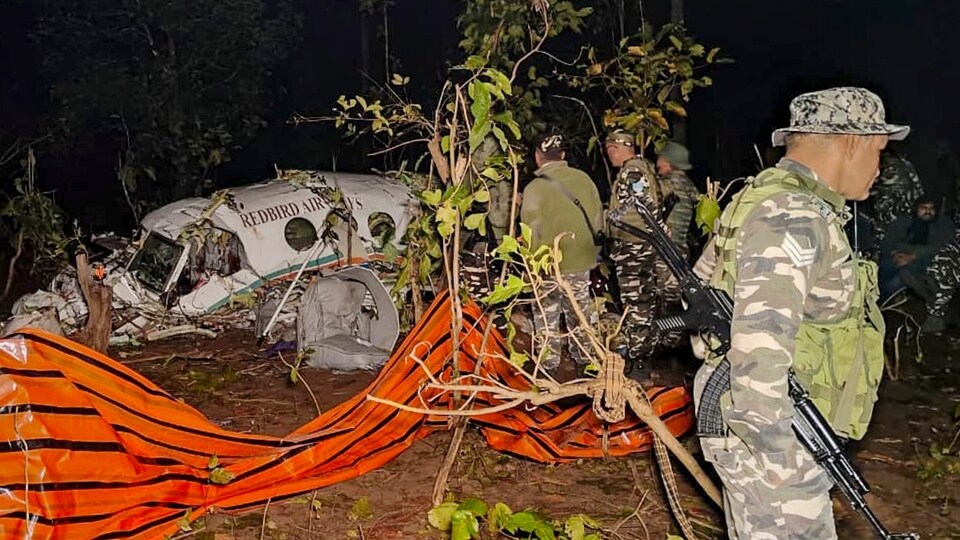
Civil aviation rules do not mandate cockpit voice recorders (CVR) or flight data recorders (FDR) for aircraft weighing below 5,700kg. “The accident will have to be studied through communication with air traffic control, analysis of the wreckage, and eyewitness accounts,” an industry expert said.
Among the aspects of the flight investigators are probing, according to one of the officials, is whether a faulty onboard weather radar caused the Beechcraft C90 King Air to take a fatal deviation from its planned route.
ALSO READ | Ranchi-Delhi air ambulance, which crashed in Jharkhand, had ‘requested deviation due to weather’
Two commercial flights operated by Air India and IndiGo had encountered adverse weather along the same route earlier and sought deviations to avoid it. While the IndiGo flight requested a left deviation, the crashed aircraft had sought a deviation to the right. “It is being probed whether the weather radar of the crashed aircraft was functioning properly,” an official said, that it will need to be determined whether the crew misread the situation unfolding on the radar or the instrument itself was malfunctioning.
Crashed plan was ‘unused' for 4 years
The aircraft, operated by Delhi-based Redbird Airways Pvt Ltd, was on a medical evacuation flight from Ranchi to Delhi when it crashed in Kasaria area of Chatra district. Those on board were the patient, Sanjay Kumar, 41, a doctor, a paramedic, two attendants, and two pilots — pilot in command Vivek Vikash Bhagat, who had around 1,400 hours of flying experience, and first officer Savrajdeep Singh, who had around 450 hours. The aircraft, manufactured in 1987, was acquired by Redbird Airways in 2022 from Orient Flying School, which had purchased it in 2001.
ALSO READ | What led to Ranchi-Delhi air ambulance crash? Officials reveal possible cause
Another official said the plane had been unused between 2018 and 2022, though the exact reason for the same could not be independently verified. The flying school had regarded the aircraft as a non-revenue-generating asset.
The Directorate General of Civil Aviation had ordered a special audit of charter jet operators after a Learjet ferrying Maharashtra deputy chief minister crashed in Baramati last month, killing all on board. It was not clear if Redbird Airways was audited. A email seeking comment on this did not get a response as of going to print.
An Aircraft Accident Investigation Bureau (AAIB) team has been dispatched to the site. Civil aviation minister Ram Mohan Naidu posted his condolences on X. “Deeply pained by the tragic air ambulance crash in Jharkhand. Loss of precious lives is heartbreaking. My condolences to the affected families in this moment of grief. Local administration and AAIB teams have immediately responded for rescue and on-site investigations,” he wrote.
Mark Martin, chief executive of Martin Consulting, said eyewitness testimony would be critical. “Some operators with aircraft below 5,700 kg choose to install FDR and CVR as a safety measure. But the Beechcraft C90 is a very old aircraft, around 25-30 years old, and regulations at the time were not as evolved as they are today,” he said. “Investigators rely heavily on eyewitness accounts. These observations can provide important clues — for instance, whether the aircraft went nose-down after entering clouds and losing control, whether there was a fire, or whether severe weather conditions like updrafts or downdrafts may have affected the aircraft.”
ALSO READ | Takeoff at 7:11 pm, contact lost 23 minutes later: Jharkhand plane crash timeline and what we know
According to the Directorate General of Civil Aviation (DGCA), the aircraft departed Ranchi at 7.11pm and was expected to land in Delhi around 10pm. Ranchi ATC handed the flight over to Kolkata Area Control shortly after departure.
The aircraft was expected to cross the ATALI waypoint but deviated from its planned route. The last radar contact was recorded at 7.22pm, when it was at 13,800 feet and approximately 40 nautical miles from Ranchi.
The final radio contact came at 7.34pm with Kolkata controllers — after which the aircraft lost both communication and radar contact approximately 100 nautical miles south-east of Varanasi. It did not subsequently contact Varanasi or Lucknow ATC, prompting Kolkata’s Rescue Coordination Centre to activate search and rescue operations.


