
 E-Paper



Remembering India’s first CDS Gen Bipin Rawat
Gen Rawat was a genuine military reformer who wanted to decolonize Indian military which is given to attendants, gala wine dinners, ceremonies, and golf.

 Prefer HTon Google


Raisina Hill legend has it that on the day the Chinese PLA with construction vehicles and road building equipment started moving towards Torsha nullah on Doklam Plateau on India-Bhutan-China trijunction in June 2017, National Security Advisor Ajit Doval, then foreign secretary and now foreign minister S Jaishankar and then Army Chief and later Chief of Defence Staff (CDS) Gen Bipin Rawat met Prime Minister Narendra Modi for military-diplomatic directions that afternoon. The trio informed the PM that the PLA objective was to reach Jampheri Ridge, unilaterally redefine the border at the tri-junction and put pressure on India’s ‘Chicken Neck’ or Siliguri Corridor. It is said that the PM asked them what should be done? The trio replied that the Chinese should be stopped. PM Modi apparently replied, “What are we waiting for?” That very day while Jaishankar diplomatically conveyed India’s serious concerns to both Beijing and Thimpu, the two Garhwali brothers pushed the Indian Army up to Jhampheri ridge and blocked the PLA from crossing the Torsha nullah bisecting the plateau.
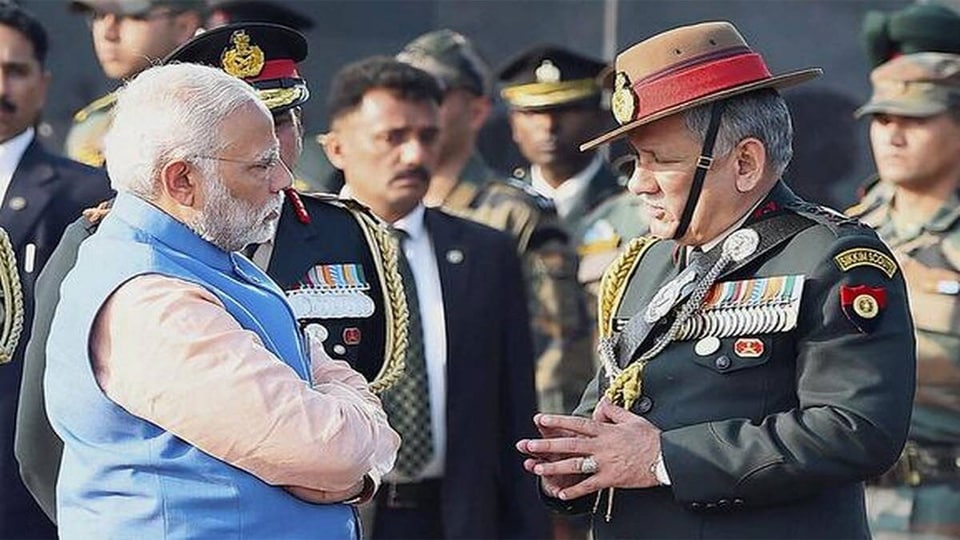
Cut to August 2020. The PLA had transgressed into Kugrang Nullah, Gogra-Hot Springs and north banks of Pangong Tso earlier in May taking advantage of the fast-spreading Covid pandemic, which had origins in Wuhan in China. On June 15, 2020, the Indian Army lost 20 men including Col Santosh Babu in a medieval skirmish with PLA in Galwan Valley but not before teaching the Chinese Army a deadly lesson for making unilateral changes on the border and imposing the India rejected 1959 on the East Ladakh LAC. With Chinese refusing to restore April 2020 status quo ante on the Ladakh LAC, the Garhwali brothers with General Rawat now the CDS in synergy with then Army and Intelligence Chiefs and full back up support of now External Affairs Minister S Jaishankar launched an offensive on August 29-31, 2020 to capture heights south of Pangong Tso , Rezang La and Rechin La, effectively turning the tables on the belligerent PLA. It was none other than General Rawat who approved the deployment of India’s Special Frontier Force (SFF), a highly specialized mountain warfare division composed of exiled Tibetans and under the Cabinet Secretariat. The NSA was fully in charge of the operation and instructions were given to the Indian troops to militarily retaliate if the PLA moved up the Rezang La ridge or South Pangong Tso heights. Fact is that a round of high explosive extended range tank round was fired by the Indian armor to deter the PLA light tanks. Rest, as they say, is history and the PLA hate India for the SFF lesson.
One year after Gen Rawat and his wife Madhulika lost their lives in an helicopter crash in the Nilgiris and with his regiment mate Gen Anil Chauhan being appointed as the second CDS, the first CDS is remembered as a genuine military reformer who desperately tried to decolonize the Indian armed forces particularly the Indian Army. Not the one given to pomp, show or red carpet, Gen Rawat was disliked by his peers and some of the serving officers for contesting on extraordinary military canteen benefits, disability allowance, sub-standard military construction and even playing a round of golf in some 195 golf courses with the Indian Army all over the country. He told the armed forces that if they wanted to make money then they would get the same respect and credibility as a large section of Indian police. As Army Chief, he got the golf course at 15 Corps headquarters in Badami Bagh cantonment in Srinagar dug out as officers were seen to be disrespecting the fallen troops whose bodies landed at the adjacent helicopter-pad. An avid golfer, he stopped playing the game as an example to other officers.
While he led his troops by example, the first CDS was also brave enough to speak his mind to the political leadership and this attitude often got him into trouble with powers that be. But that did not make him change either his mind or his attitude. He was a war general not an arm-chair strategist.
Although General Rawat stood up to the enemy from Sumdorong Chu to Uri to Doklam to East Ladakh and came out victorious, he was let down by his own when he tried to push for military theatre commands as was his mandate as the first CDS. While he answered every query and objections raised by the three armed forces chiefs particularly the Indian Air Force chief, Gen Rawat could not complete the task during his life-time as none of the three chiefs wanted to lose their fiefdoms and financial powers. It is for Gen Chauhan to complete his late friend’s final task.


