
 E-Paper



Reports of JD(S) leaders leaving not new: Kumaraswamy, ahead of polls
The upcoming elections include 25 for the upper house of the state legislature in January next year, zilla and taluk panchayat, Bruhat Bengaluru Mahanagara Palike (BBMP - the city’s civic body) and the 2023 assembly polls.


Troubles continue to increase for the Janata Dal (Secular) or JD(S) with several top leaders of the party helmed by former Prime Minister HD Deve Gowda planning to leave it to join either of the two national parties – the BJP and Congress- before various polls in the state in the next few months.
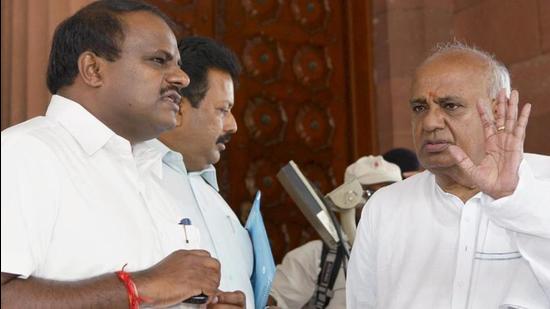
The upcoming elections include 25 for the upper house of the state legislature in January next year, zilla and taluk panchayat, Bruhat Bengaluru Mahanagara Palike (BBMP - the city’s civic body) and the 2023 assembly polls.
“Those claiming to leave, it’s not something new. It has already been decided in the last two years. We know what decisions have been taken two years ago itself,” said HD Kumaraswamy, the JD(S) leader and former chief minister.
The statement on Saturday came even as leaders like GT Deve Gowda, Srinivas Gowda and Gubbi Srinivas among others have publicly aired their intent to leave the regional outfit before the 2023 assembly election.
While the practice of defections before elections is nothing new for political parties, the movement at the top has an impact on grassroot level workers who have often expressed their anger through the ballot box.
Siddaramaiah, the Congress leader and former chief minister, on November 2, said the party lost in Sindgi assembly bypolls as workers were not able to combine their efforts as differences persisted.
The Congress had fielded Ashok Managuli, the late JD(S) legislator’s son, in the October 30 bypolls that had cost the regional outfit another seat in the lower house of the state legislature.
The Bharatiya Janata Party (BJP) won this seat while it lost Hanagal in Haveri, the home district of chief minister Basavaraj Bommai.
The Congress and JD(S) are no strangers to the effects of grassroot level workers turning against the party, allowing the BJP to capitalise on the discord and expand its footprint across regions where it has minimal presence.
The Congress and JD(S) were reduced to just one seat each across all 28 constituencies in the 2019 Lok Sabha elections as worker were unable to overcome historical differences even though the leaders at the top had stitched an uncomfortable alliance to defeat the BJP.
Sumalatha, an actress and the wife of Kannada film idol Amabareesh (MH Amarnath), benefited as she became the first ever Independent candidate to win from Karnataka.
She was officially backed by the BJP, who did not field a candidate in Mandya, in which she defeated then sitting chief minister Kumaraswamy’s son Nikhil in his debut electoral contest.
The BJP too had used the opportunity to expand its presence in the old Mysuru region with Sumalathat and KC Narayana Gowda, who had defected from the JD(S) to the saffron outfit in 2019, giving the former its first ever taste of success in what is widely believed to be a JD(S) stronghold.
“All big leaders including the current chief minister (Bommai) and his predecessor (Siddaramaiah) got their training from us and left for individual gains,” TA Sharavana, a leader from the party said on Sunday. He added that there were many leaders willing to leave but many others remain committed to the cause of the regional outfit.
Political analysts say the JD(S) continues to thrive despite the onslaught on its organisation from both national outfits and it’s own challenges stemming from the deep-seated rivalry between the two sons of Deve Gowda.
“Like those leaving the party, the JD(S) also benefits from discontentment in other parties as leaders who were denied tickets look for established outfits to contest elections,” said A Narayana, a Bengaluru-based political analyst.
But this often leads to discord between workers who tend to hold onto rivalries despite the alliance at the leadership.
The JD(S) will hold an eight-day meet, starting from Monday, to iron out differences within their grassroots level workers ahead of the local body elections that would help it gauge its support structure before 2023.


