E-Paper



Say no to testing blood samples for Covid-19
Indian Red Cross Society (IRCS), a voluntary humanitarian organisation, is working to create a database of potential convalescent plasma donors for dedicated hospitals treating Covid-19 patients.

 Prefer HTon Google


Convalescent plasma therapy to treat coronavirus disease (Covid-19) patients got a boost after the Union Ministry of Health Ministry & Family Welfare (MoH&FW) issued revised blood transfusion guidelines to include the collection of convalescent plasma under clinical trials protocol from donors, who have recently recovered from the viral infection.
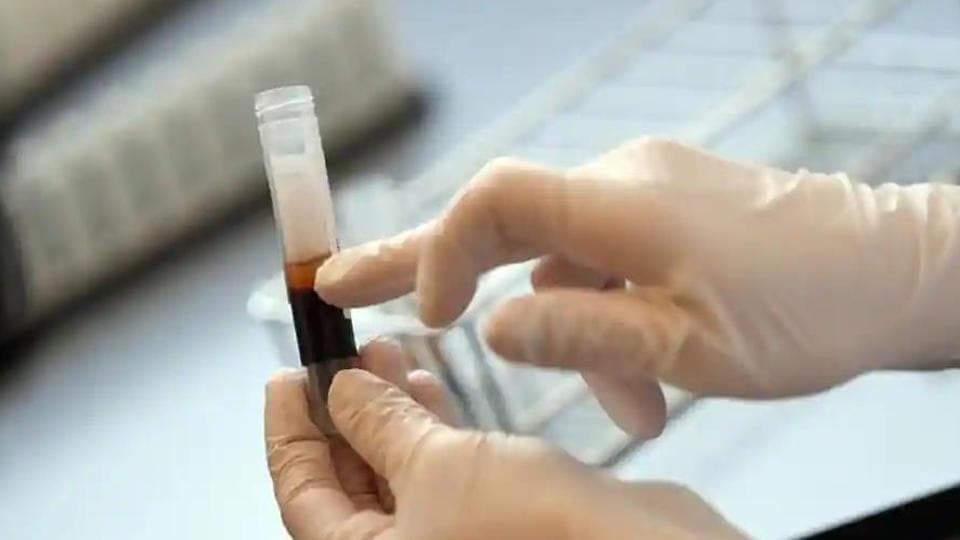
“Systems should be in place to enable re-entry of cured Covid-19 patients, as donors for convalescent plasma for the treatment of Covid-19 patients. The treatment of Covid-19 patients using plasma therapy is under clinical trial and currently, no evidence of the efficacy of the convalescent plasma as a treatment modality for SARS-COV-2, which causes the viral disease, is established… the use of convalescent plasma for routine treatment of Covid-19 patients is not recommended at present…,” stated the ministry guidelines.
Indian Red Cross Society (IRCS), a voluntary humanitarian organisation, is working to create a database of potential convalescent plasma donors for dedicated hospitals treating Covid-19 patients.
“We are creating a list of eligible convalescent plasma donors that we can share with these hospitals. We need to extensively counsel some of these people, as they themselves were Covid-19 patients, who, at times, are not very comfortable with the idea of going back to a hospital, even if it is to donate plasma. We are also not getting too many inquiries from recovered patients. We are dependent on the hospitals to provide us with the list since we don’t have a hospital of our own,” said Dr. Vanshree Singh, director (blood bank), IRCS.
The revised guidelines do not recommend testing of donated blood and blood components for Covid-19 or opting for more advanced Pathogen Reduction Techniques (PRT), citing reasons such as financial impracticality and lack of enough evidence to support transmission through blood transfusion.
“Testing of the blood supply for Covid-19 is not recommended in light of the risk of transfusion transmission being theoretical or lack of demonstrated infectivity of the Covid-19 virus in blood collected from asymptomatic persons. Routine practices of infectious disease testing for transfusion transmissible infections should not be changed,” the guidelines stated.
“Pathogen Reduction Technologies (PRT) requires significant logistical and financial investment. PRT for whole blood is less widely available and studies of inactivation of coronavirus in whole blood are lacking. The introduction of PRT for the SARS-CoV-2 would not be cost-effective or proportionate and is not recommended,” they added.
The document has cited studies that say respiratory viruses are not known to transmit through blood transfusion.
“No cases of transfusion-transmission were ever reported for the other two coronaviruses that emerged during the past two decades (SARS and MERS-CoV). Virus detection in blood has only happened in symptomatic patients with Covid-19 to date. American Association of Blood Blanks, USFDA (US Food and Drug Administration) and CDC (Centers for Disease Control and Prevention in the United States of America) are not recommending any additional action by blood collection establishments at this time because there are no data or precedent suggesting the risk of transfusion-transmission for Covid-19… According to the USFDA, there have been no reported or suspected cases of transfusion-transmitted Covid-19,” the experts, who drafted the guidelines, stated.
However, the government has asked blood banks to screen donors thoroughly for Covid-19 related symptoms, and discard or recall the donated blood, if there was even slightest suspicion of any strain of the virus. The donors will have to wait for at least 28 days before they are eligible again.
People, who cannot donate blood, are laboratory-confirmed cases of Covid-19, irrespective of clinical signs and symptoms; contacts of a laboratory positive case or those with travel history to a country where community transmission of the viral disease is established.
“The blood samples collected from a donor, who turns out to be Covid-19 positive, or is an unconfirmed case or even a close contact of a laboratory positive case within 28 days of donation, will be discarded. All known positive cases cannot donate for 28 days after the end of 7 day home isolation post-discharge or when symptoms subside, or travel to a Covid-19 affected country,” the guidelines stated.
Dr. RN Makroo, president, Indian Society of Transfusion Medicine, said thorough screening is a must. “For regular donors, a thorough screening of the history of the person is good enough. You cannot conduct a blood test or PRT, which is not just very expensive but is also not available in India. We must strengthen the screening of our regular donors that’s the only solution. The new guidelines are pretty comprehensive and they should be followed in letter and spirit,” said Dr. Makroo.
“Though The government guidelines insist on a 28-day of deferral, we go by six weeks. It is better to be safe than sorry,” said Dr. Singh from IRCS.