
 E-Paper



Russia attacks, takes control of Europe’s largest nuclear plant
The fighting and a fire at the plant at Zaporizhzhia triggered an emergency meeting of the UN Security Council.

 Prefer HTon Google


Ukraine accused the Kremlin of “nuclear terror” and the West expressed fury on Friday after Europe’s largest atomic power plant was attacked and seized by invading Russian forces, who continued to shell major cities.
Also Read | Russia-Ukraine conflict: No radioactive leakage at nuclear plant, says IAEA
The fighting – there was an exchange of heavy weapons fire and shelling -- and a fire at the plant at Zaporizhzhia triggered an emergency meeting of the UN Security Council, and came as President Vladimir Putin intensified a crackdown on opposition in Russia to his nine-day-old war.
The US envoy to the United Nations called the developments at the Zaporizhzhia nuclear power plant a “dangerous new escalation” and said that Russian forces were now closing in on a second Ukrainian atomic power plant.
“Russia’s attack last night put Europe’s largest nuclear power plant at grave risk,” Linda Thomas-Greenfield told the Security Council. “It was incredibly reckless and dangerous. And it threatened the safety of civilians across Russia, Ukraine and Europe,” she said.
Also Read | US Embassy in Ukraine calls nuclear power plant attack by Russians a ‘war crime’
Russia’s ambassador to the United Nations Vasily Nebenzya rejected the allegations that Kremlin troops attacked the facility, and said the power plant was secured by Russian forces in order to ensure continuing power supply to Ukraine and other European regions. “The fire at the training facility, which was not part of the plant, was started by Ukrainian soldiers,” he said. Russia also reiterated its allegations that Ukraine was holding foreign students — including Indian students — hostage.
India’s permanent representative, TS Tirumurti, said that it was “regrettable” that the situation in Ukraine had deteriorated further since the Council last met, and called for a “cessation of violence and end to hostilities”.
India said that it was following the developments regarding the safety and security of Ukraine’s nuclear power and facilities. “India attaches the highest importance to ensuring the safety of nuclear facilities as any accident involving the nuclear facilities may have severe consequences for public health and the environment.” India said that it also accorded the “highest priority” to the discharge by the IAEA of its safeguards and monitoring activities in an “effective, non-discriminatory and efficient manner”.
Also Read | ‘Nuclear terror’: Zelensky issues warning, says no one knows if it will explode
Combat raged elsewhere in Ukraine as Russian forces surrounded and bombarded several cities. A Ukrainian presidential adviser said an advance had been halted on the southern city of Mykolayiv, after local authorities said Russian troops had entered it. If captured, the city of 500,000 people would be the biggest yet to fall.
The capital Kyiv, in the path of a Russian armoured column that has been stalled on a road for days, came under renewed attack, with air raid sirens blaring in the morning and explosions audible from the city centre.
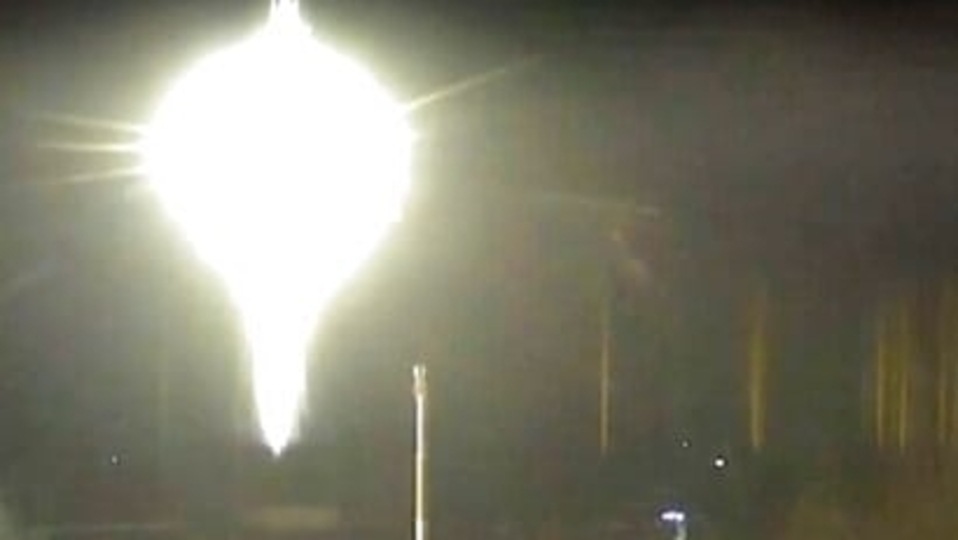
Videos verified by Reuters showed one building aflame and a volley of incoming shells before a large incandescent ball lit up the sky, exploding beside a car park and sending smoke billowing across the compound.
Russian forces have already taken control of the disabled Chernobyl nuclear facility, where a Soviet-era accident once spread detectable levels of radiation across several European countries.
Also Read | West eyes more pressure on Russia after Ukraine nuclear plant attack
“Attacks on nuclear power facilities are contrary to international humanitarian law... Every effort should be taken to avoid a catastrophic nuclear incident,” UN political affairs chief Rosemary DiCarlo told the Security Council.
Thousands of people are believed to have been killed or wounded and more than one million refugees have fled Ukraine since the February 24 start of the invasion, which has plunged Russia into economic isolation as western nations seek to punish Putin.
International Atomic Energy Agency chief Raphael Grossi paid homage to the nuclear plant’s Ukrainian staff: “to their bravery, to their courage, to their resilience because they are doing this in very difficult circumstances.”
The plant was undamaged from what he believed was a Russian projectile, Grossi said. Only one of its six reactors was working, at around 60% of capacity.
An official at Energoatom, the Ukrainian state nuclear plant operator, told Reuters there was no further fighting and radiation levels were normal, but said his organisation no longer had contact with the plant’s managers or control over its nuclear material.
Russia’s defence ministry also said the plant was working normally. It blamed the fire on a “monstrous attack” by Ukrainian saboteurs and said its forces were in control.
“Europeans, please wake up. Tell your politicians – Russian troops are shooting at a nuclear power plant in Ukraine,” Ukrainian President Volodymyr Zelensky said in a video address.
Russian forces advancing from three directions have besieged cities, pounding them with artillery and air strikes.
Russian forces have made their biggest advances in the south, where they captured their first sizeable Ukrainian city, Kherson, this week. The mayor of nearby Mykolayiv said they were now inside his city, a shipbuilding port of 500,000 people.
Zelensky’s military adviser, Oleksiy Arestovych, said the Russian advance there had been halted: “We can feel cautious optimism about the future prospects of the enemy offensive - I think that it will be stopped in other areas also.”
The southeastern port of Mariupol has been encircled and bombarded, Britain said in an intelligence update. Authorities there have described a humanitarian emergency.
Bombing has worsened in recent days in the northeast cities of Kharkiv and Chernihiv.
Ukrainians have been fleeing West, many crowding into Lviv near the Polish border.
(With inputs from Reuters)


