
 E-Paper



Saarc potential can be realised when terror ends: PM Modi
“The full potential of Saarc can only be realised in an atmosphere free of terror and violence. On this 36th Saarc Charter Day, let us re-commit ourselves to defeating the forces that support and nurture terrorism, and to work collectively towards a secure and prosperous South Asia,” the Prime Minister said.


In a veiled reference to terror emanating from Pakistan, Prime Minister Narendra Modi said on Tuesday that the full potential of the South Asian Association for Regional Cooperation (Saarc) can only be realised in an atmosphere free of terrorism and violence.
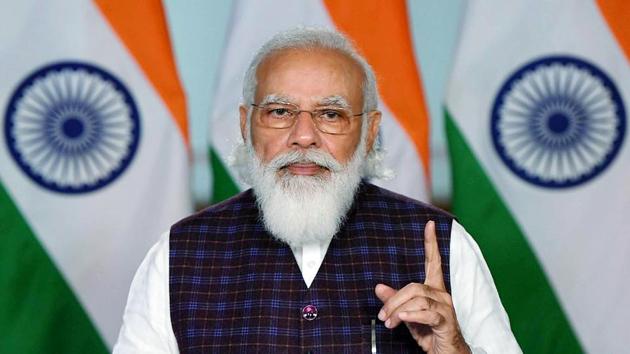
Modi, however, underscored India’s commitment to work with other countries in the region for post-Covid-19 recovery in a message on the occasion of the 36th charter day of Saarc.
The eight-nation grouping’s functioning and activities have virtually stalled because of the strained relations between India and Pakistan. Besides a virtual meeting in March on the Covid-19 situation, Saarc hasn’t had any significant engagements since India pulled out of the summit that was to be held in Pakistan in 2016 in the aftermath of the Uri terror attack.
“The full potential of Saarc can only be realised in an atmosphere free of terror and violence. On this 36th Saarc Charter Day, let us re-commit ourselves to defeating the forces that support and nurture terrorism, and to work collectively towards a secure and prosperous South Asia,” the Prime Minister said.
India, he added, “will continue to work with other countries in the region to ensure a robust recovery after the pandemic”. India is also committed to an “integrated, connected, secure and prosperous South Asia”, and will support the economic, technological, cultural and social development of the region.
“The early coordination between Saarc countries for dealing with the Covid-19 pandemic is an example of the benefit that our region can derive from greater collaboration,” he said, referring to the meeting held in March and the creation of an emergency Covid-19 fund with an initial contribution of $10 million from India.
Saarc leaders had participated in the virtual meeting at Modi’s initiative. However, Pakistan Prime Minister Imran Khan skipped the meet and the country was represented by its de- facto health minister, who created a controversy by raising the Kashmir issue.
The charter day marks the signing of the Saarc Charter in 1985 by the leaders of the member countries at the grouping’s first summit in Dhaka. The grouping now includes Afghanistan, Bangladesh, Bhutan, India, the Maldives, Nepal, Pakistan and Sri Lanka.
In a separate message on the occasion, Nepal Prime Minister KP Sharma Oli said the Saarc Charter reflects the region’s “shared vision, collective resolve and mutual pursuit to promote peace, stability and prosperity in South Asia through eradication of poverty, accelerated economic growth and advancement in socio-cultural development”.
He described the pandemic as an “unprecedented challenge affecting not only health and economy but also social life and livelihoods in the region and beyond” and said it had compounded existing challenges such as poverty, terrorism, transnational crime and climate change.
“There is a need for greater regional cooperation today than ever before,” he added.


