
 E-Paper



'I plead with you as a scientist': VK Paul on Covishield dose gap controversy
Niti Aayog (health) member VK Paul on Saturday pleaded with folded hands to not create a controversy over the gap between the two doses of Covishield. "As a scientist, as a professional, I am pleading," he said.


Niti Aayog (health) member VK Paul on Saturday said the decision to extend the gap between the two doses of Covishield to 12 to 16 weeks was an independent decision taken by the scientific body, without any pressure. "I am pleading to all of you with folded hands to put these controversies to rest," Dr Paul said. Countering allegations that the gap between the two doses has been extended to 12 to 16 weeks owing to the scarcity of vaccines in India, Dr Paul said the narrative is saddening.
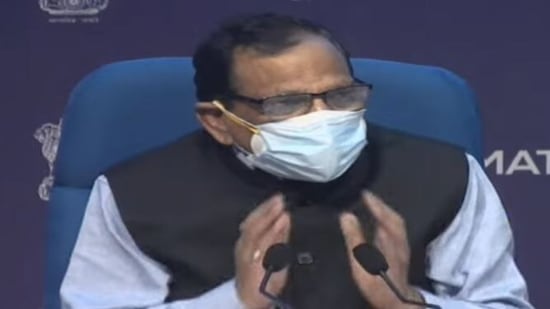
"Saying that the decision was taken under some kind of pressure trivialises the matter. Our scientific institutions comprise independent scientists. National Technical Advisory Group on Immunisation (NTAGI) is a standing committee that guided the country in the past — on rotavirus and several other immunisation programmes. Scientists of this panel deliberate and then come to a consensus," Dr Paul said explaining the rationale behind extending the gap between the two doses to 12 to 16 weeks.
Watch: NITI Aayog explains Covishield dose gap increase to 10-12 week
When to take Covid-19 vaccine 2nd dose? What to do if once infected? What experts recommend
The government has recently accepted the recommendation of the expert panel and widened the gap between the two doses of Covishield vaccines to 12 to 16 weeks. In January, the recommended gap was four to six weeks, which in April was extended to six to eight weeks. The decision courted criticism as opposition leaders accused the government of creating confusion and covering up the acute shortage of vaccines.
"Had it really been because of a shortage of vaccines, we could have done it before when the UK did it as extending the gap suits the so-called shortage but at that time we respected scientific findings," Dr Paul said adding that when the UK pushed the second dose of the Covishield vaccine to three months, India's scientific body did not recommend it as there were risks of breakthrough infections.
"Just a single dose and delayed second dose could make the chance of infection higher. When studies were conducted, the standard protocol was to administer the two doses in a gap of four to six weeks. Somewhere there was a breach in the protocol and there was a delay in administering the second dose. This breach should not have happened, but it happened. After analysis, it was found that delaying the second dose did not make any difference. But that was not considered robust evidence to extend the gap between the doses.," Dr Paul said.
So what changed now that the expert panel favoured extending the gap between the doses? Explaining the change of stance, Dr Paul said, "Now that the UK is administering the doses in a gap of three months, lakhs of people have been administered two doses in a gap of three months. This basically means a single dose for three months. So now, we have real-life evidence that transmission of the infection gets stalled when the gap is widened. This is around 60-85 per cent effective in disease protection. Now we got the confidence to implement the gap."
He also said such extensive data do not become available in research as the scope remains narrow, but now India's expert group has real-life data.
Urging people to not find any other reason behind the scientific decision, he said, "I plead with you as a scientists and as a professional. We must respect our institutions. Not everything is maths in public health. Science is evolving. Scientific knowledge about SARS-CoV-2 is only 1.5 years old. As and when new data emerges, we will see what next we get to learn."


