E-Paper



Sanskrit university project: Ant movement, frog behaviour to predict rain
The National Sanskrit University and NIT Calicut are launching a project to explore ancient weather prediction methods, drawing mixed reactions from scholars.

 Prefer HTon Google


The National Sanskrit University is collaborating with NIT Calicut, a prominent engineering college, for a project that has drawn nearly 600 applications for 36 internship positions to study weather prediction methods recorded in ancient Sanskrit texts spanning Vedic to classical periods.
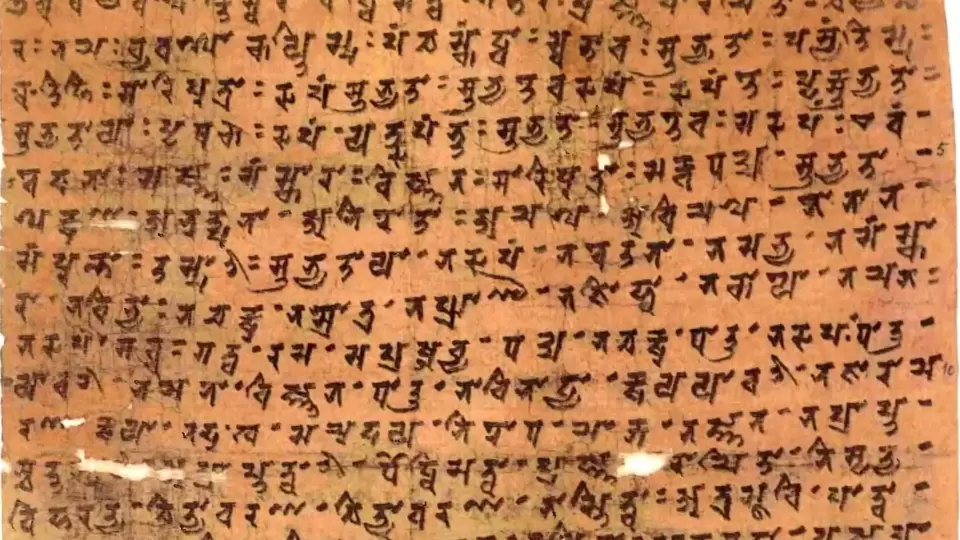
The six-month programme will examine texts including the Bṛhatsaṁhitā, a 6th-century work purportedly documents how frog behaviour, ant movements and specific cloud formations were used to predict rainfall; the Matsya Purāṇa, one of the 18 major Puranas, that seemingly records flood cycles, and Kautilya’s Arthaśāstra, which speaks of famine management strategies. The Atharvaveda, one of the four Vedas, also contains weather-related observations.
“At a time of growing climate unpredictability, revisiting such frameworks can offer complementary wisdom,” said S Vaishnavi, assistant professor at NSU and the project’s principal investigator. The academic added that the proposal emphasised rigorous documentation, translation, and comparison with modern meteorology through interdisciplinary collaboration.
Supported by the Indian Knowledge Systems division of the Union education ministry, it’s among 79 projects approved from 372 applications with a combined budget of ₹3.8 crore.
Selected undergraduates will receive ₹10,000 monthly stipends for the programme, which can be extended by another six months. The 36 interns will work across six areas including textual translation, glossary preparation and scientific comparison of ancient methods with modern datasets.
The IKS initiative, however, faces criticism from scientists and academics who worry about “pseudoscience and pseudohistory” entering education. The All India People’s Science Network, for instance, has slammed what it calls the “shoddy and biased implementation” of IKS courses, citing examples at some IITs where curricula include topics like “reincarnation, out-of-body experience” and astrology. Critics argue that without proper scientific scrutiny, IKS lines of inquiry could blur the lines between evidence-based knowledge and unfounded claims.
D. Raghunandan of the Delhi Science Forum called the internship a “completely useless project,” saying it “turns serious inquiry into a mere fashion of reading old Sanskrit texts without producing new knowledge.” He argued that any meaningful project must begin with a hypothesis and show how findings complement modern science. “Otherwise, it is just distributing texts to interns to study and not getting any fresh insights,” he said.
Vishanvi defended the initiative. “The aim is not to replace modern science but to enrich it with sustainable, indigenous perspectives rooted in India’s traditions,” Vaishnavi said. NSU will handle Sanskrit research while NIT Calicut focuses on scientific modelling and validation.
“Our methodology is to extract such verses, translate them accurately, categorise indicators (astronomical, ecological, ritual), and then compare them with modern datasets. The project is positioned not as a replacement of science but as an interdisciplinary exploration. By grounding our work in documented sources and measurable outcomes, we ensure that it remains credible, transparent, and academically robust,” she said.
“The main aim of these internship projects is to spark UG students’ interest in IKS and let them learn under experienced mentors. We achieved success in this aim in previous editions and launched the fifth edition this year,” said professor Ganti Suryanarayana Murthy, national coordinator of the IKS division.
Climate experts said traditional weather knowledge could merit assessment. “Traditional observations of weather and seasons, documented by poets like Kalidasa and Ghagh and passed down through generations, offer locally relevant insights. Integrating this knowledge with modern science can make climate information more relatable and actionable at the community level,” said group captain (professor) SN Mishra, visiting professor at TERI School of Advanced Studies.
Mahesh Palawat, vice-president of Skymet Weather, said modern forecasts are reliable short-term, less so for seasonal predictions. “Ancient methods could be scientifically tested alongside modern models, and if proven accurate, could enhance forecasting. If predictions consistently match actual outcomes with 80% or higher accuracy, they would certainly have value. If ancient methods can contribute to improving weather forecasts, it is worth exploring,” he said.
Murthy said their approach follows Kalidasa’s philosophy: don’t accept something just because it is old, and don’t reject something just because it is new. “We evaluate knowledge on merit—validate it, and take the best. We don’t claim IKS will replace modern science, but believe its 5,000-year-old wisdom can complement it. For instance, ancient traditions classified weather predictions into long-term for six months, medium-term for one-two months, short-term for one week, and same-day ‘nowcasting’—the same categories used in modern meteorology today,” he said.
“Project outputs such as glossaries, charts, and research notes will aid teachers, researchers, and policymakers, with plans for peer-reviewed publications and a policy brief on disaster preparedness, ensuring the work contributes to both academics and policy,” said Vaishnavi.
However, findings won’t be published as validated research. “These are internships, not certified research projects, so we don’t publish final reports to avoid them being misread as validated findings. The material produced may be useful, but its eventual application depends on quality and further validation,” said Murthy.
The IKS division, established in October 2020, has spent ₹6.195 crore on 113 institutional internship projects since 2022 across 16 research domains.