
 E-Paper



‘Abolish NEET; undermines poor, rural, backward students’: Tamil Nadu assembly passes Vijay govt's resolution
Tamil Nadu assembly set to pass resolution opposing NEET, citing concerns over social justice, student welfare

 Prefer HTon Google


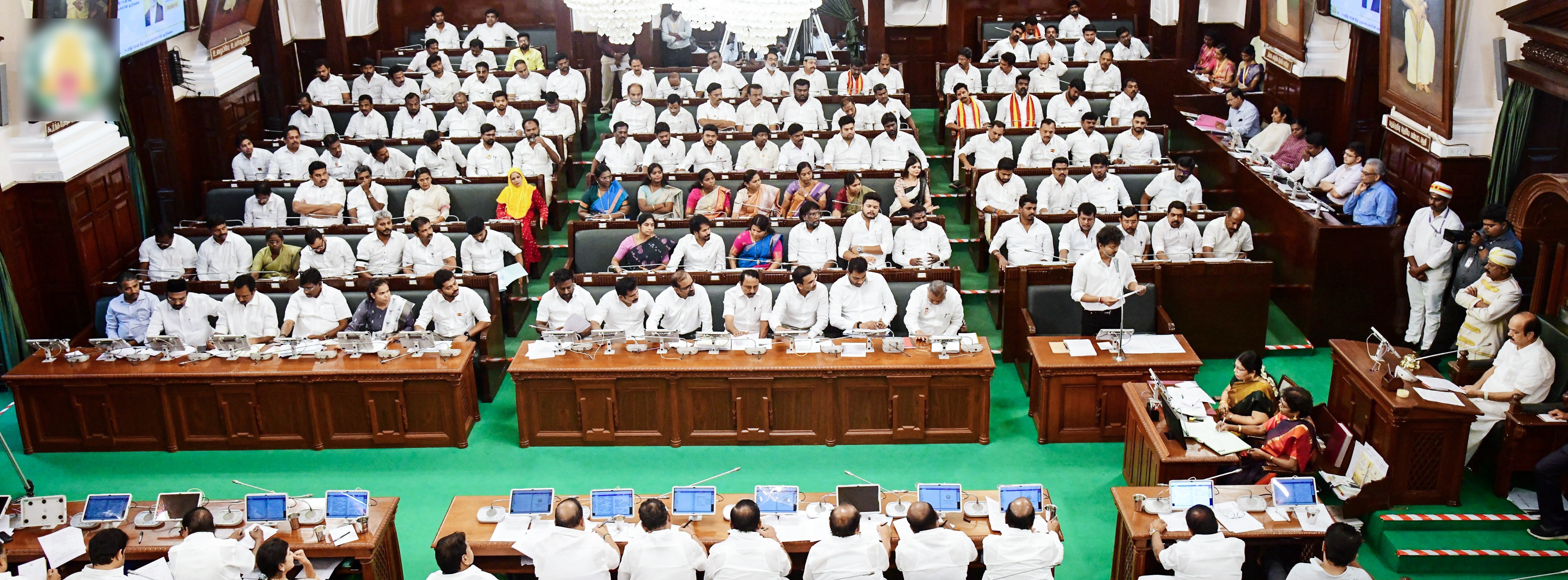
The Tamil Nadu legislative assembly on Tuesday passed a resolution against the very existence of NEET, the medical entrance test at the centre of a paper leak row that led to BJP leader Dharmendra Pradhan's resignation as Union education minister last month amid protests led by youth outfit Cockroach Janta Party.
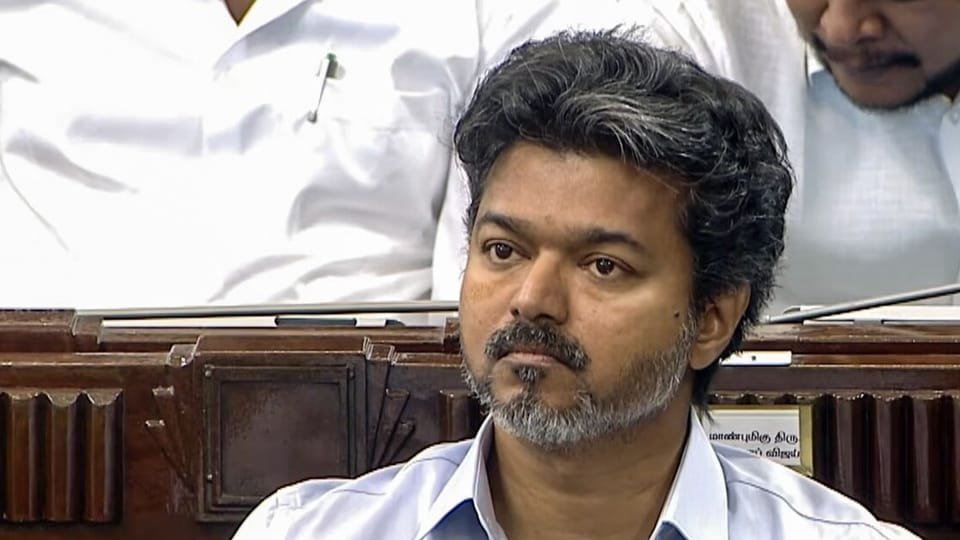
Besides the ruling TVK and its allies including the Congress, the main opposition DMK, the AIADMK and others too supported the anti-NEET resolution, while the lone BJP MLA staged a walkout.
Moved by state health minister KG Arunraj, the resolution urges the BJP-led Centre to abolish the National Eligibility-cum-Entrance Test (NEET) for admission to undergraduate medical courses.
“NEET has diverted focus of students from school curriculum to coaching alone,” Arunraj said, alleging that it has led to “proliferation of coaching centres that charge exorbitant fees”.
“This test gravely undermines medical education opportunities of rural, socio-economically disadvantaged students,” Arunraj, a senior leader of the TVK led by CM C Joseph Vijay, argued further.
He noted that Tamil Nadu under successive governments has consistently emphasised that “NEET is against social justice, equality, and rights of states”.
What, if not NEET?
The resolution urges the Union government led by PM Narendra Modi to amend relevant central laws and abolish the uniform NEET system for undergraduate medical admissions.
The Vijay government has proposed that admissions to medical courses in the state be based on Class 12 examination marks — a stand the previous DMK regime also took.
Resolution's core arguments
The resolution points out that the Tamil Nadu assembly unanimously passed Bill No 43 of 2021, seeking exemption for the state from NEET for admission to undergraduate medical courses. However, that bill has been kept pending without presidential approval, it says.
Two main points, besides others, are at the heart of the argument:
- In the resolution, the Tamil Nadu government has said the NEET system severely affects students studying in Tamil medium as well as those from rural and economically backward backgrounds in accessing medical education.
- It also raises concerns over the growing dependence on expensive coaching centres and the impact of the examination on students' school education.
The resolution states that unregulated coaching centres charging exorbitant fees for NEET have increased, forcing students to divert their attention from the school curriculum and focus primarily on NEET preparation.
It further argues that a single-day entrance examination after 12 years of schooling has become the deciding factor for students' higher education.
Paper leaks cited
The resolution cites continuous question paper leaks and irregularities in the examination system, stating that NEET-UG was cancelled and re-conducted, causing immense distress to eligible students and eroding their trust in the examination system.
It also refers to student suicides linked to the examination-related distress and concludes that the system must be abolished.
This would need the Centre to amend the National Medical Commission Act, 2019, the National Commission for Indian System of Medicine Act, 2020, the National Commission for Homoeopathy Act, 2020, and other relevant laws to discontinue NEET at the national level.
Contentious from the start
NEET was first sought to be introduced in 2013 to replace a fragmented medical admission system. Before NEET, admissions were split between the All India Pre-Medical Test (AIPMT) for a 15% national quota and individual state-level exams for the remaining 85% of seats. Premier institutes like AIIMS held independent tests, while private colleges conducted their own exams.
Following intense legal battles over NEET, by 2017 it became the mandatory nationwide test, and by 2020 even premier colleges were integrated, establishing NEET as India's single window for all medical admissions.
Led by Tamil Nadu, the criticism of NEET is that favours those who can afford expensive, multi-year coaching. States also contend that a centralised exam violates India's idea of federalism by stripping their right to manage local healthcare needs.
The resistance is largely driven by state-level parties. In Tamil Nadu, opposition to NEET spanned successive terms under the DMK and previously the AIADMK too. Following paper-leak controversies, Karnataka led by the the Congress, and West Bengal then governed by Mamata Banerjee's TMC passed resolutions to completely scrap the exam.
Kerala under the CPI(M)-led LDF and Congress-led UDF has successively been against NEET, while legal challenges came from Andhra Pradesh and Telangana too.
(with ANI, PTI inputs)


