
 E-Paper



SC cancels anticipatory bail to TN police officer in train molestation case
The top court quashed the January 7 order of the Madras High Court and remitted the matter back for fresh consideration

 Prefer HTon Google


The Supreme Court on May 7 set aside the anticipatory bail granted to a suspended Tamil Nadu police officer accused of sexually harassing a law college student aboard a moving train, holding that the Madras High Court’s decision to protect him from arrest merely because departmental action had already been initiated was unsustainable in law.
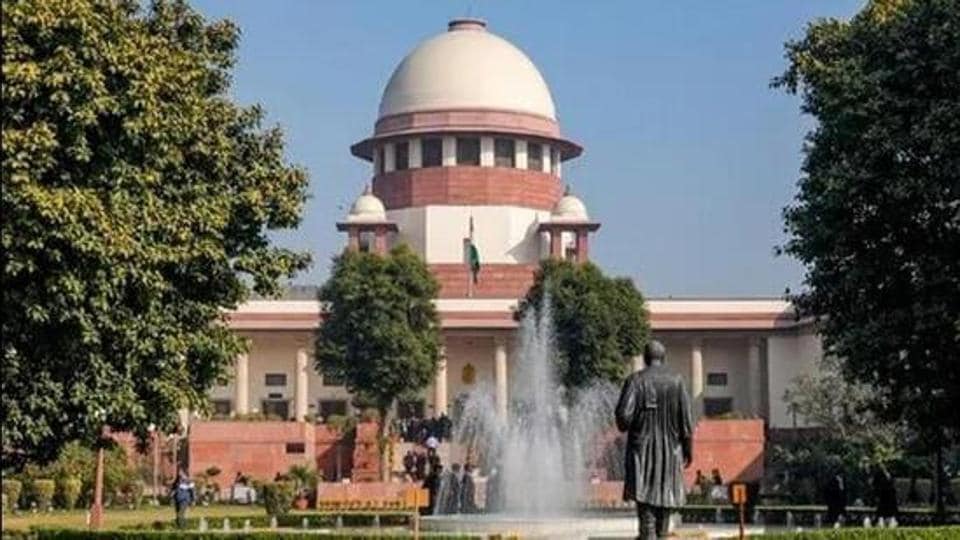
A bench of justices Pankaj Mithal and SVN Bhatti took strong exception to the reasoning adopted by the high court while granting pre-arrest bail to head constable Sheik Abdulla Mohammed, whose alleged misconduct on the Central-Coimbatore intercity train in December 2025 triggered outrage in the state and renewed concerns over women’s safety in public transport.
“The manner in which the order has been passed and the reasoning that Respondent No.1 (Abdullah) has been suspended and therefore deserves to be enlarged on bail, does not appeal to our minds,” the bench said in the May 7 order, released on Monday.
The top court quashed the January 7 order of the Madras High Court and remitted the matter back for fresh consideration of the police officer’s anticipatory bail plea on merits and in accordance with law.
“We set aside the impugned order dated 07.01.2026 and remand the matter to the High Court for fresh consideration of the anticipatory bail of Respondent No.1 on merits, expeditiously in accordance with law,” the bench said.
Also Read:‘State has powers’: SC declines to interfere with senior cop’s suspension in TN
It also allowed the appeal moved by the law student, who was represented in court by advocate Vishal Sinha.
The accused was booked under Sections 62, 75 and 304(2) of the Bharatiya Nyaya Sanhita along with provisions of the Tamil Nadu Prohibition of Harassment of Women Act, 2002.
According to the prosecution, the incident occurred in late December when the 23-year-old law student was travelling alone on the train. The policeman, identified as Sheik Abdulla Mohammed, was allegedly returning after security duty in Chennai when he inappropriately touched and harassed the woman while the train was nearing Katpadi.
The student recorded the alleged misconduct on her mobile phone and alerted the railway police. The officer was subsequently detained from the train, following which a criminal case was registered against him. He was later placed under suspension pending inquiry.
The matter generated widespread public outrage in the state, especially because the accused was a serving police personnel entrusted with public safety duties.
While granting anticipatory bail earlier this year, the Madras High Court noted that the officer had already been suspended from service and that custodial interrogation was not necessary.
The Supreme Court, however, found the reasoning inadequate and legally untenable. “The High Court has granted pre-arrest bail to Respondent No.1, simply for the reason that Respondent No.1, who is in police service, was suspended from service immediately and that no custodial interrogation would be necessary,” noted the bench while setting aside the order.
Without expressing any final opinion on the merits of the allegations, the apex court directed the high court to reconsider the bail plea afresh after hearing all parties.
“It would be open for both the parties to raise whatever pleas that are available to them in law,” the court added.



