
 E-Paper



SC fines lawyer for trying to block selection of HC judge
The collegium system, which does not find mention in the Constitution, was evolved through the judgments of the Top court.


The collegium system of appointing judges has adequate safeguards and any attempt to prejudice a collegium against a candidate must be dealt with sternly, said the Supreme Court as it imposed a penalty of ₹5 lakh on a lawyer for trying to block the selection of a high court judge.
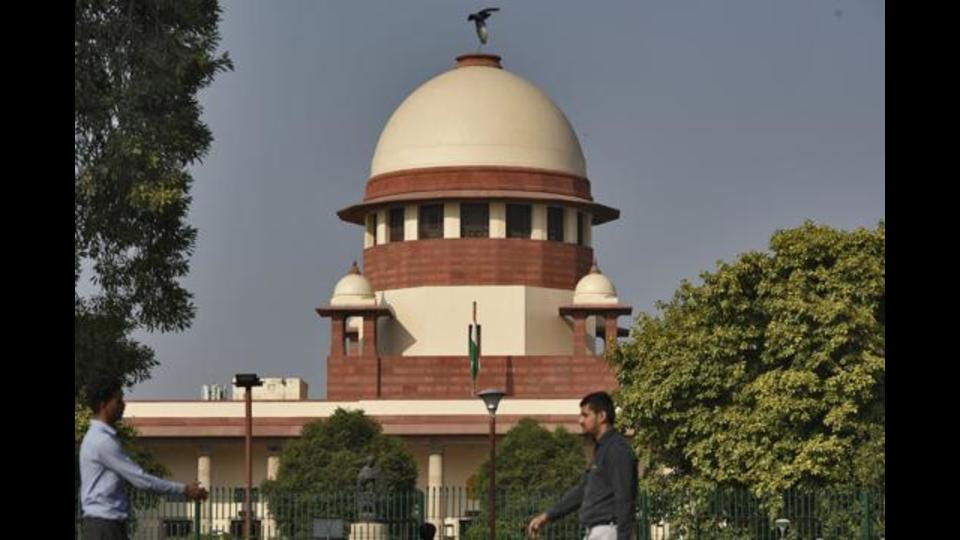
A bench of justices Sanjay Kishan Kaul and MM Sundresh termed it a “gross abuse of process of law” to file petitions in the constitutional courts with the sole motive of obstructing a candidate’s elevation to the high court as a judge.
“The process of appointment of judges to the High Court is under a well-known established process where the collegium of the High Court considers recommending the names and in case of judicial officers by seniority and on merits,” said the bench.
It further noted: “Thereafter, the proposed IB (Intelligence Bureau) inputs and other inputs are obtained and the Government processes the names. The collegium of the Supreme Court has the benefit of all the material before taking a call on whether to recommend the name or not. The appointment takes place thereafter by issuance of warrants of appointment. Thus, sufficient safeguards exist in the system.”
The collegium system, which does not find mention in the Indian Constitution, was evolved through the judgments of the Supreme Court, starting 1981 and culminating in the final judgment in 1998 when it was declared that the Chief Justice of India, along with four senior-most judges of the apex court, will make recommendations to the Union government for appointment of judges in the high courts and the Supreme Court. The judgments also laid down that while the government will be consulted on names, the CJI will have primacy in matters of appointment.
The central government tried to have a greater say in the appointment process by bringing in the National Judicial Appointment Commission (NJAC) in 2014 through a law that envisaged a role for the law minister and some independent jurists.
But the constitutional amendment validating the NJAC was quashed by the Supreme Court in 2015 while ruling that judges’ appointments shall continue to be made by the collegium system in which the CJI will have “the last word”. However, the collegium system continues to be criticised by a section for being non-transparent and lacking objective yardsticks for the appointment of judges.
Meanwhile, the bench observed that the collegium system has in-built safeguards to take into account seniority, comparative merit and other relevant factors of the candidates being considered for appointments.
In the present case, it noted that multiple proceedings were initiated by advocate B Sailesh Saxena targeting Telangana high court’s registrar general Venkateswara Reddy to stall his elevation as a judge in the high court.
“This is gross abuse of process of law...We consider the endeavour of the petitioner (Saxena) as one of harassing Respondent No. 4 (Reddy) and abusing the court proceedings and since nothing else seem to deter the petitioner in such endeavours, we are of the view that appropriate imposition of costs seems to be the only solution,” held the bench in its order last Friday.
The court also asked the Bar Council of Telangana to examine Saxena’s conduct and take appropriate action.
The bench said it is “surprised at the brazenness” of Saxena who chose to file a writ petition in the Supreme Court after the Telangana high court had already dismissed his separate petition in 2018 while noting that the lawyer was an accused in six criminal complaints involving charges of forgery and creation of fake documents.
In one of these cases, the court said the registrar general, on the direction of the high court, had lodged a complaint against Saxena for filing a petition in a land dispute case by submitting fake and forged documents of non-existent people.
“Respondent No. 4 (Reddy), as the responsible officer, only followed the direction passed by the learned judge of the high court,” said the bench, adding the high court had dismissed Saxena’s petition holding it to be an abuse of the process of law and a counterblast to the series of criminal complaints filed against him.
The bench then proceeded to dismiss Saxena’s petition with a cost of ₹5 lakh, which, it said, will be deposited with the Supreme Court Advocates On Record Welfare Fund within four weeks.


