
 E-Paper



SC gives split verdict on plea against riot case SIT of Hindu, Muslim officers
Two judges referred the matter to the Chief Justice of India for a larger bench to decide the Maharashtra government’s review plea against the September 11 order


The Supreme Court on Friday gave a split verdict on a review plea challenging a September 11 order for the constitution of a Special Investigation Team (SIT) of Hindu and Muslim police officers to probe an assault on a Muslim boy during a 2013 communal riot in Maharashtra’s Akola.
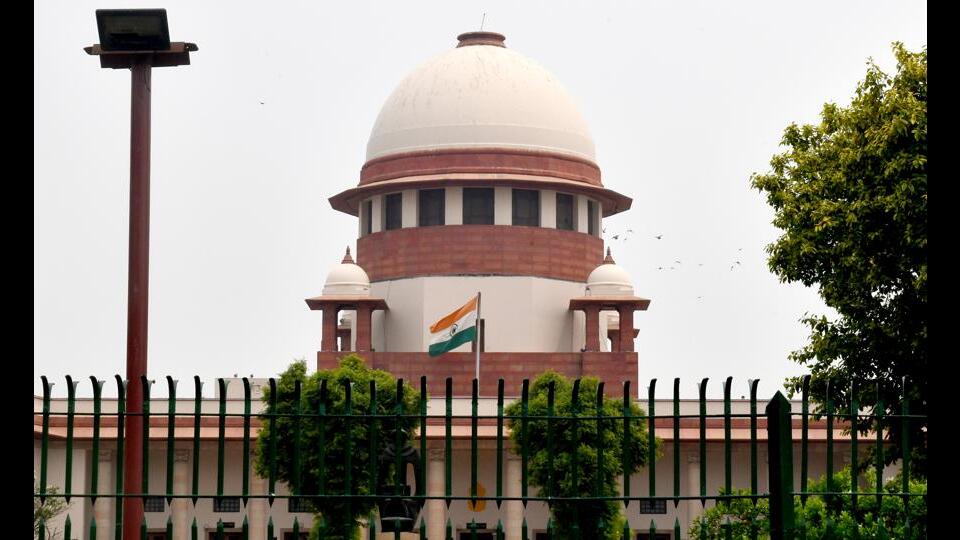
A bench of justices Sanjay Kumar and Satish Chandra Sharma differed on whether the judgment needs to be revisited. Justice Kumar maintained that the order was necessary in view of the dereliction of police duty by refusing to register a criminal case on the boy’s complaint.
Justice Sharma differed. He observed that the direction for SIT based on religious identities needed a re-look, as he posted the matter for an open court hearing after two weeks. The judges referred the matter to the Chief Justice of India for a larger bench to decide the Maharashtra government’s review plea against the September 11 order.
Justice Sharma said they were on the same page to the extent that the two judges agreed to disagree. Justice Kumar cited the argument that the religion-based composition of the SIT would impinge upon institutional secularism and divide a uniformed force on religious lines. He noted that there was total dereliction of duty on the part of the police.
Justice Kumar said these circumstances made it necessary to direct SIT to have both Hindu and Muslim police officers to maintain “transparency and fairness” in the investigation. He criticised the state for adopting a “dubious” practice of mentioning the review plea before the two judges simultaneously on the same day.
Solicitor general Tushar Mehta, who appeared for Maharashtra, apologised for the simultaneous mentioning. Justice Kumar reminded Mehta of the practice of mentioning before the presiding judge. He told Mehta that the state government refused to even file written submissions, even as the court said it would get an opportunity to put forth its stand before another bench.
Mehta said that the state was apprehensive that a direction like in the September 11 order may spill over to other areas, with demands that a bench having a particular composition should hear a matter. He said that the uniformed force cannot afford to have officers divided on the basis of their religious identity.
The court said, “On the face of it, it is a uniformed service, but people within seem biased.”
The September 11 judgment came on the 17-year-old boy’s petition. The boy was assaulted during the riot that broke out following an objectionable social media post on Prophet Muhammad. The Bombay high court rejected his petition to set up an SIT for a probe into his complaint and action against the erring officers.
The Supreme Court in September cited lapses in the case and said police disbelieved the boy’s statement that four men assaulted him with iron rods and beat an auto rickshaw driver, Vilas Mahadevrao Gaikwad, to death. Police named Muslims in the case even as the boy told them Gaikwad’s assailants were Hindus. The boy said Gaikwad was assaulted under the mistaken impression that he was a Muslim.
Police justified their action, saying the boy was unfit to give a statement when they visited him in hospital. They added that he also failed to submit a complaint later, and that is why no case was registered. The boy claimed to have a snapshot of his statement recorded at the hospital, which the police dismissed as unreliable in the absence of his signature. In June 2023, the boy’s father submitted a written complaint to the Akola police superintendent.
The court cited the Code of Criminal Procedure’s Section 154 and said it mandated the superintendent to inquire and register a case if it pertained to a cognisable offence. The court pulled up the officer in charge of the concerned police station for failing to follow up by registering a case despite being aware of the medico-legal case involving the boy and his hospitalisation. “When members of the police force don their uniforms, they are required to shed their personal predilections and biases, be they religious, racial, casteist, or otherwise. They must be true to the call of duty attached to their office and their uniform with absolute and total integrity.”
The court directed the state to initiate disciplinary action against the superintendent and the station in charge for “patent dereliction of duty”. It asked the state to instruct the rank and file of the police on their duties, and set SIT comprising Hindu and Muslim officials to investigate the assault and submit a report within three months.


