
 E-Paper



Supreme Court reserves order on 4G connectivity in Jammu and Kashmir
Amid the lockdown for the coronavirus disease (Covid-19) which has infected more than 700 people in J&K, it is imperative to restore high-speed internet connectivity, the petitioners have argued.


The Supreme Court on Monday reserved its order on a raft of petitions challenging restrictions on 4G connectivity in Jammu and Kashmir, where high-speed Internet has been.blocked to prevent terrorists from using it as a communications tool .
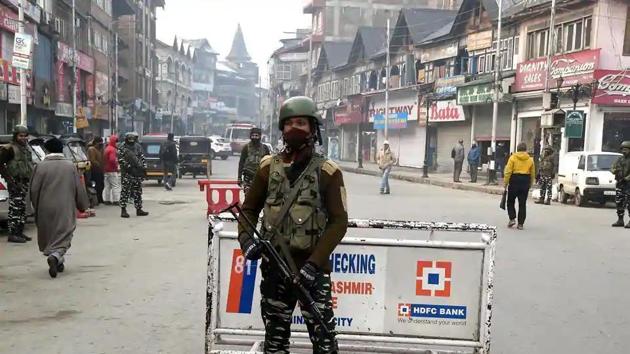
The petitions filed by the Foundation for Media Professionals and Association of Private Schools in J&K, among others, challenged a decision by the administration to restrict connectivity in the entire Union territory to 2G services.
Amid the lockdown for the coronavirus disease (Covid-19) which has infected more than 700 people in J&K, it is imperative to restore high-speed internet connectivity, the petitioners argued. This would give doctors access to the latest information on Covid-19, facilitate video consultations with patients in line with social distancing norms, and enable students to log onto online classrooms , the petitions said.
Before reserving its order, the bench of justices NV Ramana, SK Kaul and BR Gavai said that on the one hand was the right to health and education of citizens and on the other was the equally pressing concern of national security.
The Centre and the J&K administration claimed that any relaxation on restrictions will promote militancy. Attorney general KK Venugopal argued that militancy was on the rise and the courts should not interfere with decisions that are best left to the wisdom of the government.
Solicitor general Tushar Mehta, who appeared for J&K, argued that the right to Internet was not a fundamental right and can be restricted. Responding to the claim made n the petitions that 4G was essential in the battle against Covid-19 , Mehta said, “There are other places in the country where there is no internet or only 2G network is available. We have no information yet that someone has died of Covid-19 there as they did not have internet access.”
The petitioners, represented by senior advocates Huzefa Ahmadi and Salman Khurshid, said the government must demonstrate a nexus between high-speed internet connectivity and militancy.
Ahmadi said that militancy has been around in J&K for a long time and in a lockdown scenario, the right to health of citizens must take precedence. Khurshid submitted that the government could curb the spread of anti-national activities through the internet, but .that should not be made the grounds to deprive the entire J&K of high-speed internet.
Article 370 that granted J&K special status was scrapped in August last year and the state was bifurcated into two Union territories, J&K and Ladakh, in moves accompanied by widespread arrests and a communication blockade that lasted several months. In January, the apex court directed the government to review the blockade from time to time.


