
 E-Paper



SC seeks modalities on child support from Uttar Pradesh govt over school slap case
The institute was involved by the court following the inability of the state government to provide counselling to the child

 Prefer HTon Google


The Supreme Court on Monday directed the Uttar Pradesh government to suggest within a month the modalities to implement suggestions by the Mumbai-based Tata Institute of Social Sciences (TISS) on the support to be provided to a child slapped by fellow classmates on instructions of their teacher who made communal remarks at a school in Muzaffarnagar.
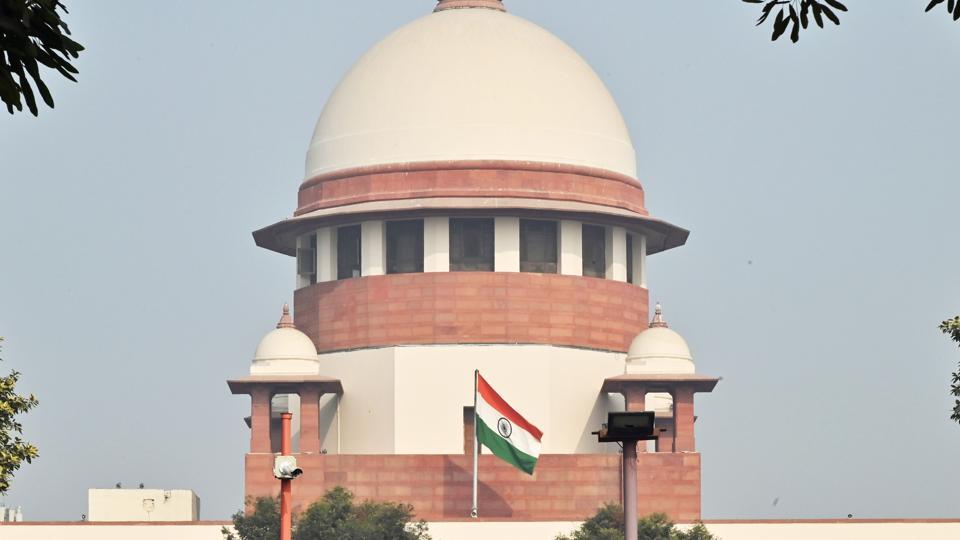
A bench of justices AS Oka and Sandeep Mehta asked the state government to interact with TISS officials and file an affidavit by January 17 containing details of how the state intends to report the comprehensive ground report prepared by the institute.
The institute was involved by the court following the inability of the state government to provide counselling to the child, who suffered mental trauma after the incident in August this year.
The bench said, “We have gone through the very exhaustive report prepared by TISS. We direct the state to file a report containing details of the manner in which the state intends to implement the report.” The matter has been posted for hearing in mid-January.
The directions were passed while hearing a public interest litigation (PIL) filed by Tushar Gandhi, the great grandson of Mahatma Gandhi, who highlighted the incident seeking an effective probe and guidelines to take action against the erring teacher and prevent such incidents from recurring.
The TISS report was presented to the court by the UP government through its additional advocate general (AAG) Garima Prasad. She flagged a concern raised in the report about the possibility of the child being left out due to “socioeconomic differences” as he is currently studying at Sharden Public school, rated as a top school in Muzaffarnagar and which is situated nearly 28 kilometres from the village where the child resides. The AAG said that the state has prepared a list of 6 government schools and 5 private schools located closer to the place of his residence.
The bench said, “One important thing is the child has settled in the school and is happy in that school.” Not of the opinion of changing the school mid-way, the bench further stated, “We have to be very careful. You may convey this to the father of the child. At present, it would not be right to disturb him. It can be for the next academic year.”
Advocate Shadan Farasat, who appeared for the petitioner and who also filed an application on behalf of the victim’s father in the case, informed the court that the child is comfortable in the new school. Since the court had asked the state to fund the fees of the student, he said, “He has just settled down in the new school. Who is to be blamed for the months he lost going to school? This is the best school in town.”
The bench said, “The child should be in the best possible school. TISS also says the child is comfortable.” The state said that the education department had deposited the entire fees for this academic year at the current school.
The video of the incident that took place at Neha Public School, an unrecognised private school in Muzaffarnagar, went viral where the accused teacher Tripta Tyagi was was seen telling children to hit their classmate “hard” and saying at one point, “Maine toh declare kar diya, jitne bhi Mohammedan bachche hain, inke wahan chale jao (I have declared – all these Muslim children, go to anyone’s area)…”
On being confronted over the incident, the teacher justified her action by saying it was important to “control” students. She was initially charged under Section 323 (causing hurt) and Section 504 (intentional insult with intent to provoke breach of peace) under the IPC but following sharp criticism from court, the investigation of the case came to be monitored by the inspector general, Meerut range, and new sections under IPC and the Juvenile Justice Act were added.
The teacher was to be prosecuted under two newly added offences - Section 295A of the Indian Penal Code dealing with outraging the religious feelings of any class of citizens and Section 75 of the Juvenile Justice (Care and Protection of Child) Act dealing with causing cruelty to a child.
In September, the court observed that if the allegations in the incident were correct, it must “shock the conscience of the state government” as it amounted to the state’s failure in ensuring the child’s fundamental right to get compulsory and quality education under the RTE Act. The court also wished to know how the RTE Act is being implemented in the state. The court said after it has dealt with the TISS report, it will deal with other issues raised in the petition at a later stage.


