The Supreme Court on Thursday agreed to examine whether the Delhi Police’s use of facial recognition technology and biometric surveillance to monitor protesters at Jantar Mantar has legal backing, and whether such mass surveillance violates fundamental rights to privacy, dignity, free speech and peaceful assembly.
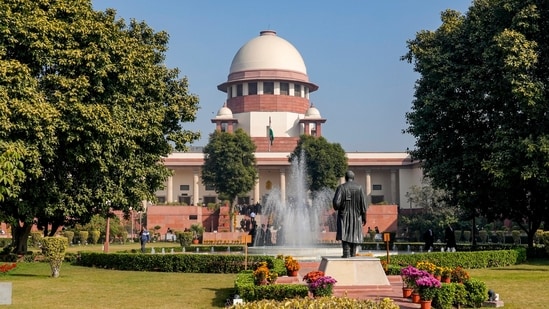
A bench comprising Chief Justice of India Surya Kant and justices Joymalya Bagchi and V Mohana issued notice to the Centre and the Delhi Police commissioner on a public interest litigation filed by CPI(M) Rajya Sabha MP AA Rahim, challenging the alleged use of facial recognition technology, AI-powered surveillance systems and biometric identification tools against protesters.
Also read: 20 FIRs filed in Delhi over CJP protest violence
SC seeks Centre, Delhi Police response on surveillance
Senior advocate Menaka Guruswamy, appearing for Rahim, told the bench that the petition specifically challenged the use of facial recognition technology by the Delhi Police against protesters and alleged that the data collected was being held by private companies. “This is very specific prayer concerning facial recognition being used by the Delhi Police against protesters, and the data is held with private companies,” Guruswamy said.
Also Read: ‘Hands off our Jantar Mantar’: CJP reacts sharply to HC’s remarks on protest site
{{/usCountry}}Also Read: ‘Hands off our Jantar Mantar’: CJP reacts sharply to HC’s remarks on protest site
{{/usCountry}}She said that the surveillance involved both a facial recognition vehicle and smart glasses, with data collected without the permission of those being monitored. “One maps your face and one is a vehicle. So spectacles are used and a vehicle is also used. And that data is all taken without permission. These private entities host the data. In violation, we will argue, of the DPDP Rules, CrPC and a variety of things,” she said.
The bench then directed that notice be issued and the plea be tagged with other pending petitions concerning the July 20 “Sansad Chalo” protest, which raise allegations of police excesses, including the use of pellet guns and violence against protesters and police personnel.
Also read: Biometric scanners in Delhi to be placed under CCTV watch
Plea alleges protesters subjected to biometric surveillance
The petition, filed through advocate Subhash Chandran KR, claims that since the commencement of the sit-in at Jantar Mantar on June 20, thousands of protesters, journalists and ordinary citizens have been subjected to “continuous and pervasive biometric surveillance”.
Rahim has sought a declaration that indiscriminate deployment of facial recognition and biometric surveillance against peaceful protesters is unconstitutional. He has also sought directions restraining the Delhi Police from deploying such technologies until Parliament enacts a law specifically authorising their use.
Also read: Police identify 2,873 protesters with ‘criminal backgrounds’
Petitioner seeks deletion of protesters’ biometric data
Among other reliefs, the petition seeks disclosure of the surveillance technologies, databases, standard operating procedures and vendor agreements used during the Jantar Mantar protest; deletion of protesters’ biometric data from NAFIS, CCTNS and allied databases; and a mechanism enabling individuals to ascertain whether their biometric information was collected and seek its deletion.
It has also sought directions to private vendors to permanently delete biometric information collected during the protest and certify such destruction, besides restraining them from using the data to train, develop or improve facial recognition or artificial intelligence systems.
According to the plea, the surveillance was carried out through CCTV cameras, drones, a Mobile Command and Control Vehicle and handheld devices, besides real-time facial recognition using the “Ikshana” surveillance vehicle and “AjnaLens” smart glasses. It also alleges collection of fingerprints through the NCRB’s “Abhigyan” application and their matching against the National Automated Fingerprint Identification System (NAFIS).
Plea questions legal basis for facial recognition at protests
The plea contends that there is no law authorising the biometric surveillance of people participating in a lawful protest. It argues that neither Delhi Police standing orders governing protests nor the Criminal Procedure (Identification) Act, 2022 permit such surveillance of peaceful demonstrators.
The petition relies on RTI responses obtained from the Delhi Police to claim that no privacy impact assessment was conducted before the surveillance was undertaken. It further alleges that an 80% similarity score is treated as a positive facial recognition match, despite the absence of any publicly available validation of the threshold.
It also claims that Delhi Police’s stated use of facial recognition technology is limited to tracing missing persons and identifying deceased persons, rather than policing peaceful assemblies.
Petition invokes privacy, free speech and assembly rights
The petitioner has invoked the Supreme Court’s 2017 privacy judgment in the KS Puttaswamy case, arguing that the alleged surveillance fails the constitutional requirements of legality, legitimate aim and proportionality. It contends that the indiscriminate deployment of facial recognition creates a chilling effect on the exercise of the rights to free speech and peaceful assembly under Articles 19(1)(a) and 19(1)(b), apart from being arbitrary and disproportionate under Article 14.
The plea also raises concerns over the retention and possible integration of the biometric information with national criminal databases, alleging that the data could be retained indefinitely without adequate statutory safeguards, purpose limitation or a defined retention policy.
Also read: ‘Jantar Mantar Season 2 going to start very soon’: CJP founder Abhijeet Dipke's big remark
Two private companies have also been made respondents to the PIL, Aditya Infotech Ltd, which allegedly supplied the “Ikshana” facial recognition vehicle, and Dimension NXG Pvt Ltd, which allegedly supplied the AjnaLens smart glasses. The plea alleges that the companies participated in the policing exercise and may continue to possess footage, facial templates and other biometric information of protesters. It also questions whether any data-processing or data-sharing agreements, or other contractual safeguards governing access to such sensitive information, were put in place.