
 E-Paper



Schools may not open any time soon, says government
Doctors and scientists have repeatedly said that the virus is known to infect children with mild or asymptomatic illness in a majority of cases


Schools will only be reopened after adequate consultation as scientific data and evidence from other countries suggest that more information is required before allowing children back into classrooms during a pandemic, Niti Aayog member (health) VK Paul said at a Union health ministry briefing on Friday.
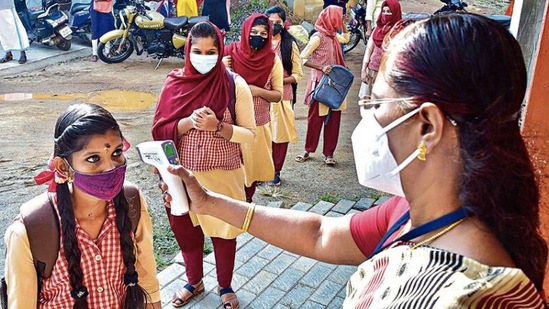
Paul’s statement comes at a time the state governments and public health experts are attempting to allay concerns that the next wave of Covid-19 infections may hit children harder.
“If we look at the global scenario, many countries reopened schools and then saw a surge in cases because of which they had to shut schools again. We cannot put our children and teachers in a similar situation... we need to have more confidence that we have controlled the pandemic enough that we will not face the kind of a situation that other countries faced. Eventually, we will have to reopen but now is not the time,” Paul said.
Doctors and scientists have repeatedly said that the virus is known to infect children with mild or asymptomatic illness in a majority of cases, but children can still transmit the disease to others -- who may be more vulnerable -- in the household.
“You have to keep in mind that in a school you have teachers, helpers, limited possibility of observing social distancing, etc. All this needs to be thoroughly considered, along with other related vital issues before a decision is taken in this regard,” Paul said, adding that “there is growing scientific evidence to be considered too”.
Schools across India have been closed for physical classes since the second wave of the pandemic began in March this year. Some states had reopened schools after the first wave tapered off, but the latest national outbreak pushed classes back online.
Although some regions in other countries, including the US and the UK, saw some minor outbreaks among school students and staff members, researchers say there isn’t enough evidence to say that the virus transmits easier in such surroundings.
On Friday, Paul also warned against relying on the idea of achieving natural herd immunity -- a threshold of infection levels within a population after which transmission of the virus falls and the outbreak dies down.
He said there is no confidence on what the herd immunity threshold will be and how the virus variants will evolve. “If we take a look at the example of Brazil, we saw it had high seroprevalence (which indicates previous infection) and yet had a large outbreak of the P.1 variant. Similarly, Delhi had over 50% seropositivity, and still we saw what happened in the second wave. We can’t take sero study findings for granted. The virus also continues to change.”
On speculation that the next outbreak may infect more children, Paul said that children -- when infected with Covid-19 -- largely get mild illness, but “we have to remain cautious”.
“There is a possibility that the virus may mutate further to an extent that it affects children more... and that is why we need to stay fully prepared to deal with any surge in future.”
The Niti Aayog member noted that the Union health ministry has released guidelines for treatment of children diagnosed with Covid-19, and that the government is prepared to handle any potential surge.
He touted the benefits of vaccination, and said several studies have shown the chances of hospitalisation are 75-80% lower in people who have been inoculated. “The point that we are trying to reiterate is that vaccines are absolutely safe and there should be no room for vaccine hesitancy,” he said.


