
 E-Paper



Science is universal, but tech must be local, says PM Narendra Modi
Our scientists must commit themselves to addressing problems of affordable healthcare, housing, clean air, water and energy, agricultural productivity and food processing, Modi said.


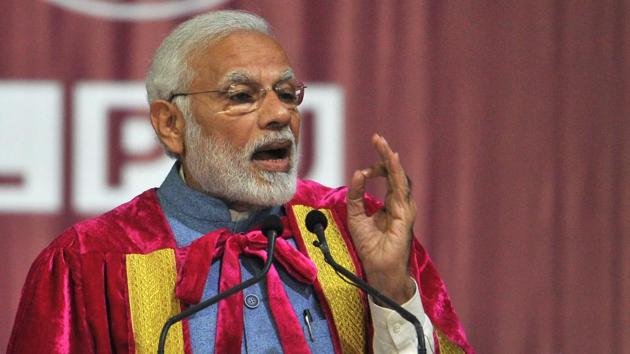
Prime Minister Narendra Modi on Thursday added the saying ‘Jai Anusandhan’ to the popular phrase coined by former Prime Minister Lal Bahadur Shastri at the inaugural ceremony of the 106th Indian Science Congress, emphasising the importance of research and innovation.
Two Nobel Laureates, who were speakers at the Congress, couldn’t agree more.
However, the vision for research in India of the Prime Minister and that of the Nobel laureates was quite different.
“Our scientists must commit themselves to addressing problems of affordable healthcare, housing, clean air, water and energy, agricultural productivity and food processing. While science is universal, technology must be local for providing solutions relevant to local needs and conditions,” said Modi.
While his focus is on using science for technological innovations, Professor Thomas Sudoph, a German American biochemist who worked with the Stanford University, California, and Professor Avram Hershko, a Hungarian-born Israeli biochemist who worked with Israel Institute of Technology, Haifa, agree that the government needs to spend on basic research.
Prof Hershko, who won the Nobel Prize for Chemistry in 2004, said: “The government has funds and resources for basic research. The corporates would not give money for such research, so it is the responsibility of the society. I think that you cannot translate a research before giving enough time to the basic research, try to translate too early and you would not be able to translate anything.”
Adding to the PM’s vision of India leading the world in the field of science, Prof Sudoph said that’s possible only when the country focuses on answering the fundamental questions.
Prof Sudoph, who won the 2013 Nobel Prize for Physiology or Medicine, said: “I understand the temptation of just moving to technology...but basic research is necessary to lead the way,” he said. “The space organisation here is doing great work, but it is something that has happened in the US and the USSR. No doubt the missions are necessary for India, but the science is already out there,” said Prof Sudoph.
Read more| Thanks to science, 100-year life firmly within our grasp


