
 E-Paper



SC to states: Ensure Covid ex-gratia claims resolved
The affidavits filed by many of the states showed that they had received claims far in excess of the recorded Covid-19 deaths.

 Prefer HTon Google


The Supreme Court on Wednesday asked states to make sure people are aware of the ex gratia being paid to the kin of those who lost their lives on account of Covid-19, and to ensure that claims were not rejected on technicalities.
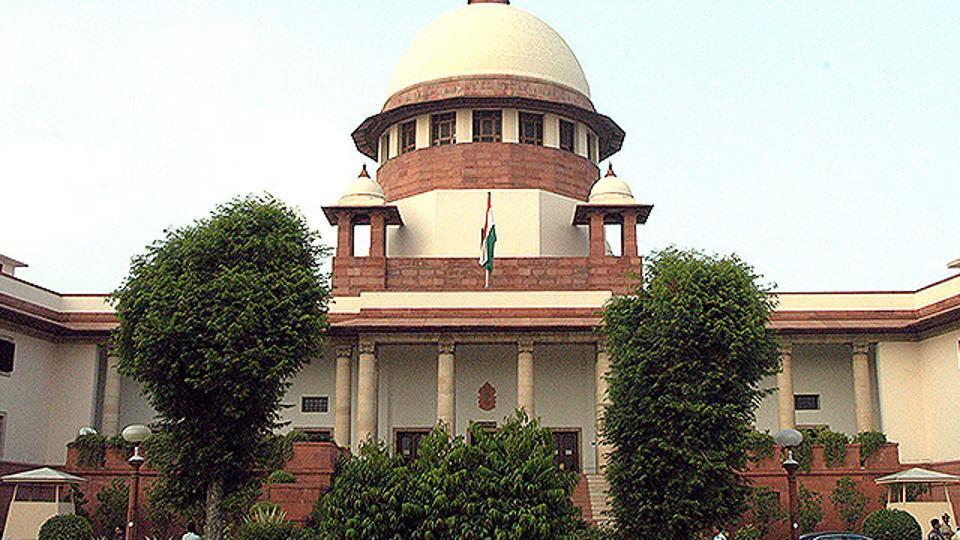
The affidavits filed by many of the states showed that they had received claims far in excess of the recorded Covid-19 deaths. For instance, Gujarat, which recorded 10,094 Covid-19 deaths according to government data, received 91,810 claims, of which, 5,761 were rejected while payment was made against 59,000. A similar jump was also witnessed by Maharashtra which recorded 141,835, the highest to be recorded by a single state in the country, but received 217,151 claims. Of this, the state government rejected 49,113 claims and paid against 100,271 claims, with the process still on.
Passing a common order for all states, the bench of justices MR Shah and Sanjiv Khanna said: “No claim should be rejected on technical grounds and if there is any lacuna in the claim, the reason must be communicated to the concerned claimants and opportunity be given to rectify the mistake to ensure compensation is paid to them.”
Similar increases were also seen in the affidavits of Andhra Pradesh (14,471 deaths according to the state and 41,292 claims), Telangana (3993 deaths and 28,969 claims), Tamil Nadu (36,825 deaths and 57,147 claims), Uttar Pradesh (22,928 deaths and 33.958 claims), and Chhattisgarh (13,600 deaths and 21,035 claims) . Madhya Pradesh and Odisha too saw increases, but marginal ones.
But the court noted with concern that in many states, the number of claims failed to reach the actual figure of deaths recorded by them. The bench observed, “Our only anxiety is to see that no person should be deprived of compensation... If the applications received are less than the actual deaths it is a matter of concern. Figures in some states have shown phenomenal increase. But the very fact you have received less applications means there is less publicity by states/UTs. It may be the poorer section of the society which may be deprived of this information.”
This was evident in the affidavits of Kerala, Punjab, Karnataka, Haryana, and Bihar , and also West Bengal, Assam, Jharkhand, and Himachal Pradesh. Kerala with reported deaths of 49,300 received 27,274 claims (23,652 paid), while Punjab received only 8,786 claims against 16,557 deaths.
Finding it unfortunate that states were not complying with its earlier orders asking them to give wide publicity about the ex-gratia scheme, the bench said, “It is most unfortunate for us to call each state and ensure our order is complied with. Every state believes we are at their mercy, the people are at their mercy. In these matters, a proactive approach is needed as the payment must be made immediately and nodal officers appointed to ensure applications are processed soon.”
Advocate Gaurav Kumar Bansal, on whose petition the Court ordered payment of ex-gratia on June 30 and October 4, informed the Court that another bench of the Supreme Court is dealing with the case of children orphaned due to Covid-19. This information, he said, was available with the national commission for protection of child rights (NCPCR) which operates a centralized database n this regard on Bal Swaraj portal.
Additional Solicitor General (ASG) Aishwarya Bhati appearing for Centre informed the Court that 10,000 children across the country lost both parents due to Covid-19. The bench directed the states to supply information about these children to the state legal service authorities (SLSA) and told states, “There has to be greater care by states to ensure the payment reaches to these children and not anyone else.”
The Court also considered involving SLSAs to speed up filing of claims in states which have not showing promising figures. An order in this regard will be passed later, the bench said, while adjourning the matter to February 4.


