
 E-Paper



Security in Parliament: Current rules of entry and how they work
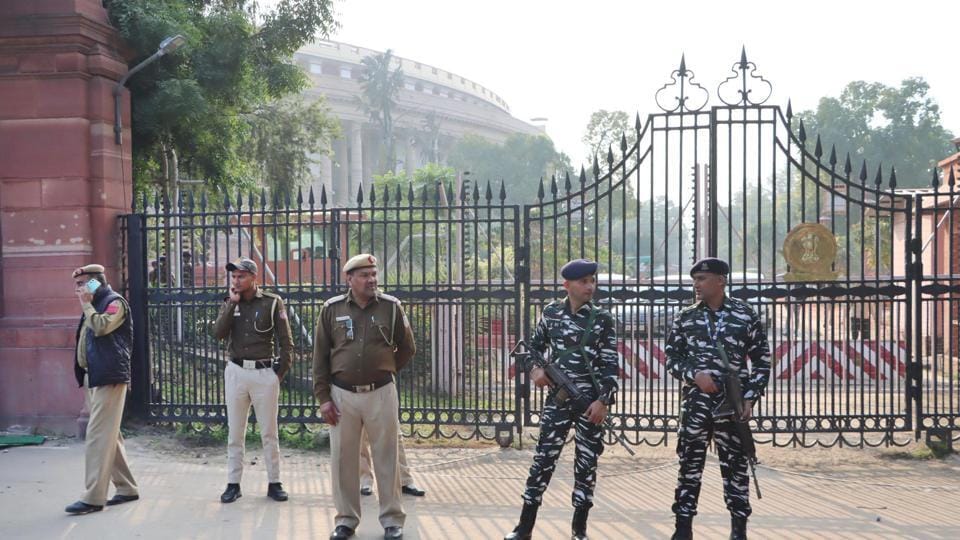
The security of the Parliament complex is managed by Delhi Police, paramilitary forces and a specialised department called Parliament Security Service (PSS).

 Prefer HTon Google


Parliament’s security was heavily tightened after the terror attack on December 13, 2001, but the massive security breach on Wednesday – two people managed to clear multiple layers of security checks, smuggled smoke canisters into the Lok Sabha, and jumped into the House from the visitor’s gallery – has raised serious questions about gaps in the system as well as the process.
Strangely, no agency is yet calling the incident a terror attack.
The security of the Parliament complex is managed by Delhi Police, paramilitary forces and a specialised department called Parliament Security Service (PSS). While the police control access of the area surrounding the complex, paramilitary jawans guard the outer perimeter of the complex. Inside, it’s the PSS and Delhi Police that is in charge. PSS, led by a joint secretary-level officer – usually from the Indian Police Service and Delhi Police – has three levels of security check for any visitor – at the entrance of the Parliament complex right before guest passes are made, at the gate of the new Parliament building, and right before the visitor enters the gallery. A thorough checking awaits the visitors at every level and they are not allowed to carry anything, including pens or books, inside the House. PSS escorts the visitors who come to watch the proceedings on the basis of a recommendation of an MP.
Read Here: Woman arrested over Lok Sabha security breach a civil services aspirant, cleared teachers' eligibility test
There is another set of select visitors who come as personal guests of the Lok Sabha Speaker or Rajya Sabha chairman. This includes diplomats and foreign dignitaries. These people are treated as distinguished visitors and some of the security protocols are relaxed for them.
Others (and that includes the two who breached the security) who watch the proceedings for a maximum of one hour, go through a rigorous security process. After they clear all security measures, they are escorted to the gallery – there are three of them for the ordinary visitors – by some security staff. The security supervision continues on the visitors even inside the public galleries.

During the session, the security of Parliament is handled by both PSS and Delhi Police. In all galleries, House Marshals – or security officers – sit in the front row throughout the proceedings. Guests are not allowed to occupy the front row seats.
This arrangement was put in place after a visitor jumped into the floor of the House when the bill to form Jharkhand was passed in the Lok Sabha in the old Parliament building.
Read Here: Smoke, chaos inside Parliament on 2001 terror attack anniversary
But that’s exactly what happened on Wednesday – when Parliament’s security was put to the test, and, 22 years after the terror strike on it, found wanting again.
Meanwhile, the home ministry, in consultation with PSS, Intelligence Bureau, Special Protection Group, Parliament Duty Group and other central agencies, is expected to conduct a complete review of the incident of security of the Parliament House complex, annexe, access control system, galleries as well as advance and instant verification of visitors, people familiar with the developments said. Union home secretary Ajay Bhalla visited Parliament after the security breach and held discussions with concerned agencies, even as Delhi Police began investigating the motive and association of the arrested people. “It is not known if any verification of the attackers was done on Wednesday but Delhi Police’s Special Cell will look into it,” one of the persons cited above said.


