
 E-Paper



Send digital records of prisoners who filed jail petitions in top court: SC
Digital records sought for pending jail petitions: The Supreme Court order came on a 2019 jail petition pending due to incomplete records received by the amicus curiae.


New Delhi: The Supreme Court has directed high court legal services committee and state legal services authority across the country to prepare digital records of cases of prisoners whose jail appeals are pending before the top court due to incomplete records.
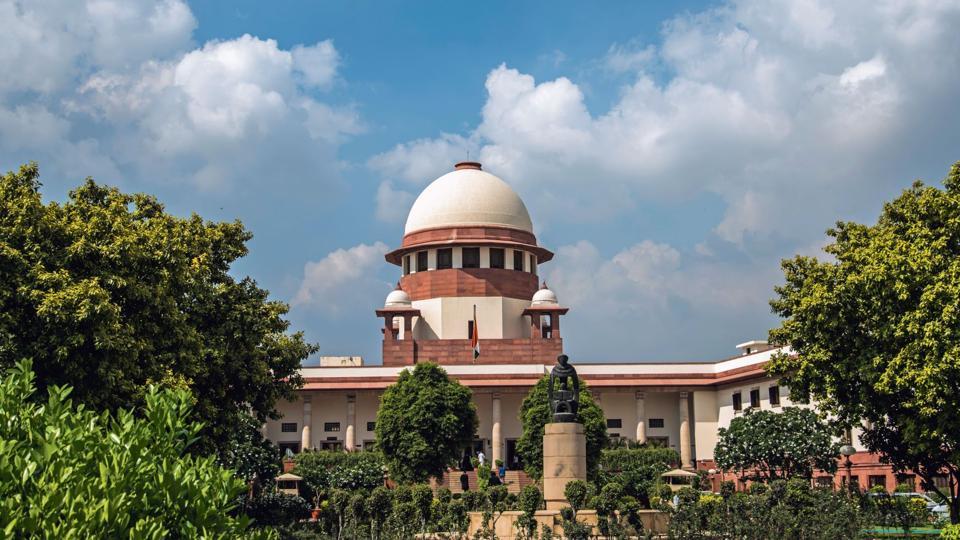
In an order on Friday, a bench of justices UU Lalit and S Ravindra Bhat directed the two bodies to supply all case records including deposition of witnesses concerned in digital format for smooth hearing of jail petitions.
Jail petitions are requests, appeals or applications of any kind, filed by convicts who cannot afford a lawyer. These pleas are forwarded by jail authorities to the state legal services authority concerned. The Supreme Court Legal Services Authority assigns the case to a lawyer on its panel who arranges the necessary documents and gets it ready for hearing. The panel’s lawyer assists the court as amicus curiae to argue the appeal.
The bench said such petitions often reached the lawyer from the panel of amicus curiae or those engaged by the Supreme Court Legal Services Committee (SCLSC) with incomplete documents and ordered that the state legal services authority or the high court legal services committee should send “complete record of the case in digital form”.
Apart from the high court and trial court judgments, the top court said relevant material such as deposition of relevant witnesses and other documents such as custody certificate disclosing the length of custody undergone by the accused should also be shared with the Supreme Court’s registry or SCLSC in digital format.
The directions came on a jail petition filed by a life convict lodged in a Rajasthan jail.
The Supreme Court received a jail petition on behalf of the convict, Kailash Thakan challenging the Rajasthan high court’s August 6, 2019 verdict confirming his conviction and life sentence. The case was assigned to advocate Karan Bharihoke as amicus curiae on August 17, 2021. The lawyer was given two weeks to prepare the appeal.
Bharihoke told the court on October 8 that he could not prepare the appeal since the case record including the depositions of the relevant witnesses was yet to be provided.
The bench felt that orders were required to be passed in the matter as similar problems arose while dealing with other jail petitions.
The court directed that its order to make digital records available to the lawyer should be sent to all state legal services authorities, high court legal services committees, SCLSC and the National Legal Services Authority (NALSA).
Bharihoke described the court’s directions a “welcome step”, adding that it will go a long way in ensuring just and adequate representation to the accused in jail petitions.”
On October 6, another bench of the Supreme Court led by justice Sanjay Kishan Kaul also took note of 300 cases where convicts in judicial custody have approached the Supreme Court court directly against conviction through jail petitions. In this case, the court directed the Supreme Court registry to ensure records from trial courts and high courts are received by end of next month.
The order came pursuant to a report prepared by three lawyers – Gaurav Agrawal, Liz Mathew and Devansh Mohta who examined the 300 jail petitions (including four death convicts) and suggested that in many cases, it was not known whether the convicts had been released or died. In two cases, the team of lawyers found out that the convicts had been released while in one case, the convict died.
The court ordered that a mechanism be put in place and directed NALSA to get the documents ready for hearing after receiving the records from the registry. Friday’s order implies that the high court’s legal service authorities concerned will have to supply the records to the registry in digital format.


