
 E-Paper



Set up special courts or risk bail for accused in UAPA cases: Supreme Court to govts
The remarks came during the hearing of a bail plea filed by Kailash Ramchandani, an alleged Maoist sympathiser from Maharashtra’s Gadchiroli district


The Supreme Court on Friday issued a stern warning to the Union and state governments, cautioning that the continued failure to establish exclusive special courts for cases investigated under the National Investigation Agency (NIA) act and other stringent laws may leave courts with no option but to grant bail to undertrial prisoners, even in cases involving terror and heinous crimes.
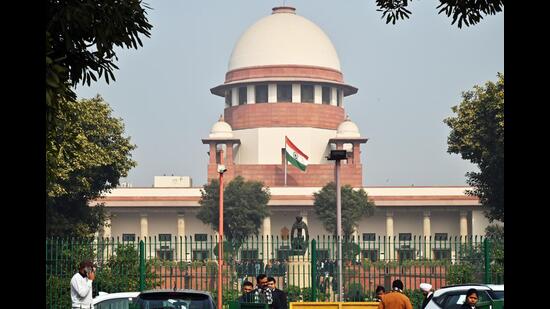
“If the authorities fail to establish special courts with requisite infrastructure to conduct timebound trials, the courts would invariably be without any option but to release undertrials on bail…How long can such suspects be kept behind bars when there is no mechanism for speedy trial?” observed a bench of justices Surya Kant and Joymalya Bagchi.
The scathing remarks came during the hearing of a bail plea filed by Kailash Ramchandani, an alleged Maoist sympathiser from Maharashtra’s Gadchiroli district, booked under the Unlawful Activities (Prevention) Act (UAPA) and investigated by NIA. The Centre’s proposal to simply designate existing courts to handle NIA cases, without creating exclusive courts, appointing new judges or provisioning dedicated infrastructure, drew sharp disapproval from the bench.
Appearing for the Union government, Additional Solicitor General (ASG) Raja Thakare informed the court that the Centre has approached high courts to designate some existing trial courts as special courts under Section 11 of the NIA Act, 2008. However, the bench flatly rejected this approach, stating it failed to meet the requirements outlined in the court’s previous orders.
“You cannot have the same court dealing with NIA cases, matrimonial matters, and civil suits,” the bench said. “In these kinds of cases, it is in everyone’s interest that trial takes place on a day-to-day basis. That can happen only when you have exclusive courts to handle such cases,” it added.
The bench emphasised that mere redesignation of existing courts was inadequate and would be “at the cost of other court cases” involving vulnerable litigants such as senior citizens, women in family disputes, and marginalised communities.
Reiterating its earlier directions from May 23, the top court stressed that establishing exclusive courts with dedicated judicial officers, ministerial staff and appropriate courtrooms is not optional but essential. “We want some concrete action…Show us sanctioning of posts, infrastructure and budget,” it told the ASG.
The court noted that the affidavit filed by the Centre showed “no effective or visible steps” taken to comply with its previous directions. “On the contrary, an impression is being given that mere designation of existing courts would suffice. This is rejected,” the bench stated in its written order.
It further recalled its March 17 order, which had recorded that the court is not inclined to release the petitioner on bail. The bench clarified that Ramchandani’s bail plea would be reconsidered on the next date if no steps were taken to set up dedicated courts. The matter has now been posted for hearing after four weeks, with the court making it clear: “This will be the last opportunity for the Union of India and the state to come out with a working mechanism.”
In its May 23 order, the court had highlighted the alarming backlog of trials under special statutes such as UAPA, MCOCA, and the Explosives Act. “These cases often involve hundreds of witnesses. However, the trials are not commencing because presiding officers are burdened with other civil and criminal matters,” it had noted at that time.
The bench further underscored that in the absence of a judicial audit and coordinated executive planning, the justice delivery system was buckling under the weight of special law cases. The continued incarceration of undertrials without trial, the court said, amounted to a violation of their fundamental right under Article 21 of the Constitution -- the right to life and personal liberty.


