
 E-Paper



Shehbaz Sharif explains how BrahMos blew up Pakistan's planned offensive: Watch
Shehbaz Sharif acknowledged that the Pakistani armed forces were preparing to launch an attack on India early on May 10.

 Prefer HTon Google


Pakistan Prime Minister Shehbaz Sharif has publicly admitted that India's BrahMos missile strikes stopped a planned Pakistani military offensive on the night of May 9 and 10.
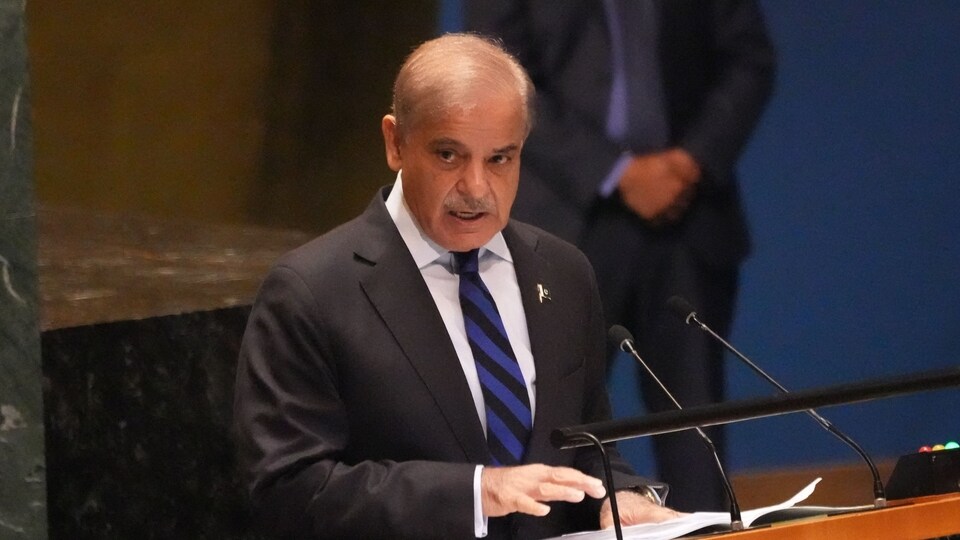
Speaking at a summit in Lachin, Azerbaijan, Sharif acknowledged that the Pakistani armed forces were preparing to launch an attack on India early on May 10. However, Indian strikes hit multiple targets across Pakistan before the planned operation could begin.
“On the night of May 9-10, we decided to respond in a measured fashion to Indian aggression,” Sharif said. “And we had decided that at 4:30 in the morning after Fajr prayers, Pakistan armed forces led very ably by our field marshal chief army staff sitting here, Syed Asim Munir to teach a lesson to our enemy.”
“But before that hour reached India again launched missile attacks, and BrahMos hit Pakistan's various provinces including airport in Rawalpindi and other places,” Pakistan PM added.
This is not the first time Sharif has confirmed the significant damage from Operation Sindoor.
Sharif says Indian missiles targeted Nur Khan Airbase
In a previous event at the Pakistan Monument in Islamabad, he said that Indian missiles hit Nur Khan Airbase in Rawalpindi and other key locations.
“On the intervening night of May 9-10 around 2.30 am, Army chief Asim Munir called me over a secure line, informing me that Hindustani ballistic missiles had hit Nur Khan airbase and other areas,” Sharif stated.
Despite admitting to setbacks on various occasions, the Pakistani government promoted General Asim Munir to the rank of Field Marshal for his role in leading Pakistan's military response, named Operation Bunyan-um-Marsoos, earlier this month.
Also read: Asim Munir's fresh warning over Indus Waters Treaty: 'Water is Pakistan's red line'
Sharif praised the operation and called it a strong reply to India’s Operation Sindoor.
Pakistan PM urges resumption of talks with India
In recent speeches, Sharif has continued to push for talks with India. During a visit to Tehran, he said, “We want to resolve all disputes, including the Kashmir issue and the water issue, through negotiations."
He added, “If they choose to remain aggressors, then we shall defend our territory like we have done a few days ago.”
However, India is firm on its stance: “Talks and terrorism can not go together, trade and terrorism can not go together, and water and blood can flow together.”
Also read: Video showing Pak PM Shehbaz Sharif ‘deep scanning’ actor Mawra Hocane goes viral
India's Operation Sindoor
Operation Sindoor, launched by India on May 7, was a direct retaliation to the deadly terror attack in Pahalgam on April 22, which left 26 people dead.
According to Indian officials, the operation precisely targeted and destroyed nine terrorist camps located in Pakistan and Pakistan-occupied Kashmir, resulting in the deaths of more than 100 militants.
The strikes triggered four days of intense clashes between the two nuclear-armed neighbours, involving drones, long-range weapons, and missile attacks.
On May 10, India reportedly hit eight Pakistani airbases, including Murid and Nur Khan, targeting runways, hangars, radar systems, and weapon storage sites.
A ceasefire agreement was later reached on May 10, ending the latest round of hostilities.


