
 E-Paper



‘Shocking’ overcrowding: SC orders states, UTs to plan new jails for next 50 yrs
Court was informed that while overcrowding was observed across all categories of jails in most states, there were some which had “super overcrowding”

 Prefer HTon Google


New Delhi: The Supreme Court on Tuesday directed states and union territories to accord “top priority” to the problem of overcrowding in jails, finding the actual occupancy of jails across the country to be “shocking” and “quite worrying” and directed committees to be set up in each district within a week to prepare a roadmap on the number of jails needed to cater to prison population for the next 50 years.
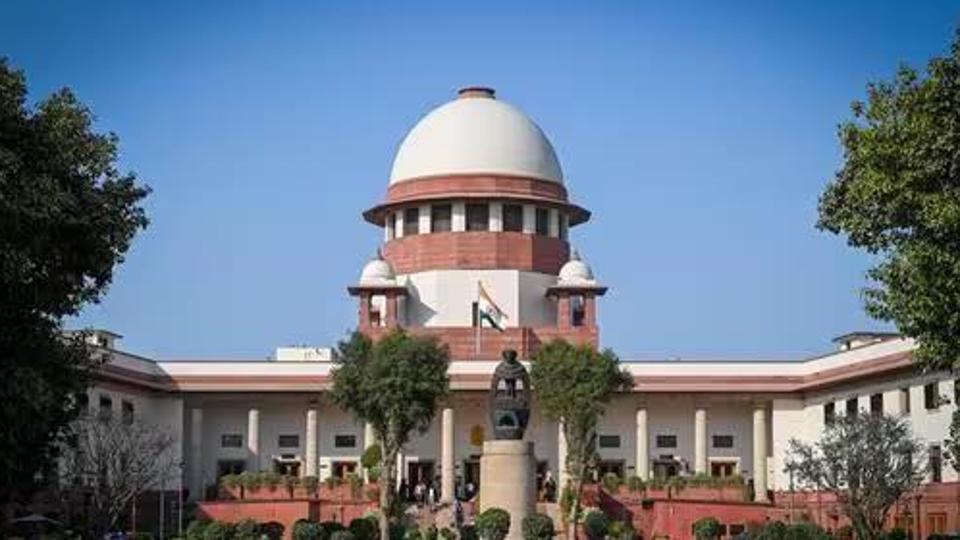
A bench of justices Hima Kohli and Ahsanuddin Amanullah said, “It appears that in most cases (across the country) overcrowding of central jails, district and sub-jails is over 10% of the permitted capacity, in some cases it being 30-50% and even four times. The figures are stark and quite worrying. They need to be addressed on top priority.”
The observation came as the Court was hearing a suo moto petition on “Inhuman conditions in Prisons” where it received reports from states and union territory (UT) on the number of jails, sanctioned and actual capacity of prisoners, and pending proposals or plans to create more jails. Two states – Maharashtra and Jharkhand did not submit a report as the Court imposed a cost of ₹10,000 each on them.
The Court went through a report prepared by senior advocate Gaurav Agarwal, assisting the Court as amicus curiae, who compiled reports received from all states. Agarwal said, “Overcrowding has to be seen qua each jail and not for the entire State, as projected by some states. The issue of overcrowding has to be addressed jail-wise and specific solutions for each jail will have to be worked out by the government.”
Accepting this suggestion, the Court order said, “Each state/UT is directed to constitute a committee comprising district judge, district magistrate, superintendent of police, superintendent of jail(s) in each district, member-secretary of district legal service authority (DLSA).” The committee shall be notified within a week and convene within the next two weeks, the order added.
Elaborating the function of the committee, the Court said, “The committee shall initiate steps and examine requirement of expanding existing jails, enquiring land available for meeting future demands of jails in the district...The future projection shall factor in a period of 50 years for implementation.”
The amicus informed the Court that while overcrowding was observed across all categories of jails in most states, there were some which had “super overcrowding”. For instance, he gave the example of Delhi having 16 central jails having more than 20,000 prisoners as against a sanctioned capacity of 10,026 prisoners. Uttar Pradesh too figured in this category. The state has 75 jails, the largest in a state, with a prison population of 99,335, far exceeding the sanctioned capacity of 65,866.
Also Read: SC seeks religion-wise data of students in key institutions
“The deficit between actual and sanctioned capacity is shocking,” the bench observed, adding, “Nobody has applied mind as states need to be futuristic.” On going through the reports by states, the Court observed that some states such as Bihar, Rajasthan, Karnataka and Madhya Pradesh failed to provide an action plan for remedying the problem in future.
Some states did not provide the actual jail-wise population that made it difficult for the Court to ascertain the districts needing special attention while other states failed to clearly indicate the stage at which the proposal for new jails were pending.
The committee was further directed to make proposals to the concerned chief secretary in each state/UT after examining the ongoing projects/plans for construction of new jails pending with the state department. The Court asked the committee to immediately focus on identification and acquisition of land for setting up or expanding jails and directed milestones to be set for time-bound implementation of pending projects.
The Court posted the matter for April 9 to monitor the responses received from the respective state/UT governments.
The suo moto proceedings were initiated by the top court in 2013. To understand the extent of the problem plaguing prisons, the Court formed a committee in September 2018 headed by a former Supreme Court judge, justice Amitava Roy which submitted a comprehensive report in multiple volumes addressing the issue of overcrowding of jails, condition of women and children in jails, transgender prisoners, death row convicts, and juvenile correctional institutions along with suggestions for implementation.
The Justice Roy-led committee also addressed other pressing concerns such as violence between inmates, unnatural deaths of prisoners, concept of semi-open and open jails, and vacancies in prison staff and correctional administration.
The report dealt with less-explored themes of psycho-social aspects of women prisoners, toilets for transgender prisoners, need for medical facilities for sick and old prisoners, and treatment for death row convicts. It also found a huge gap between sanctioned posts and actual working force in prisons and recommended all vacant posts to be immediately filled up.
As per the Prison Statistics 2021, as on December 31, 2021 for a total of 5,54,034 inmates lodged in various jails of the country, the actual strength of executive jail staff, including officers was 54,955 in various prisons while correctional staff, including counsellors/psychologists were only 886 for the 1,319 prisons across the country.


