
 E-Paper



'CCTV video of mothers, sisters…': EC cites voter privacy for not sharing data after Rahul Gandhi's ‘chori’ charge
CEC Gyanesh Kumar said the “vote chori” charges were a case of “shots being fired at the voters by perching a gun on the EC's shoulder”

 Prefer HTon Google


The Election Commission of India (EC) on Sunday cited privacy concerns of voters to argue why it has not shared CCTV footage from polling booths in recent elections, even after serious allegations of irregularities were reiterated by the Opposition led by Rahul Gandhi.
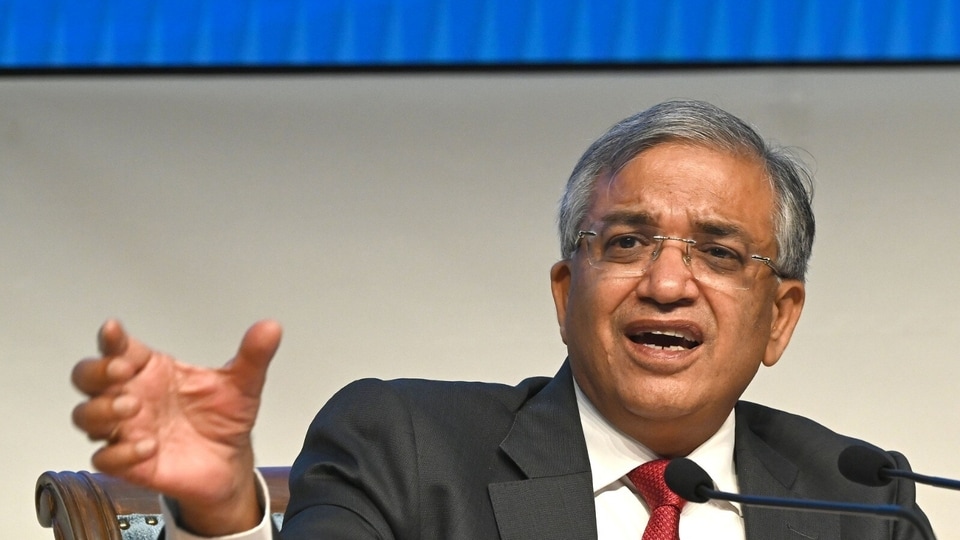
Criticising the use of phrases like “vote chori (theft)”, Chief Election Commissioner (CEC) Gyanesh Kumar was combative at a press conference in Delhi. He said “unsuccessful efforts to mislead the voters” amounted to “nothing less than an insult of the Constitution”.
Rahul Gandhi, meanwhile, reiterated his charges in Bihar, where the Opposition rallied against the ongoing Special Intensive Revision (SIR) being held just two months before elections are due.
Also read | Congress launches 'Vote Chori se Azaadi' campaign; urges for support by displaying picture
Why data can't be given in specific format: EC's argument
The CEC said the “chori” charges were a case of “shots being fired at the voters by perching a gun on the EC's shoulder”.
"We want to make it clear, that the EC has fearlessly stood by voters from across sections and religions, and will continue to stand by them like a rock,” he said, speaking in Hindi.
He spoke specifically on why machine-readable voter lists had not been provided to parties, such as the Congress, that have alleged fake names and multiple entries. “The Supreme Court has already held in 2019, that it could breach a voter's privacy,” he said.
Not naming Rahul Gandhi, he referred apparently to the Congress MP's and others' citing of some voters having being enrolled at multiple places. “We saw recently, that some voters' photos were shown to the media without their consent; and allegations were made using them,” the CEC said.
Also read | ‘Bahut khatarnaak aadmi hai’: Kharge lashes out at PM Modi over 'vote chori' claims in Bihar
With it, he also referred to the demand for surveillance footage from polling booths to determine if duplicate or proxy voting took place. “Should the Election Commission share CCTV videos of anyone's mother, daughter-in-law, sister, or of anyone else?” Gyanesh Kumar said.
Why even record the footage, asks Congress
Congress spokesperson Pawan Khera later challenged the argument.
“If you do not intend to share the footage, why do you event record it?” Khera said.
He cited the EC's recently-revised rules to keep the footage for 45 days and then destroy it: “Why isn't privacy hampered in those 45 days?”
The CEC, at his press meet, also mentioned the large number of election officials, booth-level agents and candidates' representatives — nearly 1.3 crore — and claimed, “In such a transparent process, can anyone steal votes?”
He said no proof was provided to back allegations of people voting multiple times.
We are not scared, says CEC, asks for Rahul Gandhi to apologise
The EC has already asked Rahul Gandhi to provide proofs under oath, to which he has retorted saying he has taken the oath of the Constitution as a member of Parliament, and that the EC should simply check its own data that he cited.
The CEC, in response to questions on Sunday, said Rahul Gandhi must apologise: "If within seven days I don't get the oath, it means he is a liar and he blamed my voters as liars."
‘Entire country knows’: Rahul Gandhi in Bihar
Around the same time when the EC was holding its press meet in Delhi, the Congress, RJD and allies held a ‘Voter Adhikaar Rally’ in Bihar against the Special Intensive Revision (SIR) of voter rolls in the state.
Rahul Gandhi said in Sasaram: “The entire country knows what the Election Commission is doing. Earlier, the country did not know how votes were being stolen. But we made it clear in the press conference how votes are being stolen. Whenever the theft is happening, whether in Bihar, Maharashtra, Assam, Bengal, we will catch the theft and work to show the people.”
CEC Gyanesh Kumar spoke on the Bihar SIR earlier, saying that the EC's doors are open to all, and invited political parties to raise their issues with the draft electoral rolls as per process until the end of the month.


