
 E-Paper



Speeding freight train mows down 3 young lions in Gujarat
According to data maintained by NGO Wildlife Protection Society of India, as many as 74 leopards, 30 elephants, four lions and three tigers have died in accidents on railway tracks and roads thus far this year.


Three young lions were killed after being hit by a speeding freight train in Gujarat’s Amreli district in the early hours of Tuesday, taking the toll of large wild mammals killed in railway accidents to at least 12 in the past 45 days and, according to a conservation group, 118 from road and rail accidents this year.
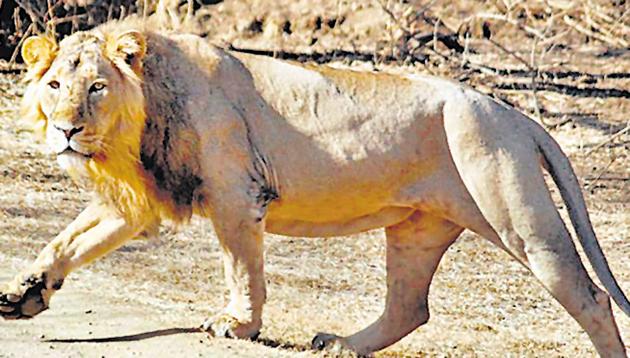
The deaths highlight the shrinking and fragmentation of wildlife habitats, causing wild animals to either venture into human habitations (resulting in human-animal conflicts that usually end badly for the latter) or try to cross railway tracks or highways, with tragic consequences.
The death of the lions from the Gir National Park and Sanctuary come in the backdrop of the electrocution of seven elephants on a railway track in Odisha in early November and the death of two tiger cubs after being hit by a train in Maharashtra on November 15. In addition, deaths of wild animals on railway tracks and highways have been reported from Assam, Kerala, West Bengal and Uttarakhand this year.
The accident in Amreli happened at about 12.45 a.m Tuesday when a pride of six lions was moving on railway tracks near Borana village. Between September and December, 25 Gir lions have died due to infighting and canine distemper virus in the sanctuary which has 523 big cats as per the 2015 census.
“Among the killed (on Tuesday) were two lions aged between 1.5 and 2 years and one lioness around 2-year old. A forest department team reached the accident site in the morning and took the bodies,” said chief conservator of forest, Gujrat, D T Vasavada.
The Gujarat incident is not a stray one. According to data maintained by NGO Wildlife Protection Society of India, as many as 74 leopards, 30 elephants, four lions and three tigers have died in accidents on railway tracks and roads thus far this year.
The data provided by state governments to environment ministry show lesser number of deaths primarily as some of the incidents are not reported. As per the information provided in the Lok Sabha on December 14, 19 elephants have died in railway accidents till mid-November in the current financial year (which ends in March 2019) as compared to 19 in the last fiscal and 21 a year before that.
Both data sets show an increasing trend in the death of endangered animals on account of road and rail accidents, indicating the impact of expanding infrastructure in the wildlife habitats.
“We have not been taking any preventive measures to control animal deaths due to linear infrastructure projects across India as development has come in conflict with conservation. What remain are bits of protected areas where we are trying to trap these free-roaming animals, which is not possible,” said Tito Joseph, WPSI programme coordinator.
Admitting that highways and rail tracks passing through wildlife areas was problematic, VB Mathur, director of Dehradun based Wildlife Institute suggested that retrofitting passageways to enable animals to move without coming in contact with traffic is one solution. A scientist at the institute Bilal Habib said another way to reduce these accidents is to identify peak activity time of animals and reduce the number of trains or vehicles during those hours.
In 2010, the elephant task force laid down guidelines for protection of elephants in and around linear projects such as railway tracks, highways and power lines, but most of the recommendations remained on paper. The task force recommended that the speed of trains passing through wildlife corridors should be reduced to 20 km per hour and that the horn should be blown to warn the animals.
Director General of Forests Siddhanta Das said the National Board of Wildlife has decided that all new linear projects proponents will have to comply with the 2016 guidelines that provides for safe passage for animals by constructing bridges, underpasses or culverts. “There are some options for retrofitting existing structures too. We have to assess whether these changes are being made in wildlife rich areas.”
The National Highway Authority of India (NHAI) insisted that the safety of animals is a prime concern while planning for any road development project . “Whenever we are designing any road or planning expansion of existing national highways, the first and foremost requirement is the safety of animals and we never compromise on that,” said Dr B Muhkopadhaya, general manager (environment), NHAI.
But, the deaths have created a stir with Women and Child Development minister Maneka Gandhi blaming absence of coordination between different government agencies for the high casualty rate while referring to the electrocution of seven elephants at a railway track in Odisha in mid-November.
“About 28% percent of elephant casualties take place due to accidents and electrocution. It is tragic to note that a dozen magnificent pachyderms are dying every year due to mismanagement and (lack of) coordination between government agencies,” Maneka wrote, saying the country owes a debt to the future generations for the welfare and safety of elephants.
State governments on their own are also taking measures to control the deaths.
“We are planning to fit GPS collars on elephants to study the pattern of their movement and locate herds and develop an early warning system,” said SK Srivastava, chief conservator of forests and head of forest force, Assam, where six elephants have been killed in accidents this year.
Odisha, Jharhand and West Bengal have introduced early warning systems for railways and co-opted local villagers to check the deaths. Despite that, death of six elephant deaths in rail accidents was reported from Bengal and seven from Odisha. No elephant deaths on railway tracks were reported this year from Jharkhand.
The south Indian states of Karnataka and Kerala reported only one elephant death each in accidents, but, what has angered wildlife conservationists is the death of an elephant last week at Nagarhole national park when it was trying to cross a railway fence to get away from villagers who were chasing it. “This is the first time we have witnessed the death of an elephant due to railway fencing. The fence was erected on the demand of local villagers,” said KM Narayanaswamy, the park’s field director. The fence was meant to keep the elephants at bay.


