
 E-Paper



Sri Lanka considers India's request on Chinese ship
Wickremesinghe's response to Jaishankar's issue was non-committal during their October 11 meeting in Colombo.

 Prefer HTon Google


New Delhi: Sri Lankan President Ranil Wickremesinghe is considering India’s request to not allow Chinese Survey and Research Vessel Shi Yan 6 to undertake a joint military scientific research with the island nation’s National Aquatic Resources Research and Development Agency (NARA) in Sri Lanka’s Exclusive Economic Zone between late October and November this year, people familiar with the matter said.
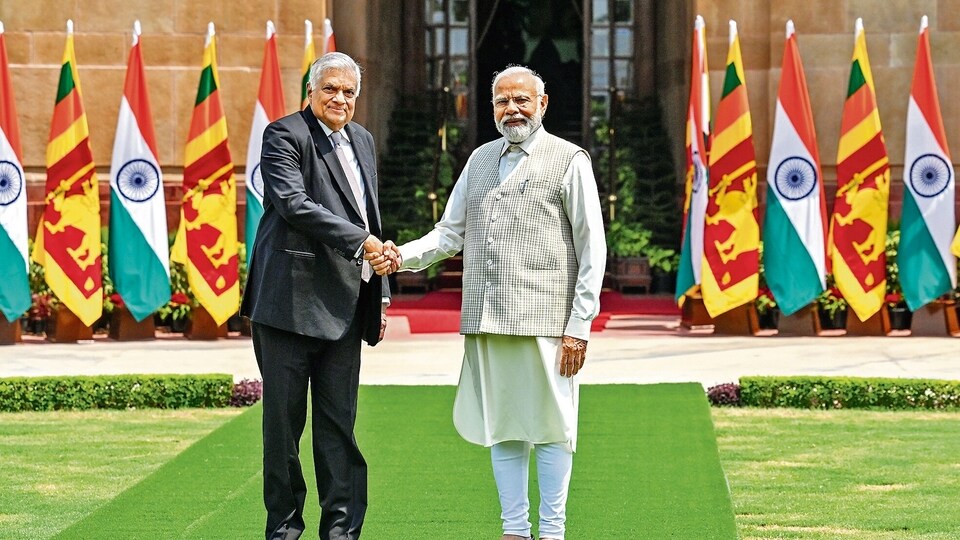
President Wickremesinghe’s response to the issue, raised by external affairs minister S Jaishankar during his meeting with the Sri Lankan head of state in Colombo on October 11, was non-committal, the people added, asking not to be named. Sri Lankan Foreign Minister Mohammed Ali Sabry was quoted by Sri Lanka’s The Island newspaper on October 9 saying that his country had given permission to the Chinese ship for docking at Colombo deep seaport in November. The same report quoted him as saying that Sri Lanka does not want “to get involved” with “big power rivalry going on” between “China, India and the US”.
Interestingly, a US navy ship, USNS Brunswick, docked in Colombo on Wednesday, and no dates have yet been announced for the visit of Shin Yan 6, the Chinese vessel.

The Chinese vessel was earlier maintaining position 1,000 km east of the China-controlled Hambantota port in the Island nation, and is currently about 280 nautical miles (500 km) east of Chennai in the Bay of Bengal. Carrying nearly 2,000 tonnes of diesel, the ship has enough supplies to last for two more months. The ship entered the Indian Ocean Region on September 23.
In July, after a visit by the Sri Lankan President, Indian Prime Minister Narendra Modi said it was “necessary” the two countries worked “together, keeping in mind each other’s security interests”. The final decision on the ship, HT learns, may be taken by Wickremesinghe during his visit to Beijing to attend the BRI summit on October 17-18 at the invitation of Chinese President Xi Jinping.
Over the past five years, Chinese ships have been active in the Indian Ocean Region with the PLA Navy growing into a proper blue water navy.
The total number of vessels including warships, ballistic missile trackers, survey and research vessels recorded in 2019 were 29, grew to 39 in 2020, then 45 in 2021 and 43 in 2022. This year, till September 15, 28 Chinese ships have been recorded in the region.
Even though Sri Lanka and China have dismissed New Delhi’s concerns and passed off the ship’s visit as having to do with routine marine research, India’s national security planners are convinced that the PLA is mapping the Indian Ocean bed to chart out new sea routes to the east and north coast of Africa as well as Indian Ocean Littoral States that bypass India altogether. This research is a precursor to Chinese strike forces patrolling the high seas in IOR as early as 2025, they believe.


