
 E-Paper



‘Statistics deceptive’: SC seeks report on Delhi pollution within a week
The Commission for Air Quality Management told the Supreme Court that crop burning had reduced over previous years, but the court felt that the ground reality is different

 Prefer HTon Google


Steps to improve Delhi’s air quality seems to be only on paper, the Supreme Court remarked on Tuesday and asked Delhi and neighbouring states of Uttar Pradesh, Punjab, Haryana and Rajasthan to file affidavits within a week explaining the steps taken by them to curb pollution in the national Capital.
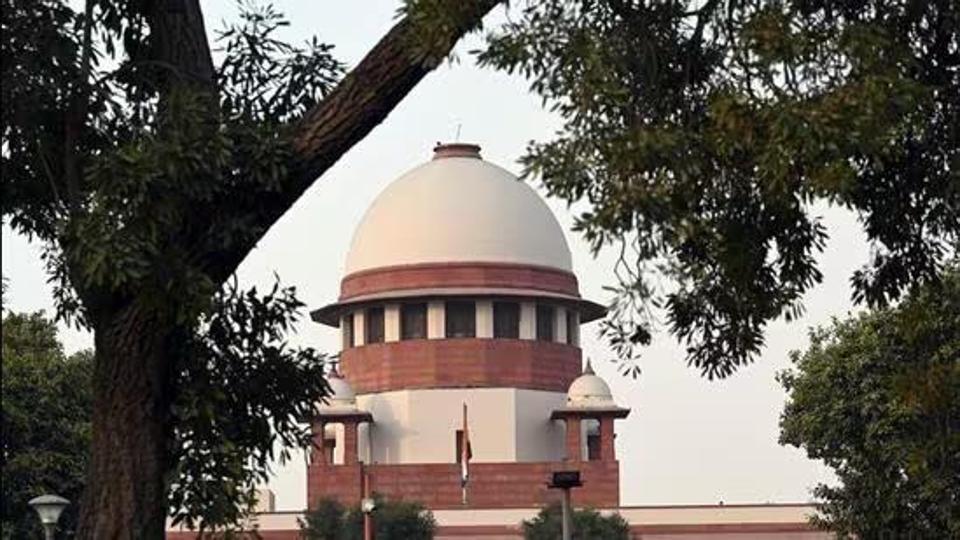
The Commission for Air Quality Management (CAQM) in the national capital region and adjoining areas told the court that crop burning, one of the issues contributing to Delhi’s polluted air, had reduced over previous years. However, the bench headed by justice Sanjay Kishan Kaul felt that the ground reality is very different with newspaper reports indicating a spurt in farm fires in neighbouring states.
The bench, also comprising justices Sudhanshu Dhulia and PK Mishra, posted the matter for November 7 directing the respective chief secretaries to file the affidavits indicating action taken under eight heads of pollution causes flagged by the CAQM.
The CAQM in its latest status report of October 28 gave details on the action taken on eight fronts of which one of the issues was crop burning or farm fires. According to the report, the incidents of crop burning in 2022 between September 15 to November 30 was 53,792 which was 32% less than the total incidents reported for this period in the previous two years. In 2020 and 2021 it was 87,632 and 78,550 respectively.
The report of the commission came in response to an order of the court on October 10 seeking steps being taken for control of air pollution in and around the Capital owing to the onset of winters. The order was passed in a public interest litigaiton (PIL) filed by MC Mehta where the court is monitoring various measures to curb air pollution in Delhi.
In the present year, the commission gathered data of over a month between September 14 to October 24 and found 2,306 crop burning instances in Punjab and 813 in Haryana.
Advocate Suhasini Sen, who represented the Centre, told the court that the corresponding figures for last year was 5,617 (Punjab) and 1,360 (Haryana). She said that all this was the result of steps taken by the commission with the respective state governments on alternate disposal of crop stubble.
She indicated that an action plan was drawn up to have zero stubble burning in six Punjab districts and near elimination of farm fires in Haryana and UP.
The bench, however, remarked, “Statistics at times can be deceptive.”
“All these steps are only on paper. We have to see what the ground reality is. What is the impact of these steps if the air quality does not improve,” it said, citing news reports which showed farm fires were still on the rise.
“What bothers us is to see this (pollution) year after year. The CAQM report is comprehensive but the problem of air pollution persists,” the bench added.
Senior advocate ADN Rao, assisting the court as amicus curiae, suggested that the court may call for action taken reports from the states concerned on steps suggested by the commission. The bench said that the problem is generally seen to worsen around the onset of winter. Justice Kaul, who has spent a significant number of years in Delhi, remarked in a lighter vein, “Couple of decades back, the winter months used to be the best time in Delhi.”
The commission in its report also indicated action taken under various other heads that cause pollution, namely vehicular pollution, dust pollution from construction/demolition activities, burning of municipal solid waste, pollution by diesel generator sets, industrial pollution, among other factors.
The report said that due to the comprehensive policy to abate air pollution in NCR, improved monitoring and enforcement of various policy actions, aided with favourable meteorological and climatic conditions from time to time, the overall air quality in Delhi-NCR has witnessed an improving trend.
The number of “Good” to “Moderate” air quality index (AQI) days recorded so far during 2023 have been the highest (206 days), except for the Covid lockdown year of 2020. The daily average AQI this year was recorded at 169.5 as compared to 183.6 last year.
On stubble burning, the report said that the paddy straw which used to be burnt is now being utilised in paddy-based biomass power projects and compressed biogas plants along with various other miscellaneous applications like packaging, cardboard, panel board and cattle fodder.
Additionally, the commission on October 19 directed all bus services between NCR cities in Rajasthan, UP, Haryana and Delhi to be operated through electric, CNG mode or BS-VI diesel fuel from November 1.


