
 E-Paper



SC seeks report on recovery of stolen weapons in Manipur
The Supreme Court has ordered the Manipur government to provide a detailed status report on the recovery of stolen arms and ammunition following ethnic clashes in the state. The court demanded the report be shared confidentially, after the government claimed publicising it could cause panic. The court stressed that regardless of which side was involved, action must be taken against the illegal possession of arms. The clashes between the Meiti and Kuki communities in Manipur began in May and have resulted in the deaths of at least 163 people.

 Prefer HTon Google


The Supreme Court on Wednesday demanded a detailed status report from the Manipur government on the recovery of arms and ammunition stolen from the police and state armouries in the wake of ethnic clashes between the Meiti and Kuki communities since early May, observing that the issue was “sensitive” and that it must be looked into seriously irrespective of which side is involved.
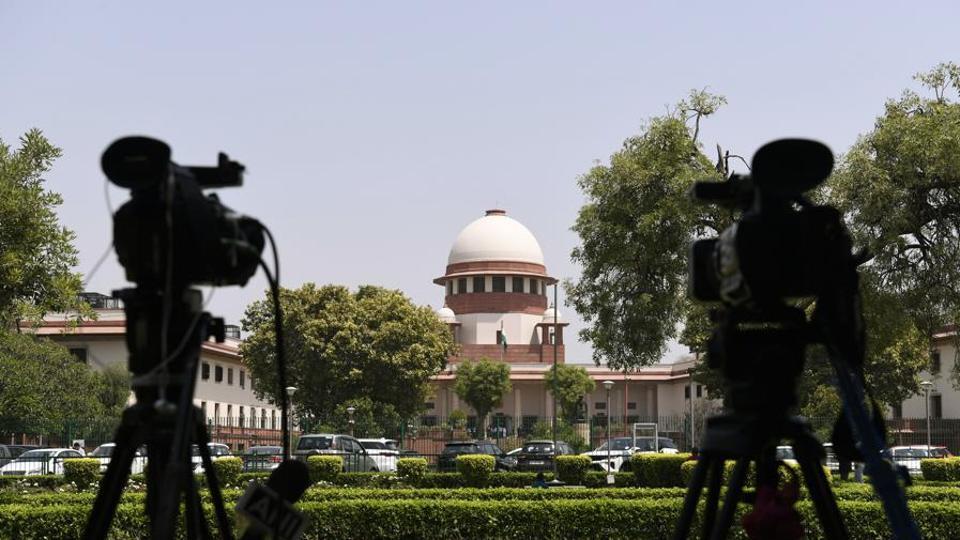
A bench, led by Chief Justice of India Dhananjaya Y Chandrachud, directed that the report be shared only with the court for now after the state government claimed publicising the report could lead to “panic”.
“I don’t believe in court seeing something others don’t know, it’s not my philosophy but if you feel like this is a matter about recovery of arms and court should be apprised, at least tell us what steps have been taken. We are dealing with it objectively. State has to take actions about illegal arms irrespective of which side has done it,” the CJI told solicitor general Tushar Mehta, who appeared for the Manipur government and the Centre in the clutch of petitions relating to the violence in the northeastern state.
In its order asking for a status report in two weeks, the bench referred to its August 7 judgment which directed the state government to investigate the looting of arms and ammunition from the police and state armouries.
During the hearing, senior counsel Sanjay Hegde and Gopal Sankaranarayanan raised the issue of the recovery of arms, adding that some militants brandished the looted arms on August 15. Other lawyers blamed a particular community for stealing arms and possessing arms, prompting the bench to respond: “We are concerned with the source of human suffering irrespective of the source. Everyone has to be dealt with uniformly. Even for disarmament, we are saying the state has to do this irrespective of the source of arms. Everything has to be done irrespective of who is doing it. We are not blaming either side and we are not going to leave the issue unattended too. We will ask the state government to tell us what they have done till date.”
In its order, the court recorded that the state government will submit a status report on the recovery of arms and that this report could “presently” be given to the court confidentially.
During the proceedings, the bench also recorded statements of the Manipur chief secretary in an affidavit that there is no shortage of food items, medicines or other essential supplies in the relief camps and that the state has been taking note of all concerns.
“If any further grievance subsists in regard to the supplies, it can be brought to the notice of the district administration that can look into it immediately. This will obviously not preclude the petitioner from approaching the committee appointed by this court. We also make it clear that this direction will apply across the board,” the order added.
On the last date of hearing on September 1, the court had directed the Centre and the Manipur government to ascertain basic supply of food, medicines and other essential materials are not disrupted.
That came after a committee of retired women judges, appointed by the top court to assess the efficacy of relief and rehabilitation measures, brought up the issue of supplies of food and essential items to the victims of violence, especially those housed in relief camps. The issue of an outbreak of measles and chickenpox in some relief camps was also raised on September 1.
An affidavit filed by the Manipur chief secretary on Tuesday, however, refuted both claims, calling the assertions false and misleading. While just a single case of chicken pox has come to light, SG Mehta added, there were adequate supplies of food and other essential items in all the relief camps, including in Moreh that some of the petitioners cited on September 1. The affidavit further said that it would have been more appropriate for the committee of retired judges to ascertain the factual position from the state administration before raising this issue in the court.
The affidavit also divulged that as on date, 386 places of religious worship have been destroyed in the state during the violence and that the state government is committed for restoration of all religious institutions irrespective of the community.
Responding to a plea in the court that had cited massive destruction of churches in the state, the state government maintained that “selective highlighting” of religious places of one community can lead to precarious position and thus, the court must step in to stop any endeavour in this regard.
During the proceedings, the bench asked the Union home secretary to have a meeting with the judges’ committee, which comprises justices Gita Mittal (former chief justice of the Jammu & Kashmir high court), Shalini P Joshi (former Bombay high court judge) and Asha Menon (former Delhi high court judge), for finalising the names of the experts who could assist the committee in its work.
Ethnic clashes between the tribal Kukis and dominant Meiteis first erupted on May 3 during a protest against a court-ordered tweak to the state’s reservation matrix, granting Scheduled Tribe status to the latter. The violence quickly engulfed the state where ethnic fault lines run deep, displacing tens of thousands of people who fled burning homes and neighbourhoods into jungles, often across state borders. At least 163 people have been killed in the violence.
Hearing a bundle of petitions that have sought an array of protective and rehabilitative orders, the court on August 25 shifted 27 cases being investigated by the Central Bureau of Investigation (CBI) to a set of designated judges in Assam to ensure protection of victims and witnesses, besides facilitating fair and quick trials. Of these, 20 cases relate to the offences of rape, molestation and murder of women. One of these cases pertains to a horrific 30-second video clip of two Kuki women being stripped and paraded naked by a mob that prompted the apex court to take suo motu cognisance, and the subsequent hand over of the case to CBI by the Centre on July 28. Among the other seven cases, three are for looting weapons, two for murder, and one case each for rioting and conspiracy.
By an order on August 10, the apex court appointed Dattatray Padsalgikar, former deputy national security adviser and ex-director general of police (DGP) of Maharashtra, to oversee investigations being carried out by CBI as well as by those conducted by the 42 special investigation teams (SITs), constituted by the Manipur government to probe more than 6,500 other first information reports (FIRs) registered in connection with the violence in the northeastern state. He has been given two months to submit a report.
INSET : protection for editors guildThe Supreme Court on Wednesday granted interim protection from arrest to the president and fact-finding team members of Editors Guild of India (EGI) that approached it for quashing of two first information reports (FIRs) lodged against them by the Manipur police for allegedly inciting more clashes in the northeastern state rocked by ethnic clashes since the first week of May.
A bench, headed by Chief Justice of India Dhananjaya Y Chandrachud, directed that no coercive steps be taken against the petitions till September 11. “Issue notice. Keep this on Monday. No coercive steps to be taken against petitioners till the next date of hearing,” the bench, which also included justices JB Pardiwala and Manoj Misra ordered.
EGI, represented through senior counsel Shyam Divan, pleaded with the bench to consider scrapping the FIRs while seeking interim protection from arrest till the final order. Those booked by the police on private complaints are Seema Mustafa, EGI president, and three members , Seema Guha, Bharat Bhushan and Sanjay Kapoor. The three members visited Manipur last month to study media reportage of the ethnic clashes.
On Monday, Manipur chief minister N Biren Singh accused the body of ‘instigating more clashes’ in the state through its “biased” fact-finding report on the violence.
On Saturday last week, EGI released a report of its ‘Fact-Finding Mission on Media’s Reportage of the Ethnic Violence in Manipur’ which claimed that the media’s reports on the ethnic violence in Manipur were one-sided and accused the state leadership of being partisan.



