
 E-Paper



‘Flagging our concerns’: SC seeks report on Manipur violence, rehabilitation
The Supreme Court underlined its three concerns to solicitor general Tushar Mehta who appeared for the Centre and Manipur government

 Prefer HTon Google


NEW DELHI: Expressing its concern over the “loss of life” and displacement of people after ethnic violence swept through large parts of Manipur, the Supreme Court on Monday directed the Union government and the state to ascertain all suitable arrangements and medical facilities in the relief camps for the victims, besides ensuring their protection and safe return to home.
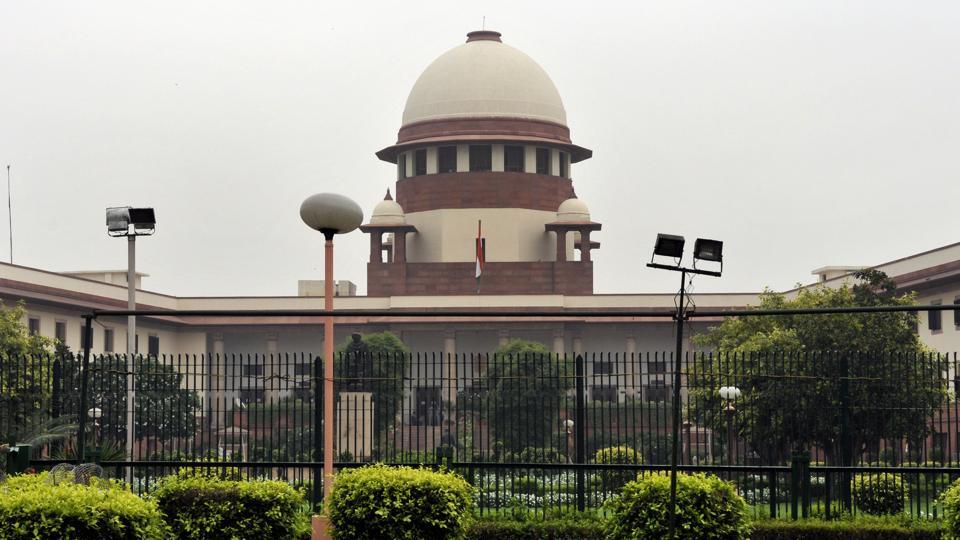
A bench headed by Chief Justice of India Dhananjaya Y Chandrachud further stressed the duty of the state to protect the places of religious worship, observing that the “immediate target of the court is protection, rescue and rehabilitation of people” affected by the violence.
“This is a humanitarian issue. We are concerned deeply about the loss of life and loss of properties. The government is taking action and there is no reason not to trust them. At the same time, we are also flagging our concerns. But we do not want these proceedings to become another platform to further destabilise the state,” remarked the bench, which also comprised justices PS Narasimha and JB Pardiwala.
Asking the state government to submit an updated status report on rescue and rehabilitation measures by May 17 when the matter will be heard next, the bench recorded the state’s submission that it will move the appropriate forum against the March 27 order of the Manipur high court that directed the state government to send a recommendation to the Centre on the demand for scheduled tribe (ST) status by the Meitei community.
The clashes between Meiteis and tribals started in Churachandpur district on May 3 after a solidarity march by the All Tribal Students Union of Manipur (ATSUM) to protest the high court order and the Meitei community’s demand to be included in the ST category. The government has confirmed the death of at least 37 people in the violence, but the toll could be significantly higher. The violence prompted the state government to issue shoot-at-sight orders, enforce a curfew and ban internet services.
Hearing a batch of three petitions filed separately by BJP MLA and chairman of the Hill Areas Committee (HAC) Dinganglung Gangmei, and NGO Manipur Tribal Forum, the court underlined its three concerns to solicitor general Tushar Mehta who appeared for the Centre and the state: “We would like to know how many relief camps are there and what are the services provided? Second, what about displaced persons? Is the government trying to bring them back to their homes? Third, places of religious worship should also be protected.”
It added: “We emphasise due arrangements in relief camps for all basic amenities in terms of food, medicines etc; taking all necessary precautions for rehabilitation of displaced persons and protection of places of religious worship.”
On his part, Mehta said that adequate security arrangements have been made in the state to quell the violence and that the situation is gradually coming back to normalcy.
“We have deployed 52 battalions of central armed police forces and more than 100 columns of the army and state police which are conducting flag marches in disturbed areas. One police officer from the state has been appointed as chief security advisor. Another experienced officer has been repatriated from the Centre to take over as the chief secretary of the state. The curfew was lifted for a few hours yesterday and there is relaxation today too. No incident of violence has been reported in the last two days,” Mehta told the bench.
Citing the volatile atmosphere in Manipur, Mehta requested the bench to defer proceedings for at least a week to wait for the situation in the state to improve. He also informed the bench that the state government is taking steps to legally move against the March 27 order of the single-judge bench of the Manipur high court.
At this point, senior advocate Sanjay Hegde appeared in the matter for some of the petitioners before the high court who had demanded the ST status for Meiteis.
At this point, senior advocate Sanjay Hegde appeared in the matter on behalf of some parties which had petitioned the high court to seek ST status for Meiteis.
The bench told Hegde that the petitioner should have been careful enough to show to the high court Supreme Court rulings that clearly hold that a court cannot direct for inclusion of any community in the SC/ST category. “This power, the high court never had. This is the presidential power. How could high court direct the state government that it shall forward the recommendation to the Government of India?” it asked the senior counsel.
Hegde said that there is not just one community which has been impacted by the violence. To this, the bench retorted: “Our order does not mention any one community or class. It applies to everyone. Our immediate concern is rehabilitation and safety of people.”
Senior advocate Colin Gonsalves, representing the tribal outfits, pressed for the evacuation of a batch of tribals from a particular area. Tushar Mehta assured the bench that he will look into the concerns but added that the proceedings before the top court should not become another reason to create unrest. The bench agreed with Mehta, recording in its order that the solicitor general has assured that the concerns shall be addressed and all remedial steps will be taken.
Dinganglung Gangmei, BJP MLA and chairman of the Hills Area Committee (HAC) of the Manipur assembly, contended that the “proceedings before the high court were vitiated on account of not making the HAC a party” and that the high court order created tension and led to violence between the two communities. He argued that there is no recommendation of the state government for the inclusion of the Meitei community in the Scheduled Tribe list and that the state cannot be forced by the court to do so.
The other petition filed by NGO Manipur Tribal Forum through advocate Satya Mitra demanded protection of the tribals — Nagas and Kukis, and to deploy central forces to protect all churches and places of worship of these communities in Manipur. The plea has also sought a probe into the violence.
Churachandpur, the epicentre of the violence, located around 70 km from Imphal, saw the first signs of normalcy on Sunday when people stepped out for two hours when the curfew was relaxed, while massive military deployment kept guard. Comprising around 53% of Manipur’s population, the majority Meiteis community is also affluent while the Nagas and Kukis, who constitute about 44% of the population, mainly live off of agriculture on the hills and are more economically deprived.



