
 E-Paper



Supreme Court dismisses appeals in Nithari killings, upholds Koli’s acquittal
Even with this decision, Surendra Koli will remain in jail as he is undergoing life imprisonment in one of the Nithari killings where his conviction was upheld by the top court in 2011

 Prefer HTon Google


The Supreme Court on Wednesday upheld the acquittal of Surendra Koli in nearly 12 cases of murder linked to the Nithari killings, trashing the appeals filed by the Central Bureau of Investigation (CBI) and the victims seeking revival of conviction against him considering the gruesome nature of the crime involving the death of nearly a dozen minor girls.
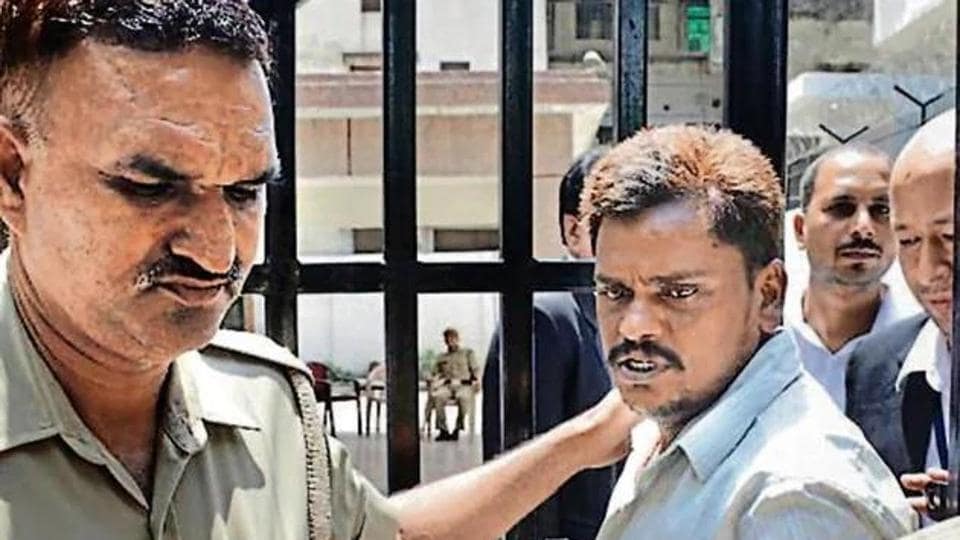
A bench headed by Chief Justice of India (CJI) Bhushan R Gavai passed the order endorsing the findings of the Allahabad high court in October 2023 that acquitted him. Even with this decision, Koli will remain in jail as he is undergoing life imprisonment in one of the Nithari killings where his conviction was upheld by the top court in 2011.
The CBI, represented by additional solicitor general (ASG) Rajkumar Bhaskar Thakare told the court that the high court has refused to believe the discovery of skulls and bones outside the house where Koli was working as a servant. It was the case of CBI that he used to lure minor girls to the house.
As ASG opened submissions describing the case as “one of the darkest crimes in history”, the bench, also comprising justices SC Sharma and K Vinod Chandran said, “Don’t try to prejudice the court by using such expressions. Just tell us what is the perversity in the high court judgment.”
The CBI lawyer said that the high court has disbelieved the confessional statement of Koli considering that he was in custody of the police and the possibility of him being tutored. He said that the trial court which convicted Koli in the 13 cases while acquitting him in three, had extensively considered the evidence presented by CBI.
The court told Thakare that being a seasoned criminal lawyer he should know that any recovery made during the investigation should be supported by a statement under Section 27 of the Evidence Act. This provision relates to recovery made pursuant to a statement recorded by an accused in police custody.
Thakare told the court that the recovery of skulls, bones, slippers and clothes of the victims could not be planted by anyone. He urged the court not to go by the high court’s insistence on recovery not being consistent with Section 27 but rather go by the recovery as a fact under Section 8 of the Evidence Act, which constitutes motive or preparation for any crime.
The bench asserted, “If Section 27 statement is not recorded, then the recovery should be thrown into the dustbin. The high court has disbelieved the recovery on that ground.”
As Thakare sought to take the court through the evidence on record, the bench insisted, “We will take up the appeal only if you show any perversity or impossibility in the high court order.” CJI Gavai told the law officer, “ Show us one judgment that any recovery made without recording of Section 27 is admissible. The judgment of the high court has followed this established rule of law. If you tell us to follow otherwise, nearly 100 judgments passed by me may have to be rendered per incuriam (legal term which means order passed in ignorance of law).”
Senior advocate Geeta Luthra appearing for the father of one of the victims told the court that the case requires an elaborate hearing. She said that in 2011, based on the same set of evidence and confession of the accused, the top court had upheld the conviction of Koli. She pointed out that the evidence presented by the prosecution before the trial court showed the culpability of the accused and to this extent, urged the court to consider setting aside the high court decision.
The crime which took place in Nithari, a village adjoining the upscale satellite town of Noida, was a sensational crime as investigations by the police and later by CBI found that Koli lured girls to the house and later sexually assaulted them. He was even accused of cannibalism. The prosecution had even discovered the weapon used to chop the bodies of his victims.
Out of the 16 cases involving killing of young girls between 2005 and 2007, the police had named Koli and his employer Moninder Singh Pandher. While the trial court convicted Koli in 13 cases, Pandher was convicted in two of the 13. Pandher has been acquitted in all cases against him while in one out of the 13 cases, Koli’s conviction was upheld by the top court in 2011. CBI took up the investigation of the case in 2007 and out of the 16 cases lodged by the UP Police, three resulted in acquittals by the trial court.
In July 2024, the top court had issued notice on CBI appeals and had directed the entire case records from the trial court to be shared in digital form with the lawyers appearing for both sides in the matter.
Incidentally, while senior advocate Yug Mohit Chaudhary appeared along with advocate Payoshi Roy for Koli, they were not called upon to make submissions as at the end of a hearing that lasted for nearly half-an-hour, the court dismissed the appeals.
According to the prosecution, Koli was a servant working in the house of Pandher in Sector 31, Noida. It was the CBI case that Pandher would often call sex workers home. Watching his employer with sex workers triggered passions in the mind of Koli who enticed young victims on one pretext or the other and later raped and killed them. He then allegedly chopped the bodies, ate the torsos, and threw skulls, bones, clothes and other remains in a drain. It was at his instance that police recovered 16 skulls and clothes and slippers of the victims near the drain behind the house, the CBI had stated in its appeal.


